

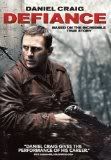

Daniel Craig, Liev Schreiber and Jamie Bell portray the Bielski Brothers who lead a group of upward of 1,000 Jewish refugees in Nazi-occupied Europe. They survive by hiding in the Belorussian forests living meekly and constantly worried about being discovered. They eventually hook up with the Russian resistance and then there's lots of guns and fire and stuff.
This should be a great movie and it isn't.
Daniel Craig, while perfectly fine in many roles involving brooding, violent men, doesn't work here. He can look convincing when he hits a man, he looks like he can put some stank on it. However, he shows here he has a little trouble hitting a man and making us care he's done so. His James Bond physical presence has its place and he's great at it. It simply has no place in a film about Jews scraping a living in a freezing forest.
Opposite Craig is Lev Schreiber who offers what I think is perhaps his best performance. He strikes the right tone for dramatic action. Throughout the film it occurred to me that he should have been cast in Craig's role. This should have been his chance to graduate from supporting to lead role.
The film as a whole is far too long and often too concerned with punching up conflicts. The audience is asked to hop from one crisis to the next, always preoccupied with a moment of peril or someone screaming at someone else that it is hard to settle down enough to really care about the proceedings. By the third act, my interest was exhausted.
Director Edward Zwick (Blood Diamond) not only drags the production out too long, he fails to provide a useful villain. If that wasn't bad enough, he never brings the audience into the living conditions of the refugees. We are told and shown that it stinks to be hiding out in the woods in the dead of winter - we know this. We are never asked to feel how terrible the conditions were, to really have any understanding of their predicament.
Put simply, this is a missed opportunity.

Related Reviews:
Daniel Craig movies
Layer Cake (2003)
Casino Royale (2006)
Other Critic’s Reviews:
Critical Mass Film House
ReelFilm Reviews
Click here to buy your copy of

You Are What You See and learn
to change the world from your couch
Labels: Daniel Craig, film, Jamie Bell, Liev Schreiber, movie review, World War II
posted by Michelle Obama's Left Nut at 8:00 AM
0 comment(s)


Share
Nope
Short Review: Previous generations got John Wayne, we get a self-hating drunk crying in his beer.
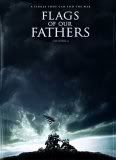

Wake me up if they decide to make a movie about Iwo Jima. This about sums up my experience screening this distracted choppy, dropped ball of a movie.
Clint Eastwood’s film has less to do with the actual battle in the black sands of that remote island and more to do with the marketing campaign back home. The three surviving men, John "Doc" Bradley, Ira Hayes and Rene Gagnon who raised the flag in the famous picture from Iwo Jima are used by the war department as spokesmen for the war bond drive. The film treats this necessity like it was a cynical, terrible assault on human dignity. It probably made the men uncomfortable to be remembered for something as simple as raising a flag, but the goals of the marketing were good. Eastwood plays these segments like the men were being leveraged to sell Coca-Cola.
The bulk of the film shows these men coping with their guilt. Great, Oprah has made a war movie. This is why I loathe this film. People don't read much anymore, and they certainly don’t consume a great deal of history when they do. Films such as this stand as historical monuments. People will know what they know about Iwo Jima because of this film. What will people get from this? We fought, but we didn’t have a clear moral goal and a cynical government back home duped the people into supporting our efforts. Our soldiers were pawns guilty of their actions and shamefully dismissed by a belligerent public. Since the film serves to undermine the concept of heroes and a moral war, the audience will learn little about the actual battle. They also won't come to understand why we fought and why it is critical for us to win.
The film is spread out over decades and told in a series of disruptive and unrelated flashbacks. It is like watching television with someone else holding the remote who is very bored. We’re watching a war movie…oh, wait now it’s a family drama…wait, it’s a halftime show…opps, more war…wait, isn’t this the Alcoholics Anonymous Channel? If you don’t like a part of the film, wait a minute and Clint will change gears. Since the film never spends too much time in one place all of the scenes are sucked dry of any dramatic flavor. The film becomes a prattling string of scenes without any punch. I found that this particularly effected the battle sequences.
The battle of Iwo Jima was as brutal a fight as was seen in WWII. Thousands of American men were wounded or killed in the fight. This film doesn’t give the sense of the massive size of this sacrifice. The battle sequences are without personality or tension. Everything is quiet then it is a wall of noise…then we cut to the men back home.
This is a film, it is intended for dramatic purposes. The battle sequences should grab the audience and rivet their fear and imagination. It should bring them into the fight. This film never accomplishes this task because it never defines characters well enough for us to care when the bullets begin to fly. Our concern is one of being distantly uncomfortable rather than personally involved. In Saving Private Ryan, we were literally placed into the bloody waters of D-Day. Then we are attached directly to Tom Hanks, a known face, that drew us into that fight. Eastwood does not offer us any handle to pull us into his film’s world.
One of the worst things about the fighting is that only one side of the battle is seen. American soldiers are shown moving up the beach and then cut down. The Japanese soldiers are almost never seen in this film. When they are it is in the dark. There are a couple of fleeting shots of the Japanese in sunlight but they are not presented as human, just props to be knocked down. A great deal of attention is given to their guns however. Eastwood offers many shots of Japanese muzzles poking out of spider holes and bunkers. This dehumanizes the Japanese fighters and removes the human element from the overall battle.
As it stands, the film expends more effort making certain we know that Ira Hayes had to deal with white people making casual remarks about his Indian heritage. With little exception, nearly every white person in the film belches out a ignorant statement about Indians to Hayes. He’s asked if he killed the Japs with a tomahawk and we’re supposed to be disgusted. Over and over, never ending is the verbal assaults from whitey. Okay, but Italians, Irish and Polish soldiers all got mocked as well. The amount of focus Hayes gets is clearly inordinate.
Eastwood spends so much time showing how poorly Hayes is treated, how guilty he feels, that the film winds up being about Hayes. This stinks because Hayes was a drunk. Which is more racist? People making insulting comments about a man's heritage or a Hollywood film concentrating on showing an Indian drunk and vomiting in all of his scenes? At least Hayes is in the film, unlike the hundreds of black soldiers who are literally removed from history by Eastwood and company.
Black soldiers performed support roles in WWII. At Iwo Jima, the battle was so intense these men found themselves in the murky sands next to their white counterparts. There is one shot of black soldiers in this film. There is no word for this other than shameful to express Eastwood’s not recognizing these men.
Overall, this film serves to dilute heroism during a time when our country is at war. It serves to water down history and remove the moral core from the Pacific theater of WWII. The stories of the battles our soldiers fight are worthy of being told. We must be reminded of sacrifice and yes heroism. Heroes do exist in war. If there are cowards, then there are heroes. This film should have shown the sacrifices of the men on that island. It doesn’t do this task and is therefore a terrible waste. It is an unforgivable waste.

Related Reviews:
War movies
Midway (1976)
The Thin Red Line (1998)
Other Critic's Reviews:
Film Critics United
Confessions of a Film Critic
Click here to buy your copy of
You Are What You See and learn
to change the world from your couch
Labels: Barry Pepper, Clint Eastwood, film, Ken Watanabe, movie review, Neal McDonough, Robert Patrick, Ryan Phillippe, World War II
posted by Michelle Obama's Left Nut at 8:00 AM
1 comment(s)
Share
Sure.
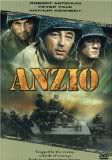

A traditional old-time war movie complete with easily identifiable stock characters, roughly delivered dialog and overly theatrical death. With all of its conventionality, it still manages to stumble a little as it struggles to settle on a point. This film about a war corespondent (Robert Mitchum) who gets wrapped up in an ambush has its, hey I'm a war movie made during the Vietnam Era vibes. At the same time, since this wasn't made today, the directors weren't as comfortable crapping all over our troops while they were still fighting and dying - today, if you don't crap on our soldiers and imply they're murderers you're some pro-McBushie Muslim baby killer. The film suffers from some odd choices because of this duality, being a pro-war/anti-war movie. At one point Mitchem ponders the emotional depths (well, as deeply as he was able to delve into them given his stoic delivery) while the war rages around him. This kind of break from reality cuts deeply into the film's credibility and distracts from what should be a great film.
Concerning the performances, Robert Mitchum plays Robert Mitchum in this one. His leaden persona hangs a little heavy on the production but Peter Falk easily lightens things up with a relaxed, comfortable performance.
Overall, this film has some significant flaws, there's no doubting that. These flaws can be forgiven thanks to some very good patchwork, battle sequences and the inclusion of Peter Falk in the proceedings. I do recommend the film, but not as something you should hunt down. If you're flipping through the channels or if absolutely nothing else is available, you can fall back on this pick.
Related Reviews:
War movies
The Longest Day (1962)
The Big Red One (1980)
Other Critic's Reviews:
Ozus' World Movie Reviews
Roger Ebert
Labels: film, movie review, Peter Falk, Robert Mitchum, Robert Ryan, war, World War II
posted by Michelle Obama's Left Nut at 8:00 AM
0 comment(s)
Share
 This film gives us a glimpse of what it was like inside Hitler’s bunker in the final days of World War II through the eyes of his stenographer Tradul Junge. This film is based on Junge’s book of the same name and is stunning in the portrayal of the human side of this evil regime.
Many people believe that Schindler’s List and Saving Private Ryan should be required viewing in high schools. I would claim that this is the film kids should see. After having The Third Reich explained, the students should watch this film and see how blind faith in a man-made god leads to destruction.
 Spielberg’s World War II epic is not perfect, but close enough. This film has changed how war movies are made. Its original look and feel will echo for decades in the industry.
While this is at its heart a "pick-off" film (a "pick-off" is a film that presents an ensemble of characters only to bump them off one by one,) it is still an great piece of cinema. If you haven’t already seen it, the now famous opening half-hour showing the invasion of Normandy is one of the most important pieces of mainstream cinema.
This is a very violent and unrelenting film, in particular the D-Day invasion. None of the violence is out of place and unnecessary. This is a perfect example to reference when speaking about the proper use of violence in the movies.
 Although it is a little dated it still packs a punch. The wide scope of this project is jaw dropping. With a monstrous cast and full-scale reenactments of D-Day, a film like this will not come around again. The directors managed to take a very complicated series of events (D-Day) from both the Allies and the Axis perspectives and lay them out in an easy to digest film.
The acts of providence that made D-Day a success are shown over and over in this film. The seemingly random events of that day are shown in their historical perspective and reveal how "directed" the actual day(s) were.
Labels: movie recommendations, World War II
posted by Michelle Obama's Left Nut at 12:00 PM
0 comment(s)
Share
No.
A more enjoyable movie perhaps.
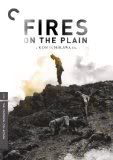

Kon Ichikawa’s (Ten Nights of Dream) film about Japanese soldiers suffering in the last days of the Battle of Leyte is a stark rough film. It is well-made and a fascinating watch but even with a brief running time of 110 minutes it feels like a very long movie. Want to be made to feel your lot in life ain’t so bad? Check this film out. You’ll have a hard time complaining about things for a while afterward.
If you’re into war dramas, this is a good pick. If you’re just looking for something to watch, this may be a bit too involved.
Related Reviews:
World War II movies
To End All Wars (2001)
Letters From Iwo Jima (2006)
Other Critic’s Reviews:
DVD Verdict
Cinema Strikes Back
Labels: film, Japanese cinema, movie review, war, World War II
posted by Michelle Obama's Left Nut at 5:00 PM
0 comment(s)
Share
The fact that Eli Roth's goober smile is in the thing doesn't help matters. This does NOT look good.
Screenwriter: Quentin Tarantino (Reservoir Dogs)
Director: Quentin Tarantino (Pulp Fiction)
Actors: Brad Pitt (12 Monkeys), Diane Kruger (National Treasure 2: Book of Secrets), Eli Roth (Death Proof), Mike Myers (The Cat in the Hat) and Samuel L. Jackson (Snakes on a Plane)
Labels: Brad Pitt, Eli Roth, film, Mike Myers, movie trailer, Quentin Tarantino, Samuel L Jackson, World War II
posted by Michelle Obama's Left Nut at 8:00 PM
0 comment(s)
Share
The trailer makes this out to be a Saving Private Ryan derivative which it's not. It never reaches that level. The follow-up to this film, Letters from Iwo Jima is far superior, but of course, there's no manipulative American Government to slam when you're focusing on the Japanese.

Screenwriter: Paul Haggis (Quantum of Solace) and William Broyles Jr. (Jarhead)
Director: Clint Eastwood (Unforgiven)
Actors: Ryan Phillippe (Stop-Loss), Adam Beach (Joe Dirt), Barry Pepper (Battlefield Earth), Paul Walker (The Fast and the Furious), Robert Patrick (Terminator II: Judgment Day), Jesse Bradford (W.) and Neal McDonough (Minority Report)
Labels: Barry Pepper, Clint Eastwood, film, movie trailer, World War II
posted by Michelle Obama's Left Nut at 5:00 PM
0 comment(s)
Share
No.
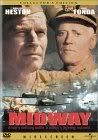

This is far from perfect and numerous fatal flaws that make wide swatches of this film excruciating to watch. One of the key battles in Naval history is reduced to stumbling scenes weighed down with two-dimensional dialog and clumsily edited in raw footage. Charlton Heston and Edward Albert suffer through some of the more awkward scenes I've ever seen as father and son. Charlton lives up to his usual belligerent hero persona. On the other hand, Albert whines in a performance so lacking in confidence and nuance that makes Mark Hamill's Luke Skywalker seem like Olivier playing Hamlet.
Despite the broad scale, the huge ambitions and impressive cast, this film falters. Part handicapped by the style choices stemming from the time it was made, part ruined by simply bad writing, this movie is a huge missed chance and should be avoided.
Related Reviews:
World War II movies
Saving Private Ryan (1998)
The Great Raid (2005)
Other Critic's Reviews:
Christian Spotlight on the Movies
Apollo Movie Guide
Labels: Charlton Heston, Cliff Robertson, Edward Albert, film, Glenn Ford, Henry Fonda, James Coburn, movie review, Robert Mitchum, Robert Wagner, World War II
posted by Michelle Obama's Left Nut at 5:00 PM
0 comment(s)
Share
No.
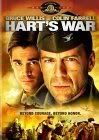

What we have here is really just a twist on the Civil Rights Era movie but in a historical setting. In Civil Rights Era movies black victims are only saved when East Coast liberal lawyers ride into town and beat away the wild-eyed, moron Southern whites. In this case, the only thing that changes from that template is that this takes place in Germany instead of Mississippi. Racial politics play out in a World War II prison camp because, as we all know, a story involving a POW camp run by Nazis isn't dramatic enough. Two black American pilots arrive in the camp. One gets murdered, the other is brought up on charges over the death of a white solider. Angry whites spit venom as the dutiful and open minded , Lt. Thomas W. Hart (Colin Farrell), takes up the case. While tensions flare, ranking officer Col. William A. McNamara (Bruce Willis) plots to take revenge on their captors.
Sounds like it could be good, but it isn't. Farrell sleepwalks through his role and the competing conflicts of the racist trial on one hand and Stalag 17 wanna-be element on the other pulls this film in too many directions. It's not a horrible film but it is forgettable.
Related Reviews:
Bruce Willis movies
Tears of the Sun (2003)
Live Free or Die Hard (2007)
Other Critic's Reviews:
The Z Review
Roger Ebert
Labels: Bruce Willis, Colin Farrell, film, movie review, World War II
posted by Michelle Obama's Left Nut at 9:00 AM
0 comment(s)
Share
Here's the heart of my concern for the movie: Daniel "James Blond" Craig, Liev Schreiber and Jamie Bell are playing brothers...eh? Brothers? Wha? Why not just have Seth Green, Dolph Lundgren and Conan O'Brien play the roles?
Screenwriter: Edward Zwick (The Last Samurai) and Clayton Frohman (Under Fire)
Director: Edward Zwick (Glory)
Actors: Daniel Craig (Layer Cake), Liev Schreiber (The Omen) and Jamie Bell (Flags of Our Fathers)
Labels: Daniel Craig, film, Liev Schreiber, movie trailer, World War II
posted by Michelle Obama's Left Nut at 8:00 AM
0 comment(s)
Share
Yes.
Short Review: This films cuts both ways, on one hand it is a brilliant grunt level look at war, on the other hand it is a kick in the soft compliments to the American military.

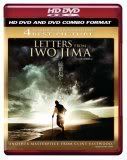
There are two ways to look at this film. One is to take this film as a standalone piece exploring the psyche of the Japanese side of Iwo Jima. The other view on this is to take this film in context and as a companion piece to director Clint Eastwood’s earlier and far inferior film about Iwo Jima, Flags of Our Fathers.
Taking this on its own merits, it is a great film. The story is focused, and we are given a fascinating look into the workings of the Japanese army. As the conditions on the ground begin to crumble as the American forces press on, the natural collapse of morale and discipline are shown in vivid detail. Eastwood does well managing this chaotic storyline of various characters meeting their imminent doom. Buttressed by screenwriter Iris Yamashita’s talent for character, Eastwood creates a stark portrait of men faced with internal and external existential wars to fight.
At the center of this film are two moving performances. The real lead in this piece is Kazunari Ninomiya. Ninomiya’s performance as Saigo, a poor baker who is torn from his love and conscripted into the army, carries the film. He is a critical figure in the film since he is the only character most people will be able to fully connect to. He is somewhat sarcastic and lacking the compliance or commitment to his army’s call. He is a common man yanked into the maelstrom of the Pacific theater. The other main focus of the piece is General Tadamichi Kuribayashi, portrayed by Ken Watanabe (The Last Samurai). Watanabe brings his natural charisma to the role and fills the shoes of a general quite well. He is a thoughtful leader who was educated in America. His leadership mismatches the brutal discipline of his underlings. This rift creates much of the film's early conflicts from which the characters are allowed to express themselves before the fighting begins. Kuribayashi is likewise a pawn and cast into the pit along with his men. The difference with his character is that he knows its coming. He goes into the fight with the Americans fully aware he cannot win.
Eastwood patently moves through subplots and minor characters to keep hammering home the uselessness of the venture of making war. From the upper echelon to the lowest grunt, we are shown that the wages of war are deep and, apparently in Eastwood’s eyes, not worth it. The full impact of the piece is muddled however given the inability for the characters to fully connect. In all of their effort to bring the expanse of the battle to the screen, Eastwood and Yamashita move around too much and too quickly. This battle went on for thirty-five days. Because of the hurried script it seems like the defeat of the Japanese came quick. The Americans land, there’s a couple of scuffles and the Japanese begin killing themselves. There is absolutely no feel to the timeframe involved. This breaks down the drama faced by these men, and saps some of the energy from the piece. When the final climatic moment occurs the lack of perspective comes to bear. While it is certain these men faced hard and violent times, the full scope of their endurance is missing.
Also missing from this piece is an honest look at who these guys were as soldiers and what they were capable of given their worldview. In this film it is the Americans who are shown to be brutish and cruel. While there is one individual Japanese officer who beats his men, the others are shown to be regular guys. While, yes, the Japanese soldiers we're all fully committed to the cause, it is important to remember that many were and that the Japanese army fully capable of horrible atrocities on the level of the Nazis. One has to look at Eastwood’s portrait and ask would this still be acceptable if he was showing us a sympathetic side to German forces? The Axis in WWII were strongly evil forces and Eastwood casually dismisses this in his work.
Overall, taken as a standalone piece this is successful and worth seeing at least once. Eastwood’s tendency to get long winded works in this piece as it is balanced out by Yamashita’s episodic writing. For those who love war film, this is a must see production. For those looking for an escape into comfortable entertainment, this may be a little too heady.
Cautions: Obviously, given that this is a frank look at war, this is a very violent film. Only a moron would go in thinking it would be otherwise.
So then, if you're a moron - be careful.
Related Reviews:
Clint Eastwood movies
Million Dollar Baby (2004)
Flags of Our Fathers (2006)
Other Critic's Reviews:
FilmCritic.com
Dear Cinema
Labels: Clint Eastwood, film, Kazunari Ninomiya, Ken Watanabe, movie review, war, World War II
posted by Michelle Obama's Left Nut at 9:00 AM
0 comment(s)
Share
Yes.


Centering around Kenneth Branagh reading from Josef Goebbels’s personal diaries, this documentary about Hitler’s master propagandist is a fascinating look into Germany’s Nazi Party. We follow the mousy marketer from his initial idealistic impressions of Adolf Hitler to his eventual disillusionment and subsequent murder/suicide in the bunker with his family. For any student of World War II this is a must see film. Be warned there are some gruesome images like an unedited view of Goebbels’ naked and burned corpse.
Reviews:
The Los Angeles Times
Film-Forward
Labels: Adolf Hitler, documentary, film, Josef Goebbels, Kenneth Branagh, movie review, Nazis, World War II
posted by Michelle Obama's Left Nut at 6:00 PM
0 comment(s)
Share
Yes.
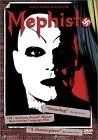

Klaus Maria Brandauer's performance as actor Hendrik Hoefgen who comes to prominence playing Mephistopheles during pre-World War II Germany is powerful and is considered by many to be one of the great screen performances. His performance is striking to be certain, the film itself however, does suffer from being slightly boring. Much of the punch of the film is watching Hoefgen implode under the weight of his own corruption. Even though he only has meager talents, he knows how to play to the Nazis and is given rewards for his efforts. He performs for the rising regime that tramples his colleagues under its heel. The obvious connection here is that he is making a Faustian deal with the devil (Nazis) and he pays with his soul.
There's plenty to recommend this film, a brilliant piece of acting, a strong script and probably the most detailed view of pre-World War II Germany ever put to film. If you're a fan of haughty cinema, you will get your fill here. If you're more into traditional Hollywood fare, you'll be best adised to skip this one.
Be advised that this is a film for adults and it contains adult material - not for the kids to see.
Related Reviews:
Another film about pre-WWII Germany
M (1931)
Other Critic's Reviews:
Roger Ebert
Film Fanatic
Labels: film, German cinema, Klaus Maria Brandauer, movie review, Nazis, World War II
posted by Michelle Obama's Left Nut at 6:00 PM
0 comment(s)
Share

Eh...sure...although, if you don't, you're not missing much.
Short Review: The mediocre raid.
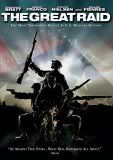

There have been many attempts to express the torture American soldiers endured at the hands of The Japanese during WWII. Like To End All Wars, this film goes out of its way to show the brutality of the Japanese P.O.W. camps in an unfiltered and realistic fashion. This movie also shares another quality with that film, it is painfully slow. We come to get a glimpse at how low humans can drop when personal honor is cherished over personal morality. In this respect, this film is successful. The viewer does come to understand how bad it was for the prisoners. This film fails, however, because beyond this weighty point, there is little else of note.
This film primarily suffers from a clear lack of direction. The structure of the film is built from two stories that are split into three portions. That sounds fun doesn’t it? There is the drama of the prison camp where Major Gibson, played wonderfully by an intense Joseph Fiennes (Luther), tries to control his men while he is slowly dying of malaria. The second portion is dedicated to Margaret (Connie Nielsen (Gladiator), Major Gibson’s unrequited love. She struggles to remain free while operating a local underground movement and smuggling drugs to the P.O.W. camp. This makes up one of the two stories told in this movie. This would have been a successful production if this was the extent of the narrative. There is enough here to make a deeply moving story about the separated couple. Well, this is called The Great Raid not The Great Story About The Separated Couple - there has to be more.
Finally we have the last portion given to the actual raid. This is equally as interesting and potentially striking as the other plot lines in the film. Like the other plots there is enough content in this portion to make its own film. The raid section of the film holds some good content but could have been improved. James Franco and Benjamin Bratt offer strong performances although their roles don’t require much. It would have been better if the film had the time for character development and conflict. As it is, the raid is shoehorned into the film and the story suffers.
The central issue is that the plots have nothing to do with one another until the final act. While Gibson and Margaret go through their internal struggles, the raid is being massed and executed by people who otherwise have nothing to do with them. In a way it is like watching a movie on television and clicking over to another movie on another channel and then coming back. The actual raid seems to impose upon the film about the struggles of the suffering couple.
The piece as a whole is tragically disjointed. With the stories not connecting until the final moments and the complete lack of a centralized villain there is nothing pushing the story forward. We have a series of events that end without meaning, thus, no real reason to watch. I’ve said it before and I’ll say it again, a story requires a central villain. This forces a thrusting conflict against the hero and is used to move the story forward. Conflict demands a question be proposed to the audience; “Will the boy get the girl?” “Will the raid be successful?” “Will the hero get his goal?” Through the conflict that drives the story the storyteller and audience learn the answer to the central question. This answer gives birth to “the moral of the story”. If there isn’t a notable bad guy, there isn’t a notable conflict and thus there isn’t a notable moral to close the story. This is a first class ticket to an unsatisfying ending.
While I can’t tell you to avoid this one, there are some good scenes and some fine acting, I’m certainly not raving about this film. It is lukewarm, proceed with caution.
Related Review:
Another P.O.W. Movie
Rescue Dawn (2006)
Other Critic's Reviews:
The Armchair Critic
CinemaBlend
Labels: film, James Franco, Joseph Fiennes, movie review, war, World War II
posted by Michelle Obama's Left Nut at 5:59 PM
0 comment(s)
Share
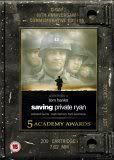

"Greater love has no one than this, that he lay down his life for his friends." John 15:13
Directed by Steven Spielberg, WWII film follows a small group of U.S. Soldiers who are sent into enemy territory to locate Private Ryan and bring him home. In a moment of mercy, the United States military makes the choice to spare the young man to send him back to his mother who has lost all of her other sons to the war. The plot, while it may seem contrived, works well and is played out to full effect by screenwriter Robert Rodat. The scope of the film is smartly kept tight and keeps directly on path. It is common for war films with larger casts to splinter into an episodic collection of narratives that eventually weigh the pieces down (A Bridge Too Far, The Longest Day). Rodat’s script is certainly episodic but it doesn’t break into multiple tangents. Rodat also does well managing his large cast of characters. With ensembles it is easy to lose character development and focus. Rodat weaves in logical and compelling soliloquies for each character to build them up enough for us to care that they are in peril.
This is one of those films where you can go back ten years later and identify brand name actors milling around in the supporting roles. The cast is populated with the likes of Matt Damon, Vin Diesel, Paul Giamatti, Nathan Fillion, Giovanni Ribisi, Jeremy Davies, Adam Goldberg, and Barry Pepper. Each of these men may be household names (or at least faces) now, but when the piece was released they were relative unknowns. At the front and center of the film is Tom Hanks who is very generous with his screen time and allows the young actors plenty room to work. Given that Hanks is one of the only recognizable faces in the piece it means he has to work extra hard to meld into the film. It would be very easy for him to appear as Tom Hanks pretending to be a soldier. An example of how this doesn’t work is Ted Danson’s cameo. Danson is inserted into the piece and sticks out like a sore thumb. He is easily identifiable in the sea of unknown faces and the piece suffers while he’s on screen. The entire time I kept asking “Why is Sam Malone doing in France?” Thankfully, Hanks’ provides a detailed performance that anchors the film and enriches the story.
Spielberg’s is at the top of his game and is playing to his strengths. I’ve always maintained that Spielberg is at his best when he’s killing Nazis (Raiders of the Lost Ark, Schindler’s List). Thanks to Spielberg’s brilliance, this film created a new template for war films. Its look, the way it was filmed, even the sound recording have influenced war films and video games since and will continue to do so for decades to come.

Cautions: This is a war movie therefore there's plenty of brutal violence and grisly death scenes. This film particularly has vibrant battle sequences and deaths that are some of the most striking to ever to be put to screen. There's also plenty of salty language but given the subject matter, it is permissible.
Worldview: This piece moves beyond the simple "war is hell" bromides and delves into the motives of the men on the ground. War is certainly hell but it can also be used to promote goodness in this world. The sacrifice of the men and women involved in our wars are worthy of our respect. This film expressly demands us to make certain we earn the right to accept the sacrifices of the men who have died for our freedom.
Related Reviews:
War movies
The Big Red One (1980)
Paths of Glory (1957)
Other Critic's Reivews:
Crazy4Cinema
ScreenIt!
Labels: Ed Burns, film, Matt Damon, movie review, Steven Spielberg, Tom Hanks, war, World War II
posted by Michelle Obama's Left Nut at 7:00 AM
0 comment(s)
Share
posted by Michelle Obama's Left Nut at 11:38 AM
0 comment(s)
Share





















Good News Film Reviews LLC 2004-2010 - used with permission
Images, video and titles are the property of their respective copyright holders. Good News Film Reviews LLC claims no ownership or connection to them.
The views expressed on this site are not the opinion of any advertiser or external entity.
While we take care to only link to responsible entities, Good News Film Reviews LLC takes no responsibility for the content linked from this site. There are sharks in the waters. Surf at your own risk.
The Template is generated via PsycHo and is Licensed.