

No.
Short Review: I kept hoping this was the tape from The Ring so that damp little girl would pop out of my TV and put me out of my misery.
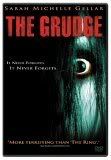

If you saw The Ring (staring the impeccable Brian Cox of Super Troopers fame,) you have seen The Grudge – except the lighting is better. This opus, like The Ring, is actually a remake of a Japanese horror film. That means this mindless crud is infecting two cultures at the same time. Moreover, they released The Grudge II (I believe it will be called The Grudge Takes Manhattan.) And you thought the invasion of Pearl Harbor was reason enough to go to war.
The interesting thing about this film is that it goes out of its way to make certain we know the victims are wholly innocent. Morality has nothing to do with one's fate in this film. Much like The Ring, each character happens across an unstoppable evil that consumes them for its own private pleasure. There is nothing intentional to get on the death list and there is nothing one can do to stop it. Actually, in The Ring you could stop it by propagating the evil. It’s as if the movie wants us to believe we’re all just flies trapped in a large web. The spider will get you sooner or later.
What's fun is that? That the thing about fatalists, they're so darn boring. Everything is always so gloom and doom.
The film isn't well done. The Ring was cheaper looking but at least had more detail and depth. This film is flat. The writing is still and wanting. There is not a serious moment of suspense in the whole piece. You know up front that everyone is going to die, so there is no shock when everyone eventually bites the dust. Furthermore, the only reveal is the crime that brings the curse into being. The problem is the situation that gives birth to the curse is not compelling. I've see worse situations in the morning paper every week. The reason for the curse should be a huge payoff and it isn't even chump change.
Looking to the acting: Sarah Michelle Gellar should stick to the facial astringent commercials. Leave the acting to the adults. I’ve seen mimes with more subtlety. Bill Pullman is apparently in a good portion of the film, I don’t quite remember him being in there. I do remember a large chunk of driftwood lumbering about muttering lines, but no Pullman.
Overall, if you’re over thirteen and can read books without pictures you can skip this one. If you want scary go watch MTV for an hour – if that doesn’t get you begging for the mercy of our Lord, nothing will.
Related Reviews:
Horror movies
The Ruins (2008)
Gwoemul "The Host" (2006)
Other Critic's Reviews:
Beyond Hollywood
ReelViews

Labels: Bill Pullman, film, horror, Japanese cinema, movie review, remake, Sarah Michelle Gellar
posted by Michelle Obama's Left Nut at 8:00 AM
0 comment(s)


Share
Short Review: A horror movie without the horror - and that's actually a good thing.
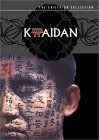

This is one of my favorite films. Consisting of four Japanese ghost stories with fantastic set work and mouth-dropping cinematography, this film is a rare treat. This is a different kind of horror movie. The four short films are less about the characters being haunted by ghosts than by their own pain, guilt and burdens. This is less a series of horror stories and more of a samurai Twilight Zone.
If you are a fan of The Ring or The Grudge, and you don’t mind subtitles, this film may work for you. This is the grandfather of these films. As with Ringu (the original Japanese version of The Ring) the stories all slowly build to satisfying conclusions. This differs to most horror films made in the West today, which are in a hurry to get to the gore and are almost never satisfying.
The four stories are as follows:
This is a simple story about a poor samurai who abandons his young bride and lives to regret it. The first of the films shown, this story is a perfect set up for the remainder of the movie. The dark, brooding story is presented in equally morose scene work and lighting. The story is simple and offers an easy introduction to the strange worlds the film offers. If you’re unsure about watching a foreign film, I would suggest trying out this first story to see if the film will match your tastes. You must remember however, the point is not to be scared – these films are far from frightening. It is about character and story not cheap thrills.
This film shows the visual brilliance of Yoshio Miyajima’s cinematography. Even if you’re not thrilled by the narrative content of the film, the scenery may just keep you watching. This section tells the tale of a poor woodcutter who survives a run-in with a vicious demon in the woods. The woodcutter promises the demon he will not tell a soul about their encounter in exchange for his life. Years later we find out what happens when the woodcutter breaks his oath.
This portion of the film builds on the ground laid in The Black Hair. Where The Black Hair is soaked in darkness and brooding scenery, this short film is glowing with the shine of snow and the haunting glares of eyes literally looking down from the sky.
The eyes in the sky I mention may indicate to you that this is a visually odd movie – it is. The films are clearly shot on sound stages. There are obvious backdrops and very theatrical lighting. It is amazing but the backdrops and intruding lighting and scenery actually work to improve the film. The fake sets offer a strangeness and falseness to the worlds that only serve to set the character’s lives further off kilter.
This is the reason you'd watch the movie. From the absolutely enthralling battle sequences to the creepy ghost story that follows, this piece carries the whole film.
The battle sequence may not be for everyone. Again, we have a scene presented on a sound stage in front of easily identifiable backdrops. The battle is surreal and dreamlike rather than realistic. In a stroke of genius, the narrated battle sequences are inter-cut with images from paintings of battles. The ancient paintings support the strange visuals of the battle (the disjointed colors, the backdrop, the sharp angles, etc.) It is as if you’re watching a sort of living painting of a battle long since over.
The remainder of the film centers on Hoichi, a blind monk who is lured by the lost souls of the ancient battle to their hidden temple. At the temple Hoichi plays songs to the souls of the great war. Hoichi is seduced by the lost soul’s flattery and respect but at what cost to his life?
I simply cannot offer enough praise of this portion of the film. This part of the film blew me away with its story and its design. You can scoff at the rest of this film, but this section will command you attention. This is simply brilliant film making and this section will show why this film won the Jury Special Prize at 1965 Cannes Film Festival.
This is the weakest of the four stories. This simple little ditty is about a man keeps seeing the image of a smiling ghost looking back at him in his drinking cups. Soon the smiling ghost and his cohorts descend upon the haunted man.
This section of the film is disappointing. Like the other portions of the film it is a joy to watch for its look and the great acting, but the story itself is lacking.
This classic film is a pleasure to watch if you have an ounce of film geek in your veins. If you’re one who doesn’t get into foreign films (foreign in this case meaning non-Western based) and/or hates subtitles you’re best just moving on. Personally, this is one of the better films I’ve seen in months. I would place this in one of the better films ever made.
Related Reviews:
Japanese films
Samurai 1: Musashi Miyamoto (1954)
Sword of Doom (1966)
Other Critic's Reviews:
Combustible Celluloid
The Criterion Contraption
Labels: film, ghosts, horror, Japanese cinema, movie review
posted by Michelle Obama's Left Nut at 8:00 AM
0 comment(s)
Share
Screenwriters: Hitoshi Matsumoto and Mitsuyoshi Takasu
Director: Hitoshi Matsumoto
Actors: Hitoshi Matsumoto, Riki Takeuchi and Ua

Labels: film, Hitoshi Matsumoto, Japanese cinema, movie trailer
posted by Michelle Obama's Left Nut at 12:00 PM
2 comment(s)
Share
No.
A more enjoyable movie perhaps.
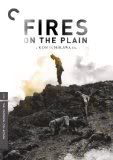

Kon Ichikawa’s (Ten Nights of Dream) film about Japanese soldiers suffering in the last days of the Battle of Leyte is a stark rough film. It is well-made and a fascinating watch but even with a brief running time of 110 minutes it feels like a very long movie. Want to be made to feel your lot in life ain’t so bad? Check this film out. You’ll have a hard time complaining about things for a while afterward.
If you’re into war dramas, this is a good pick. If you’re just looking for something to watch, this may be a bit too involved.
Related Reviews:
World War II movies
To End All Wars (2001)
Letters From Iwo Jima (2006)
Other Critic’s Reviews:
DVD Verdict
Cinema Strikes Back
Labels: film, Japanese cinema, movie review, war, World War II
posted by Michelle Obama's Left Nut at 5:00 PM
0 comment(s)
Share

Director: Hideo Nakata (Kaidan)
Actors: Nanako Matsushima (Ringu 2), Miki Nakantani (Happily Ever After) and Hiroyuki Sanada (Speed Racer)
Labels: film, horror, Japanese cinema, movie trailer
posted by Michelle Obama's Left Nut at 8:00 PM
0 comment(s)
Share
Yes.
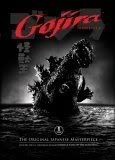

A great, classic monster movie. Forget the silly battle royale follow ups and stick with this wonderful original film. What is better than Godzilla smashing a part cheap looking cityscapes while bellowing that terrific growl? This film is campy, but in a good way. It is, at least to me, as enjoyable as an adult as it was when I was a child. Good stuff.
Related Reviews:
Monster movies
Cloverfield (2007)
Gwoemul "The Host" (2006)
Other Critic's Reviews:
Beyond Hollywood
The Austin Chronicles
Labels: film, Japanese cinema, monster, movie review
posted by Michelle Obama's Left Nut at 6:00 PM
0 comment(s)
Share
Japan has an incredible cinematic history with a vibrant list of brilliant actors, writers and directors that stands up to the American and European masters. The truth be told however, the names of directors like Akira Kurosawa (Rashomon), Hiroshi Inagaki (Miyamoto Musashi), and Masaki Kobayashi (Kaidan) may thrill pathetic, doughy-gutted film geeks but most Americans wouldn’t know them from Adam. When most Americans think of Japanese film they think of Godzilla (and if they’re really astute they may toss in Mothra for good measure).
The influx Ishirô Honda’s Gojira "Godzilla" and other classic monster movies beginning in the 1950’s had an impact on American culture and cinema. We are currently in the middle of another wave of Japanese influence on our cinema – with the same amount of thought given to the pieces that are being thrown our way.
This time, instead of sitting through screeching giant lizards knocking down model cities we have a damp little girl climbing out of a television.
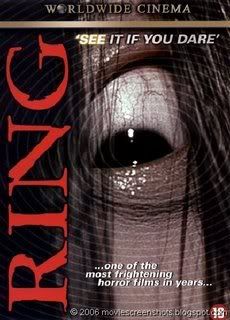 Today Japanese horror is really represented by two names: Hideo Nakata and Takashi Shimizu (some will argue I should include Takashi Miike). Nakata and Shimizu are probably most recognizable to American audiences, not by their own work but by the derivative American works from the past few years. Nakata’s movies Ringu and Honogurai mizu no soko kara and Shimizu’s Ju-on and Ju-on 2 have inspired a generation of Western horror filmmakers. Haven’t heard of these films? Sure you have, The Ring (Ringu), Dark Water (Honogurai mizu no soko kara – you know that one with Jennifer Connelly you didn’t see because it looked stupid (it was)) and The Grudge (Ju-on). These films whether in their Japanese or American versions all have something in common – nihilism.
Nihilism is essentially the logical byproduct of existential thought and can be watered down to this simple definition: everything means nothing and therefore everything has no worth – including you and all of the petty thoughts in your meaningless head. This is the stuff of those loser white suburban kids with died black hair lurking around the mall food court. Each of the films mentioned above offers a new look at horror. The films follow the same predator concept as Friday the 13th and Halloween but there’s something new. In these films there is an absolute – and I mean complete – lack of moral structure. They show a world completely devoid of God. This is really the reason why these films are so effective.
In these films the heroines are threatened by the cursed ghost of a child. Following the traditional aspects of Japanese ghost stories these movies bring the dead into real life. Instead of following normal Japanese ancestral belief where the dead protect the living, these ghosts do quite the opposite. Each of the works has the characters entering into a world where they are infected by the curse at play and they are unable to detach themselves. The curse supersedes God and therefore hope. Once caught in the web, the characters hopelessly fall to the brutal death that awaits them. In Ringu the simple act of watching a videotape condemns its viewers to a horrifying death. In Ju-on, entering a cursed home also leads to death. There is no conceivable way out, there is no escape – you are going to die, its going to hurt and there’s nothing you can do about it. To be fair, in The Ring, for example, the heroine does escape from her fate but at a cost.
Fun stuff eh? Why is this important?
American and European (and if you like Takashi Miike – some Japanese) films are busying themselves with puking violent bile into the mainstream of our culture and making torture just that more palatable to the masses. These Japanese originals and their remakes have been bringing hopelessness to their young audiences. In films like Nightmare on Elm Street, American Werewolf in London or The Exorcist there is a strand of Godliness than can be found in the narratives (no really, its there – its buried under gore and ugliness but it is indeed there.) There is hope, there is structure to existence and although evil is having its day, good still exists. In The Ring and The Grudge movies neither good nor evil exists. The dark pit of nothing is all that faces the characters. At the end of the film, where the moral of the story resides (and it’s called the MORAL of the story for a reason –hey look, I found another post topic) we find the resolution doesn’t provide any moral structure. The characters discover their trials have been resulted in getting their lives back but the triumph of good over evil (or vice-versa) hasn’t occurred. Ultimately, the lives saved aren’t deserving of the effort since the proof of the narrative is that everything is worthless. It is the Ying-Yang view of the world – when good and evil are equal they sum up to nothing.
In some ways the projection of nihilism is as coarse on the human heart as the visual impact of extreme violence. Films are modern myths, they are stories and they are used to teach us about our lives and our universe. When our stories teach that the universe is without design, without purpose and life itself is a meaningless effort it only serves to harm the audience. Projecting a world without God presents the lowest of human invention. The human mind that denies God is the same that accepts anything else in exchange. How can a person who denounces the worst of pornography also believe we live in a world uncontrolled by the Almighty? Remove God – you remove hope. Without God, why not indulge in torture porn or anything else that ignites your fancy? In a nihilistic universe there is no reason for morality and no logical reason for offense.
Horror movies are fun. I don’t deny that and I argue they have their place in society. Horror however doesn’t operate under different set of rules. All film, all stories are, in effect, instructional manuals on how to get by in this world. When films give bad direction they should be called out for what they are – just plain wrong.
1 Timothy 4:7 Have nothing to do with godless myths and old wives' tales; rather, train yourself to be godly.
Categories: film, movie review, Japanese cinema, horror, Hideo Nakata, Takashi Shimizu
Labels: commentary, film, Hideo Nakata, horror, Japanese cinema, Takashi Shimizu
posted by Michelle Obama's Left Nut at 10:27 AM
0 comment(s)
Share





















Good News Film Reviews LLC 2004-2010 - used with permission
Images, video and titles are the property of their respective copyright holders. Good News Film Reviews LLC claims no ownership or connection to them.
The views expressed on this site are not the opinion of any advertiser or external entity.
While we take care to only link to responsible entities, Good News Film Reviews LLC takes no responsibility for the content linked from this site. There are sharks in the waters. Surf at your own risk.
The Template is generated via PsycHo and is Licensed.