

HT to Robert M. Lindsey from Retro Hound for pointing me to the post.
“Christian film” is far better now than it was just a few years ago. Then again, that is a little like saying that dry heaving is better than puking. Yes, you’re doing better, but you’re still left queasy and the end material results are still unpleasant. After thirty years of claiming to be on the verge of breaking into the mainstream, “Christian film” is still synonymous with substandard production values, heavy-handed dialog and childish plots. This is not to say there’s a lack of good movies to be seen. The issue is that we don’t need good movies.
We need great movies.
To be blunt, if a film purports to be a “Christian film” it supposedly is done for the glory of God. You don’t glorify God by making lousy movies.
We need great movies.
Like I said, things are getting better. Production values are indeed increasing and there are some serious shops out there trying their best. Within the past ten years we’ve gone from embarrassing messes like Left Behind, The Omega Code, and Joshua to more impressive works like The Nativity Story, Luther, Beyond the Gates of Splendor, Saints and Soldiers, and Facing the Giants. There’s also that little ditty Mel made called Passion of the Christ. As the industry has come to see the financial and cultural muscle of Christians they have worked to market products our way. Those directly in our ranks have likewise stepped up and tried to cater to our tastes. This has lead to more investors, more money and better looking product. Of course you can have the nicest lighting in the world but if you’re still filming a pedantic script with summer-stock reject actors your “better looking product” is simply lipstick on a pig. The product still stinks.
As I said, the genre is improving but must do better. I believe the first step in improving “Christian film” is to stop having “Christian films” and simply have Christians making films. I believe labeling our works, or allowing others to label our works, is our first mistake. When we label our works as being “Christian”, the intention is usually to announce that the piece is “made for Christians” and presumptively is made to glorify Christ. These are commendable ideals and should be the goals of any committed Christian when making art. We run into a few problems when we use the “Christian film” label however:
1. The label is just that, a label. It allows Christian artists to be pigeonholed by people in the industry. Those in the industry can subscribe any negative ideas they’d like to a label “it’s one of those “Christian films.” The label can also relegate the product to a particular distribution stream, which isn’t always a great match.
2. The audience can pigeonhole as well. Christian audiences have come to expect very particular things. The rules don’t tend to stress Biblical truth, moral clarity and sound technical achievement but rather a watered down view of the world. Violence is almost non-existent, salty language never happens, unmarried couples never struggle with lust, evil isn’t really all that evil (because showing various forms of sin isn’t allowed) and in the end everyone is converted quite nicely with no residual issues. Life is reduced to an after school special with praying thrown in for good measure.
For me, this is where the aforementioned dry-heaving usually comes in.
The “Christian” label sets the filmmaker up with a number of hindering rules that are meant to satisfy the most sensitive members of the audience that hijacks the proper development of a story.
3. When a non-Christian is presented with a “Christian film” their reaction is going to be far more defensive than a regular movie. No one wants to go to the movies to be proselytized and most people won't give the time of day to a film that promises to preach.
4. Which branch of Christendom gets the corner on the label “Christian film"? Catholics make movies, as do the Evangelicals and Mormons. Who gets to claim their films are “Christian”? I’m certain most Catholics would be made uncomfortable at a film like Luther while most Evangelicals would bristle at many of the films stemming from the Mormons.
5. When we remove ourselves by stamping our cinema with the Christian label we are leaving the wider culture to be run by whoever comes around. We retreat into our safe little subculture and then act surprised when the Pagan turn Hollywood into Nineveh. We handed over the steering wheel to the heathens and relegated ourselves to whining in the backseat as they drive the culture straight to hell. Our place is at the FRONT of culture not running along the side of it hoping we’ll get noticed.
As you can see, the label brings up a number of serious issues – issues that are not necessary. Christians should drop the pretenses and get to work. We have retreated into this subculture to protect ourselves from the wider one. By relegating our work to be “Christian” and defining that word with the most simplistic, nearly childish worldviews, we extract ourselves from the wider population. We need to be in the mix.
Christian film’s has a long history of being relegated to the basements of churches. The films were made by Christians for Christians to be seen by Christians in the comfort of their churches. We have spent all of our efforts preaching to the choir and then exclaiming that our work was done. If Christians are to make movies they should be with the intent of distributing the teachings of God to everyone not just those in the light. We are to speak the Good News to the world and we can’t do that if we’re too busy entertaining ourselves. Redefining the brand of “Christian film” is the first step in the process of opening up to the outside world.
I am not calling for a lowering of our moral standards. I am not saying we should be ashamed of being Christian. Quite the contrary, we should be open about our faith. I do believe it is important for the filmmaker to be identified as Christian than his work be labeled as such. If a Christian makes a film and if that Christian speaks to Biblical truth and morality – he is making a Christian film. The labeling is there for show and its not really helping anyone. A pagan can make a movie and label it as Christian. The product itself shouldn’t be where the labeling resides. The artist is the one who is the Christian. His fruit will bear His name.
I have no interest in seeing any “Christian film.” What I want to see films made by Christians. There is a difference in my mind. The former is made to satisfy the demands of Christian culture. The latter answers to Christ.

Labels: Christian culture, Christian film, commentary, film, miscellaneous
posted by Michelle Obama's Left Nut at 4:40 PM
1 comment(s)


Share
Coincidence is God's way of being obvious. When things come together in life, I pay attention. I honestly think this is one of the ways the Lord speaks to us. This is probably because of my ability to be easily distracted. When I pray, I plead with the Lord to be as blatant as possible. I hope for something along of the line of Him dropping an anvil from sky with a note tied to it. Coincidence is His anvil.
For those of you who read my reviews on a regular basis, my harsh criticisms of “Christian film” are well known. I’ve maintained for years that as a rule the Christian film market is packed with cheesy, poorly made and ironically uninspiring products. A majority of the films are all intention and no execution. They likewise fail to reach beyond the church walls, keeping their focus firmly on preaching to the choir. I believe we need to move past just talking to each other and open our efforts up to include those not saved. We need to look at seed planting. We should work to lift up this declining culture and spread the Word through film. Despite all of my complaining and sometimes attacking of my fellow Christians, coincidences in my life have lead me to realize I have lost sight of some things.
My biggest concern with Fireproof was its unflinching Christianity. This may seem like an odd thing for a Christian to be repelled by. This is a “Christian film” after all. The display of Christian thought and action in itself hasn’t been my concern. Where I wobble is how it is received by non-Christians. There is a certain level of embarrassment when dealing with non-Christians in light of films such as this, not because of any shame of I have towards Christ, but because of the awkward disconnect the non-Christian has with the cultural norms we hold within the church.
Secularists have been raised to have a caricature in their minds when they think of Christians. To many we’re a bunch of doe-eyed morons who believe in a fairytale. For many people raised in our culture, the idea that the Christian faith is steeped in firm academic traditions and holds a logical foundation is preposterous. It seems films like this one which delivers its agenda so plainly risk promoting the misconception others have of us. Film is one of the greatest tools of communication ever devised. It instructs the population and has the ability to direct the course of our civilization. When I see film, I see a tool to be used to spread the Gospel to all people. Up to this point, a film that spoke directly to the converted annoyed me. It always seemed to me like holding a play, but not letting the general public in to see the stage. What’s the point? Along with some other things, my interview with Stephen Kendrick has softened my criticism.
Stephen Kendrick was a sharp and thoughtful interviewee. Unfortunately, the phone system I had used to conduct the interview crashed, so I do not have his exact words. I will paraphrase, I hope he doesn’t mind. I had asked him if he had wanted to direct the film specifically at Christians and if non-Christians could get something out of this film? His response was unapologetic. He said that he and his brother were called by God to make films for Christians. Their focus was directly towards that group. The film itself was intended to call us faithful to renew our marriages. If we hope to inspire and draw others to the church, we need to shore up our own issues. Christians lead by example and his intent was to help us heal our relationships and stand more in alignment with Biblical teaching. When I pressed him on the overt messages of the film pushing away potential secular audiences he responded that “the Narnia and Lord of the Rings films are wonderful, great films, but I don’t know of anyone coming to Christ after seeing them.” He has a good point and it has struck a chord with me. Buttressed by a post by Skip Press over at Big Hollywood, and conversations I’ve been finding myself in lately. I've been urged to reconsider my criticisms of Christian film.
I’ve been comfortable pointing at the overt Christian displays of a film like Fireproof and dismissing them as obtuse. A number of my readers have agreed with my attitude. It has been my contention that we need to speak to the masses and not as if we were in mass. I’ve been wrong on this, or at least I’ve been wrong with the degree at which I’ve attacked this brand of filmmaking. While subtlety is good in some venues, being open is good in others. If the message is so buried under symbolism and narrative what is the point? We need films that plant seeds to be certain. A film such as Magnolia for example is not Christian at all but John C. Reilly’s Jim Kurring in the film still stands as one of the best portrayals of a Christian man I’ve seen put to film. We also need films that speak in declarative tones. Christ is the way, He is your Savior - no frills, there it is. We need films that do speak to the converted. We need films that call us to account and reaffirm the Word in us. To always have films push Christian thought while avoiding Christ Himself doesn’t work. He is the author of everything and avoiding the topic of his role is unhealthy. Employing the arts and sciences while ignoring the governing hand of God is like completing a jigsaw puzzle cardboard side up. You can figure out how the pieces fit together but you're missing the beauty and function of the design. Christ is the answer and He belongs in our art. Seed planting is a worthy goal but we also need to keep Him upfront. In my zeal to urge Christian artists to speak to broader audiences, I have forgotten the simple fact that they need to speak to us as well.
On the subject of coincidence, I asked Mr. Kendrick how he and his brother found distribution for Facing the Giants. Pooling funds and talent to make a movie is one thing, but finding distribution is whole other beast. Securing a favorable distribution deal is the make or break part of any production. He told me they were just local film makers looking to obtain the rights for a song they wished to use in the soundtrack. They contacted the music publisher to negotiate these rights. As it turns out, the publisher just so happened to have been bought up by Sony. Sony just opened up a faith film branch. Sony put out word they were looking for Christian films and the tape of Facing the Giants was sent on and it goes from there. In addition, the controversy of the film getting a PG-Rating from the MPAA increased the visibility of the film upon release. Clearly, in particular when you view the meteoric rise of these film makers, the Lord is working through these men and their crew.
* - Research accounting in the film industry and you’ll understand why I couched this sentence.
Labels: Christian film, commentary
posted by Michelle Obama's Left Nut at 12:00 PM
1 comment(s)
Share
We need great movies.
To be blunt, if a film purports to be a “Christian film” it supposedly is done for the glory of God. You don’t glorify God by making lousy movies.
We need great movies.
Like I said, things are getting better. Production values are indeed increasing and there are some serious shops out there trying their best. Within the past ten years we’ve gone from embarrassing messes like Left Behind, The Omega Code, and Joshua to more impressive works like The Nativity Story, Luther, Beyond the Gates of Splendor, Saints and Soldiers, and Facing the Giants. Lest we forget, there’s also that little ditty Mel made called Passion of the Christ. As the industry has come to see the financial and cultural muscle of Christians they have worked to market products our way. Those directly in our ranks have likewise stepped up and tried to cater to our tastes. This has lead to more investors, more money and better looking product. Of course you can have the nicest lighting in the world but if you’re still filming a pedantic script with summer-stock reject actors your “better look product” is simply lipstick on a pig. The product still stinks.
As I said, the genre is improving but must do better. I believe the first step in improving “Christian film” is to stop having “Christian films” and simply have Christians making films. I believe labeling our works, or allowing others to label our works, is our first mistake. When we label our works as being “Christian”, the intention is usually to announce that the piece is “made for Christians” and presumptively is made to glorify Christ. These are fine – no commendable ideals and should be the goals of any committed Christian when making art. We run into a few problems when we use the “Christian film” label however:
1. The label is just that, a label. It allows Christian artists to be pigeonholed by both people in the industry. Those in the industry can subscribe any negative ideas they’d like to a label “it’s one of those “Christian” films.” The label can also relegate the product to a particular distribution stream, which isn’t always a great match.
2. The audience can do the pigeonholing as well. Christian audiences have come to expect very particular things. The rules don’t’ tend to stress Biblical truth, moral clarity and sound technical achievement but rather a watered down view of the world. Violence is almost non-existent, salty language never happens, unmarried couples never struggle with lust, evil isn’t really all that evil (because showing various forms of sin isn’t allowed) and in the end everyone is converted quite nicely with no residual issues. Life is reduced to an after school special with praying thrown in for good measure.
For me, this is where the aforementioned dry-heaving usually comes in.
The “Christian” label sets the filmmaker up with a number of hindering rules that are meant to satisfy the most sensitive members of the audience and more times than not hijacks the proper development of a story.
3. When a non-Christian is presented with a “Christian film” their reaction is going to be far more defensive than a regular ol’ movie. No one wants to go to the movies to be preached at. As it turns out, looking at the box office receipts, they don't go.
4. Which branch of Christendom gets the corner on the label “Christian film”? Catholics make movies, as do the Evangelicals and Mormons. Who gets to claim their films are “Christian”? I’m certain most Catholics would be made uncomfortable at a film like Luther while most Evangelicals would bristle at many of the films stemming from the LDS.
5. When we remove ourselves by stamping our cinema with the Christian label we are leaving the wider culture to be run by whoever comes around. We retreat into our safe little subculture and then act surprised when the Pagan turn Hollywood into Nineveh. We handed over the steering wheel to the heathens and relegated ourselves to whining in the backseat as they drive the culture straight to hell. Our place is at the FRONT of culture not running along the side of it hoping we’ll get noticed.
As you can see, the label brings up a number of serious issues – issues that are not necessary. Christians should drop the label, drop the pretenses and get to work. We have retreated into this subculture to protect ourselves from the wider one. By relegating our work to be “Christian” we extract ourselves from the wider population. We need to be in the mix.
Christian film’s has a long history of being relegated to the basements of churches. The films were made by Christians for Christians to be seen by Christians in the comfort of their churches. We have spent all of our efforts preaching to the choir and then exclaiming that our work was done. If Christians are to make movies they should be with the intent of distributing the teachings of God to everyone not just those in the light. We are to speak the Good News to the world and we can’t do that if we’re too busy entertaining ourselves. Removing the unneeded label of “Christian film” from our works is the first step in the process of opening up to the outside world.
I am not calling for a lowering of our moral standards. I am not saying we should be ashamed of being Christian. Quite the contrary, we should be open about our faith. It is important for the filmmaker to be identified as Christian than his work be labeled as such. If a Christian makes a film, and if that Christian speaks to Biblical truth and morality – he is making a Christian film. The labeling is there for show and its not helping anyone. A pagan can make a movie and label it as Christian. The product itself shouldn’t be where the labeling resides. The artist is the one who is the Christian. His fruit will bear His name.
I have no interest anymore in seeing “Christian film” What I want to see are films made by Christians. There is a difference in my mind. The former is made to satisfy the demands of Christian culture. The latter answers to Christ.
Labels: Christian culture, Christian film, commentary, film
posted by Michelle Obama's Left Nut at 4:00 PM
2 comment(s)
Share
As a Christian I loath attacks on the faith (at least unfounded ones). Usually these attacks, such as The Da Vinci Code tend to be tedious affairs but they still get a number of Christians all whipped up. As a general rule Christians react to potential attacks on the faith with a loud whining sound. Even when the perceived attack is actually not intended to be harmful (see the reactions to Evan Almighty) Christians can still become a gaggle huffy sourpusses.
There is a great article on The Golden Compass over at FamilyLife (click the link to read). They speak with Looking Closer Journal's Jeffrey Overstreet about the books and the film and they provide a reasonable approach for Christians.
Labels: anti-Christian, Christian culture, commentary, film, The Golden Compass
posted by Michelle Obama's Left Nut at 10:10 PM
1 comment(s)
Share
In the article, Fox Faith: Is It Working? Winter admits the error of going with the Fox Faith brand:
Another producer, Ralph Winter, who helmed Fox Faith flicks like Thr3e, The Visitation, and Hangman's Curse, said he will take some of his future projects to Lionsgate for distribution—starting with House, which will release sometime in 2008.I come down hard on Fox Faith and the genre of "Christian" film precisely because of the obvious consequences of relegating works to these pigeonholes. Moving away from tagging ourselves with exclusive labels can only improve our box office and distribution in the future.
Winter clarified that he has nothing against Fox Faith; indeed, he was one of its original founders, and he praises the brand to this day. But he says the smaller films he produces—typically spiritual thrillers—aren't a good fit for Fox Faith.
"Our movies are more edgy and are not necessarily served by that label," Winter said, citing films derived from books by Frank Peretti and Ted Dekker. "We are working with stories that have a wider appeal than just Christians. Producing a spiritual thriller that is limited to Christians limits our general market appeal. It gets 'labeled.' Audiences that see a Fox Faith label have trouble seeing our spiritual thrillers as being legitimate—they feel it might be watered down and reject the movie without giving it a chance."
Winter said that's what happened with Thr3e, which earned $1 million at the box office in January. "In hindsight, we believe Thr3e would have done better without that label. To get to the audience that enjoys these kinds of thrillers, the Fox Faith label was an oxymoron. It made our movie seem 'soft.' How could this be a thriller if it is Fox Faith?"
HT to producer Phil Cooke of Cooke Pictures. Cooke's site is fantastic and a great resource. Check it out here.
Labels: Christian culture, Christian film, commentary, links
posted by Michelle Obama's Left Nut at 2:42 PM
0 comment(s)
Share
Eldridge is quoted as saying:
"I told the Fox people this movie was going to resonate with the Christian audience and that's fine with me, because I am a Christian," said Eldridge. "But I was worried that this movie would get tagged as a little “Christian” movie, like that was some kind of Good Housekeeping seal for the Christian marketplace. ...”
The film does have Christian messages and direct references to Christ himself, but doesn’t slather its narrative with the divine. Both Mattingly and Eldridge clearly see this label as a hindrance to getting an otherwise worthy piece out to the general public (and to higher receipts.)
"I think it's obvious that this is what happened and that caused some people to distance themselves from this movie. There was no need for that to happen."
The film, which is quite good, did marginal business on DVD and almost nothing at the box office (a tad over $3 million domestically.) This is probably due to a limited release in theaters and a meek marketing campaign to promote the product. Most people probably haven’t heard of the film and that is why they didn’t see it. It is likely that the distribution ran into some roadblocks when the film went down the same old FoxFaith marketing stream that flows mostly to churches and other heavenly minded groups. Being a FoxFaith product tends to mark a work as a “Christian” film and that limits its ability to be distributed to larger audiences.
Click to view The Ultimate Gift trailer
In reaction to this piece, Dr. Ted Bahr wrote a retort on September 19th titled Mean-Spirited Attacks on Faith-Filled Movies on WorldNetDaily.com. In this reaction, Dr. Bahr is indignant and refuses the notion that the Christian label is an issue. He further sees the article as an attack on the faith. He argues that faith-based films are solid box office winners. Pointing to last year’s Facing the Giants as an example (the film grossed over $10 Million with a budget of only $100,000). He also includes the perennial favorites Passion of the Christ and The Chronicles of Narnia as additional examples.
Where Dr. Bahr errs is in his failure to acknowledge the inherent limitations of a “Christian” label on a product. His argument is solidly one-sided with Christian films seeming like a no-brainer for potential marketers. His view is that the lack of business The Ultimate Gift received was an issue of bad marketing (or bad filmmaking) not a damaging label.
“In every genre, there are winners and losers. Some children's films bomb at the box office. Some romances bomb. Many horror movies bomb. Many movies about African-Americans fail. But, they don't bomb just because of their genre or their faith. They bomb because of their lack of entertainment value and/or their limited marketing. Thus, poor marketing and a lackluster release in a limited number of theaters (which is another skill of the marketing craft) can doom a smaller movie, or even a big one.”
The problem Dr. Bahr’s argument is that the marketing and the labeling of the film as “Christian” are inclusive of one another. A film marked as “Christian” has the inherent issue of appearing to be created with only one group in mind. Horror films don’t purport to speak to any specific group while denying others entry simply by their creation. Anyone can approach a horror film and enjoy it. This is the same for “African-American films” or romances. When a film is labeled “Christian” it is saying that the piece is intended for Christian audiences and contains an overt and probably evangelistic message. This gives a sense of exclusivity – and for good reason. The label essentially wards off atheists or folks of other faiths (or milquetoast Christians for that matter).
The biggest hindrance for a film labeled as “Christian” is every other Christian film ever made. We can cherish Passion of the Christ all we want, but we still have to contend with The Omega Code, Left Behind and The Last Sin Eater. “Christian” films stink. They stink badly – they are a rotten egg inside of Michael Moore’s sweat sock, buried in a shallow hole under a cage filled with monkeys who have contracted dysentery kind of stinky. After years of “Christian” films being low-budget, sanctimonious and poorly executed disasters, people have learned to be leery. The best marketing campaign a “Christian” film can have is to put a message on the movie poster that says “This is the one that doesn’t reek.”
Dr. Bahr cites a number of films from 2006 (The Pursuit of Happyness, Superman Returns and Cars) as being examples that prove that films about faith and values are winners at the box office (we'll ignore that Superman Returns promotes Superman siring a bastard child.) This is a misdirection of sorts. None of these films were released as “Christian” films but rather just films that contained some Biblical themes. If anything, the citing of these films works against the concept of offering Christian labeled films. They managed to successfully deliver Biblical themes without the troubling label. This is the model Christian filmmakers should be following.
As much as I respect Dr. Bahr, I believe his response to Mattingly’s article is littered with errors and misstatements. It is important for us to protest when our brothers and sisters are attacked, but it is just as important for us to acknowledge when they are being criticized properly.
Categories: film, Christian film, Ted Bahr
Labels: Christian culture, Christian film, commentary, links
posted by Michelle Obama's Left Nut at 6:06 PM
0 comment(s)
Share
Japan has an incredible cinematic history with a vibrant list of brilliant actors, writers and directors that stands up to the American and European masters. The truth be told however, the names of directors like Akira Kurosawa (Rashomon), Hiroshi Inagaki (Miyamoto Musashi), and Masaki Kobayashi (Kaidan) may thrill pathetic, doughy-gutted film geeks but most Americans wouldn’t know them from Adam. When most Americans think of Japanese film they think of Godzilla (and if they’re really astute they may toss in Mothra for good measure).
The influx Ishirô Honda’s Gojira "Godzilla" and other classic monster movies beginning in the 1950’s had an impact on American culture and cinema. We are currently in the middle of another wave of Japanese influence on our cinema – with the same amount of thought given to the pieces that are being thrown our way.
This time, instead of sitting through screeching giant lizards knocking down model cities we have a damp little girl climbing out of a television.
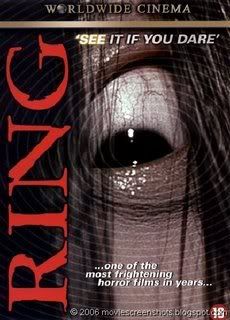 Today Japanese horror is really represented by two names: Hideo Nakata and Takashi Shimizu (some will argue I should include Takashi Miike). Nakata and Shimizu are probably most recognizable to American audiences, not by their own work but by the derivative American works from the past few years. Nakata’s movies Ringu and Honogurai mizu no soko kara and Shimizu’s Ju-on and Ju-on 2 have inspired a generation of Western horror filmmakers. Haven’t heard of these films? Sure you have, The Ring (Ringu), Dark Water (Honogurai mizu no soko kara – you know that one with Jennifer Connelly you didn’t see because it looked stupid (it was)) and The Grudge (Ju-on). These films whether in their Japanese or American versions all have something in common – nihilism.
Nihilism is essentially the logical byproduct of existential thought and can be watered down to this simple definition: everything means nothing and therefore everything has no worth – including you and all of the petty thoughts in your meaningless head. This is the stuff of those loser white suburban kids with died black hair lurking around the mall food court. Each of the films mentioned above offers a new look at horror. The films follow the same predator concept as Friday the 13th and Halloween but there’s something new. In these films there is an absolute – and I mean complete – lack of moral structure. They show a world completely devoid of God. This is really the reason why these films are so effective.
In these films the heroines are threatened by the cursed ghost of a child. Following the traditional aspects of Japanese ghost stories these movies bring the dead into real life. Instead of following normal Japanese ancestral belief where the dead protect the living, these ghosts do quite the opposite. Each of the works has the characters entering into a world where they are infected by the curse at play and they are unable to detach themselves. The curse supersedes God and therefore hope. Once caught in the web, the characters hopelessly fall to the brutal death that awaits them. In Ringu the simple act of watching a videotape condemns its viewers to a horrifying death. In Ju-on, entering a cursed home also leads to death. There is no conceivable way out, there is no escape – you are going to die, its going to hurt and there’s nothing you can do about it. To be fair, in The Ring, for example, the heroine does escape from her fate but at a cost.
Fun stuff eh? Why is this important?
American and European (and if you like Takashi Miike – some Japanese) films are busying themselves with puking violent bile into the mainstream of our culture and making torture just that more palatable to the masses. These Japanese originals and their remakes have been bringing hopelessness to their young audiences. In films like Nightmare on Elm Street, American Werewolf in London or The Exorcist there is a strand of Godliness than can be found in the narratives (no really, its there – its buried under gore and ugliness but it is indeed there.) There is hope, there is structure to existence and although evil is having its day, good still exists. In The Ring and The Grudge movies neither good nor evil exists. The dark pit of nothing is all that faces the characters. At the end of the film, where the moral of the story resides (and it’s called the MORAL of the story for a reason –hey look, I found another post topic) we find the resolution doesn’t provide any moral structure. The characters discover their trials have been resulted in getting their lives back but the triumph of good over evil (or vice-versa) hasn’t occurred. Ultimately, the lives saved aren’t deserving of the effort since the proof of the narrative is that everything is worthless. It is the Ying-Yang view of the world – when good and evil are equal they sum up to nothing.
In some ways the projection of nihilism is as coarse on the human heart as the visual impact of extreme violence. Films are modern myths, they are stories and they are used to teach us about our lives and our universe. When our stories teach that the universe is without design, without purpose and life itself is a meaningless effort it only serves to harm the audience. Projecting a world without God presents the lowest of human invention. The human mind that denies God is the same that accepts anything else in exchange. How can a person who denounces the worst of pornography also believe we live in a world uncontrolled by the Almighty? Remove God – you remove hope. Without God, why not indulge in torture porn or anything else that ignites your fancy? In a nihilistic universe there is no reason for morality and no logical reason for offense.
Horror movies are fun. I don’t deny that and I argue they have their place in society. Horror however doesn’t operate under different set of rules. All film, all stories are, in effect, instructional manuals on how to get by in this world. When films give bad direction they should be called out for what they are – just plain wrong.
1 Timothy 4:7 Have nothing to do with godless myths and old wives' tales; rather, train yourself to be godly.
Categories: film, movie review, Japanese cinema, horror, Hideo Nakata, Takashi Shimizu
Labels: commentary, film, Hideo Nakata, horror, Japanese cinema, Takashi Shimizu
posted by Michelle Obama's Left Nut at 10:27 AM
0 comment(s)
Share
A man is snared in a complicated piece of machinery that slowly turns his limbs until his bones snap and break through his skin. The final action for the machine is to turn his neck around until it too slowly snaps.
Another young woman having been raped and beaten is tied to a post. We casually watch as her captor loads a gun and then shots her in the shoulder. She screams but the abuse doesn’t stop there.
These are descriptions of the images served by Hollywood today (Hostel, Saw and Wolf Creek respectively). Today the most vile and disturbing works has infested the genre of horror. Many people have never enjoyed horror films. They are scary, they are intentionally violent and since the 1960’s, they are usually rather brutal and gory. These days however, horror has taken a turn for the worse (and yes, that is possible).
The term “torture porn” is becoming more widespread. It speaks to the latest development in horror movies. Instead of seeing the evil on screen from the point of view of the victim(s) we are now provided a view of the action from the killer’s side of things. This is not to say we are putting the knife into the screaming teenage girl’s stomach (although if that’s your thing, there are plenty of video games that will allow you that thrill.) What is happening is that we, as audience members, are shown extended and very realistic scenes of torture. Like the scenes described above, the horror films being produced around the world (in particular in America and Europe) now rely less on suspense and fright as they do brutality and shock.
What is important is that these scenes are without moral contexts. They are there to titillate and to shock. Less any moral framework, these pieces effectively support the actions of the killer by not overtly condemning their actions. With no moral structure frame what we are viewing, we are asked to indulge in the same rush of seeing someone else in pain that is driving the tormentor. The rush of seeing someone else in pain is a dangerous drug to get addicted to and filmmakers are more than happy to make a buck serving it to the masses. Many of the filmmakers see their works as art, as examinations of the human psyche and of evil itself. But this new brand of cinema reduces the tone of fantasy from the narrative. Its one thing to see Freddie Kreuger carving up teens in their dreams and seeing the vicious killers in extended ten minute rape scene in Gaspar Noé’s crime drama Irréversible that goes out of its way to be as real as possible. With basic morality cast aside and a premium on realism, these scenes of torment are cinematic candy for the sick. They cater to the deranged individual in the audience and effectively condone their ill thoughts.
Gone are the monolithic evil killing machines like Jason, Michael Myers or Freddie Kreuger. These villains have been updated for a new generation. In a post-modern world one cannot abide by mythical figures hunting down a gaggle of teens in the woods. That’s too comical and too connected our folklore past (think Little Red Riding Hood, Jason would be the big bad wolf in this instance.) Like the Big Bad Wolf, Jason, Leatherface, Dracula or Frankenstein the big villain in horror movies has traditionally been a tool of morality (of sorts). Its not an accident that the slasher films of the 1970’s and 80’s concentrated on a virginal princess type evading a brutal harbinger of death who kills the immoral. Jason’s victims were the sexually flamboyant, the drug users and the coarse people in the crowd. They sinned and then died. As sick as the slasher movies were, there was a real and notable morality at play. I know it’s a little like saying that eating a dog turd will give you extra fiber, but compared to what is being produced today, Friday the 13th seems like a Greek tragedy.
For Christians, the question we must look at is why are these films are being made. I believe it goes to our post-modern society. We (as a culture) have forsaken God. We have decided (the cultural elites have decided) that he doesn’t exist and his followers are all fools. At least two American generations have been raised with this mindset constantly being drummed into their heads. Once you remove God, you remove the roots for any real morality. You also remove the roots for any real purpose in the universe. The absence of real morality and purpose is at the heart of a post-modern (existentialist) worldview. The works at the cinema reflect this lack of direction. Anything goes now because the only moral force in action is that which the elites decide should be in place. When morality is placed in the hangs of people, morality begins to lose its stability. Good suddenly begins to look more and more like bad and bad becomes far more agreeable.
In generations past horror was used to scare people into correct ways of living. The witch in Hansel and Gretel and the story of Count Dracula served the same function as Michael Myers did for the kids in the 1970’s. Today with the moral vacuum the elites are promoting, this generation is getting the scare without the lesson. This is akin to giving them the poison without the antidote. Without a moral cure for the evil that is presented, the audience learns that their fate is sealed and there is no escape. Christians know better, but others do not
Categories: film, horror movies, torture porn, post modernism
Labels: commentary, film, horror, torture porn
posted by Michelle Obama's Left Nut at 11:50 AM
3 comment(s)
Share
Christians have money.
Hollywood was shocked to learn that responsible people who focus their lives on obeying God, getting married, settling down, raising kids and generally keeping their collective noses clean, end up having money. Moreover, these societal aberrations are willing to act in tandem with one another. Once this fact came to light, it probably took about five seconds of looking at the scope of “Christian film” before the marketing directors of Hollywood began to wonder “Geez, I bet these Christians would like movies that didn’t have to come with barf bags.”
A friend turned me on to a short article over at Brewing Culture about another article over at The Florida Times-Union. The basic gist is this, movie marketers are trying to lure Christians and Christian leaders to spend money one films and this is cause for concern. In the article James A. Smith, Sr., executive editor of the Florida Baptist Witness states that “My point, basically, is we're becoming co-opted by Hollywood.” I take Mr. Smith’s point …and then I quickly disregard it. Let me explain why.
Hollywood knows Christians are under-served and hungry for good products. A hungry and well monied audience is a marketer’s dream. It shouldn’t be a surprise they have come knocking at our church doors. Church leaders can get free merchandising and tickets to films such as Evan Almighty, Spiderman 3 and other box-office behemoths. They can be offered notes on how to mention these products in their sermons and are offered study guides. Some church leaders are even provided with meet-and-greets with the filmmakers and actors. All of this is intended to get said church leader to either mention the film before their congregation or to at least begin a word-of-mouth movement within the Christian community. The intended end result is to get us to go see movies.
What’s the problem with this again?
Given that Christians tend to be a paranoid and ungrateful lot when it comes to Hollywood, more and more of us are bemoaning that movie marketers are attempting to usurp the pulpit. Many Christians look at the influx of movie marketing as being a cynical attack on our faith.
We need to make up our minds.
Christians have been moaning for the longest time that Hollywood isn’t making movies the way that they want. Now Hollywood has turned their attention our way and is intentionally trying to court us. We need to acknowledge this and work with them. Secular Hollywood may be driving the cultural car but they’re finally asking us for directions. Perhaps we should stop telling them to go to hell.
Here is the deal, it is a blessing that Hollywood is attempting to cater to our needs. It is a blessing they are actively trying to get us to see their works. Hollywood marketing to us is a golden opportunity for us to help them improve their products. Instead of looking at their attempts to woo us as being some disgusting attempt to sully our church, we need to look at this as a chance to let them know exactly what we want. This is their way of saying that they want to work with us. They want to serve us. We need to respond with open hands not closed minds.
In the Jacksonville.com article, James A. Smith, Sr rightly urges “more caution and wisdom” when confronted with marketing. I couldn’t agree with this more. The marketers are looking to make money and aren’t concerned with the effects their works will have on the church. That’s not their job. Their job is to get butts in cinema seats. Being concerned about the effects of influences on your church is the job of your church leader. As the face of the church our leaders must be strong enough not to be tripped up by some shyster with an Evan Almighty official collector’s fanny pack. If you have serious concerns that your church leader will be duped by marketing efforts then you need to find yourself a new church leader. Personally, I have no concerns about marketing influencing the leaders of my church. They’re not cultural hermits and are engaged in the culture. This means they’re aware enough to not be lured easily. They will direct us to films they know will be good for us to see. Just like they do for books, just like they do for other areas of life.
Like Hollywood, churches perform marketing campaigns as well and use the same marketing techniques to get their message across. The marketing itself isn’t evil and we shouldn’t be so cynical when we see it. Yes, Hollywood is looking to get their mitts on your cash. They will certainly step over the line at times in their attempt to get our "Passion dollars". When this happens it simply means they’re desperate to get our attention. I say let’s give them our attention. Let’s welcome them and let them know how to make products that will serve our needs. Both groups can only improve from the relationship.
Labels: Christian culture, commentary
posted by Michelle Obama's Left Nut at 10:25 AM
0 comment(s)
Share

This is a complicated question that has many angles. To get to the roots of this, the inquiry can be broken down into two sections. 1. Why was this film so good? 2. Why don’t they make more films that don’t make me want to dry heave?
The specific reasons why one would like this film are numerous. At the center of the piece is a fantastic story. The novel is a classic of American literature and this film does well by its source material. Both writers, Harper Lee who wrote the book and the screenwriter, Horton Foote who adapted the piece for the screen, are both Pulitzer Prize winners. This was back when winning the Pulitzer was a meaningful achievement. The work of these two is the foundation for the success of this piece. The main reason for this production working so well is because it was written first and then produced.
This isn’t always the case.
What I mean to say is that the script was carefully built. It was created with a literate mind at work. Often adaptations are lousy affairs where the original material is injured by the experience. If the screenwriter is a screenwriter first and isn’t versed in the broader areas of literature and dramatics, translating a complicated piece like this will most surely fail. While this piece isn’t a page by page translation, Foote’s obviously understood the work and went forward with thoughtful concern for what he was doing.
Another important point about this production is the director and lead actor. The director Robert Mulligan was at the top of his game during this period. He was brilliant with actors and assisted the likes of Ellen Burstyn, Natalie Wood and others to Oscar wins. In this piece, he helped the lead Gregory Peck win his Oscar for Best Performance. Peck’s performance as Atticus Finch is one of the better cinematic performances of his generation.
The short answer here is that you liked this film because it was well done. The casual pace matched the low boil the film is set to. The intelligence of the performances is in sync with the depth of the material. In other words, the best people doing the best work they’d produce in their lives built this film.
How many productions can boast that?
Looking to the other question of why aren’t more films made like this? Well, first and foremost it is an issue of marketing. The development of the “target audience” has killed literate film.
There has been a slight culture change. We’ve devolved from reading works like To Kill a Mockingbird, of Mice and Men, and In Cold Blood to consuming Stephen King and Harry Potter. Obviously people still review the classics but these folks aren’t those the marketers in Hollywood wish to woo. Look around, do you see some dim eyed, moron teen frantically working over their cell phone.
That’s the lump of humanity the movies are made for these days.
Go ask the aforementioned moron their thoughts on the character arc of Atticus Finch. Ask them about Lee, Steinbeck or Hemingway. Ask them if they know what a book is.
I bet they won’t know what you’re talking about. C’mon, they’re a moron – morons don’t know anything that’s why they’re morons. That is also why they go to give money to any movie that is pushed in front of them.
There’s a deeper issue at work within the industry as well. Unlike many directors and actors today, the folks from back in Gregory Peck’s day had serious dues to pay. This is not to take away from the work people do these days to get their big breaks. Back then however, it was common for actors and directors to come from theatrical backgrounds. They learned their craft not from some film school but from the theater. Peck, as an example, left Berkley to get into acting. He trained at the Neighborhood Playhouse in New York and made his way to Broadway before breaking into the movie business. While most actors still are trained, and trained by effective teachers, many go directly into film/television acting. Sure, many still attempt the theatrical life, it is safe to say that many simply head out East for the Gold Rush. The separation of film from theater another reason for the illiteracy in our entertainment. Those directing film/television are trained for these areas. They rarely have any theatrical background at all. Therefore, they begin their careers without being versed in the classics of our civilization. Instead they worship at the shrines of world cinema. This is how we end up with the likes of Kevin Smith, Quentin Tarantino and Robert Rodriquez. While they may be great guys to have a beer with, they are useless when it comes to insightful works that improve humanity. If one doesn’t have an understanding of the classics of drama they lose the broader view of this world. This, as we can see, leads to the artist having much less to say about this world.
To summarize:
1. Why was this film so good?
It is a piece built by the best in the business doing their best work.
2. Why don’t they make more films that don’t make me want to dry heave?
Those who are not our best and brightest are making works to satisfy the common denominators in our society.
To finish I want to remind folks of a couple of things.
1. You can e-mail me with any film related question and I will be more than happy to oblige. If I don’t know the answer, I know where to direct you to find resolution to your query.
2. Any such e-mails are subject to being republished here (without your name) if the answer matches my content.
Labels: adaptation, commentary, Gregory Peck, reader mail
posted by Michelle Obama's Left Nut at 6:47 AM
0 comment(s)
Share
We need great movies.
To be blunt, if a film purports to be a “Christian film” it supposedly is done for the glory of God. You don’t glorify God by making lousy movies.
We need great movies.
Like I said, things are getting better. Production values are indeed increasing and there are some serious shops out there trying their best. Within the past ten years we’ve gone from embarrassing messes like Left Behind, The Omega Code, and Joshua to more impressive works like The Nativity Story, Luther, Beyond the Gates of Splendor, Saints and Soldiers, and Facing the Giants. Lest we forget, there’s also that little ditty Mel made called Passion of the Christ. As the industry has come to see the financial and cultural muscle of Christians they have worked to market products our way. Those directly in our ranks have likewise stepped up and tried to cater to our tastes. This has lead to more investors, more money and better looking product. Of course you can have the nicest lighting in the world but if you’re still filming a pedantic script with summer-stock reject actors your “better look product” is simply lipstick on a pig. The product still stinks.
As I said, the genre is improving but must do better. I believe the first step in improving “Christian film” is to stop having “Christian films” and simply have Christians making films. I believe labeling our works, or allowing others to label our works, is our first mistake. When we label our works as being “Christian”, the intention is usually to announce that the piece is “made for Christians” and presumptively is made to glorify Christ. These are fine – no commendable ideals and should be the goals of any committed Christian when making art. We run into a few problems when we use the “Christian film” label however:
1. The label is just that, a label. It allows Christian artists to be pigeonholed by both people in the industry. Those in the industry can subscribe any negative ideas they’d like to a label “it’s one of those “Christian” films.” The label can also relegate the product to a particular distribution stream, which isn’t always a great match.
2. The audience can do the pigeonholing as well. Christian audiences have come to expect very particular things. The rules don’t’ tend to stress Biblical truth, moral clarity and sound technical achievement but rather a watered down view of the world. Violence is almost non-existent, salty language never happens, unmarried couples never struggle with lust, evil isn’t really all that evil (because showing various forms of sin isn’t allowed) and in the end everyone is converted quite nicely with no residual issues. Life is reduced to an after school special with praying thrown in for good measure.
For me, this is where the aforementioned dry-heaving usually comes in.
The “Christian” label sets the filmmaker up with a number of hindering rules that are meant to satisfy the most sensitive members of the audience and more times than not hijacks the proper development of a story.
3. When a non-Christian is presented with a “Christian film” their reaction is going to be far more defensive than a regular ol’ movie. No one wants to go to the movies to be preached at. As it turns out, looking at the box office receipts, they don't go.
4. Which branch of Christendom gets the corner on the label “Christian film”? Catholics make movies, as do the Evangelicals and Mormons. Who gets to claim their films are “Christian”? I’m certain most Catholics would be made uncomfortable at a film like Luther while most Evangelicals would bristle at many of the films stemming from the LDS.
5. When we remove ourselves by stamping our cinema with the Christian label we are leaving the wider culture to be run by whoever comes around. We retreat into our safe little subculture and then act surprised when the Pagan turn Hollywood into Nineveh. We handed over the steering wheel to the heathens and relegated ourselves to whining in the backseat as they drive the culture straight to hell. Our place is at the FRONT of culture not running along the side of it hoping we’ll get noticed.
As you can see, the label brings up a number of serious issues – issues that are not necessary. Christians should drop the label, drop the pretences and get to work. We have retreated into this subculture to protect ourselves from the wider one. By relegating our work to be “Christian” we extract ourselves from the wider population. We need to be in the mix.
Christian film’s has a long history of being relegated to the basements of churches. The films were made by Christians for Christians to be seen by Christians in the comfort of their churches. We have spent all of our efforts preaching to the choir and then exclaiming that our work was done. If Christians are to make movies they should be with the intent of distributing the teachings of God to everyone not just those in the light. We are to speak the Good News to the world and we can’t do that if we’re too busy entertaining ourselves. Removing the unneeded label of “Christian film” from our works is the first step in the process of opening up to the outside world.
I am not calling for a lowering of our moral standards. I am not saying we should be ashamed of being Christian. Quite the contrary, we should be open about our faith. It is important for the filmmaker to be identified as Christian than his work be labeled as such. If a Christian makes a film, and if that Christian speaks to Biblical truth and morality – he is making a Christian film. The labeling is there for show and its not helping anyone. A pagan can make a movie and label it as Christian. The product itself shouldn’t be where the labeling resides. The artist is the one who is the Christian. His fruit will bear His name.
I have no interest anymore in seeing “Christian film” What I want to see are films made by Christians. There is a difference in my mind. The former is made to satisfy the demands of Christian culture. The latter answers to Christ.
Labels: Christian culture, Christian film, commentary, film
posted by Michelle Obama's Left Nut at 7:06 AM
4 comment(s)
Share
JulieD of THE HAPPY CATHOLIC had posted a list of “movies hat matter” (follow this LINK). This lists films she believes to have positive messages. This was a result of her review of the book Movies That Matter: Reading Film Through the Lens of Faith
 , by Richard Leonard. Mr. Leonard’s book is one of many that push Christians to interact with the cinema and look for meaning in our films. While I strongly agree that Christians are required to interact with culture, I think we need to be careful with how we do it.
The most important thing a Christian can do when viewing a film is to understand what the film is saying to them. The problem is that we want to like movies we watch. Then again, as Christians we also want to remain committed to our faith. This duality often leads us to excuse the culture we digest. We either are completely dismissive of film (it’s just a movie) or we pick and choose the messages we claim a film projects. This is a common snare for Christians and I certainly find myself caught in this trap. It takes a great deal of patience and thought to avoid the pitfalls of cinema’s allure.
The idea that someone blows off cinema as being meaningless speaks for itself. It’s wrong, but it is obvious what I mean. Every film, from Citizen Kane to Dodgeball expresses a worldview and has a message it is putting forth. There is no such thing as a film that is “just entertainment”. This is a fiction people repeat out of either honest ignorance or as means to excuse their enjoyment in a particular piece. It is fair to consider films to be a little like commercial for worldviews. Like actual commercials a film presents an problem and the resolves said issue with the behavior they wish to support. An example of this that I like to use is from Pirates of the Caribbean. The problem is Will Turner wants to woo Elizabeth Swann but he is restricted by social rules. The answer is abandon society and become a pirate. In an actual commercial they present a problem (you’re hungry) and then they present an answer (eat of McDonalds.) Every film has this set up and resolution.
The more complicated issue is the picking and choosing of themes or philosophies. This is when Christians, in their attempt to find something nice to say about a piece will ignore huge parts of a film and clutch on to one positive aspect to make the whole piece seem wonderful. Forrest Gump is good because it tells the tale of a man fighting against his handicap and winning. Yeah, but the film is a post-modern screed which denies any order to the universe (therefore no God.) Christians love The Matrix because of the Christian references. They want the film to be a Christian analogy so bad they ignore such things such as the wanton murder of the “unsaved” and the fact that the evil computer created the original “Eden” matrix (this translates to the evil computer being God.) The examples are legion. We will say that a film that shoves existentialism, paganism or various other “isms” that are contrary to the Christian worldview are acceptable because they promote a narrow theme. I can say Bladerunner examines the nature of humanity and has really cool gunfire sound effects. Yes, but the piece as a whole denies actual existence. The main character turns out to be a robot so we are left wondering if anyone actually is human. This denial of existence is at the heart of the post-modern worldview. We must take the piece as a whole, not pick and choose like it is a buffet of ideas. You consume the whole thing, not just its parts. There are plenty of porn flicks out there that give great messages about “teamwork” and “doing unto others”. We need to be mindful of the whole piece not just its parts.
The above may sound like I’m a freak about content. In a way I am. In my eyes, a film is one of moral value if it promotes two essential things. 1) It supports and examines a Christian value. 2) It supports and promotes the Christian worldview. Everything else is philosophical weak sauce and should be digested with caution. A good example of a positive worldview is found in the works of Quentin Tarantino who lavishes his work with the teachings of our Lord. Just checking to make sure you're still paying attention. Tarantino is actually a moral retard and is one of the great turd merchants standing at the brim of this septic tank we call popular culture.
I am not one who believes that the presence of sex and/or violence immediately means a piece is unacceptable. Adult topics deserve adult honesty. If the story calls for nudity I say fine. If the story calls for violence, okay. I concern myself more with WHAT is being said. HOW it is being said takes a backseat (although it is not totally out of the equation.) I have been asked to offer my own list of “movies that matter”. Using my criteria I have isolated some films I believe are “good” for Christians.
I’ve decided the split my choices of “movies that matter” into three categories: Safe, Moderate and Are You Out of Your Head?
The Safe List are films that are commonly held “Christian-safe” films. The second group is the Moderate List. These are films that have some questionable content for many Christians such as war violence or sexual suggestions. These are more “mainstream” films that are not meant to speak directly to Christians but to a wider audience. The final group, or the “Are You Out of Your Head? List” are films that are not for kids and some adults. These films have harsh violence and/or sexual content. I believe they have more however. Sure they are rough but they have value. I say if we're going to set boundaries we need to know where they stand. As my pastor likes to say, “The site is called Nehring The Edge after all. If you need me to explain the final choices, let me know and we’ll have at it.
The Moderate List
These films that I believe support our way of thinking while they still entertain. They are in no particular order. If you haven’t seen these films, I recommend each one. If you haven’t thought of these film being worthy for Christians, I suggest giving them a second look.

This is the Coen Brother’s best piece and the only George Clooney performance worth noting. Strong Christian roots feed this humorous piece about a trio of escaped cons who find that no matter where you go God’s divine hand will find you.

Frank Capra and James Stewart provide a brilliant and uplifting look at the power of the individual. Stewart answers the call of his beliefs and stands for truth. This is an outstanding piece that shows that even a single voice can change the world.
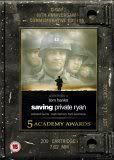

The best war film of all time, hands down – no arguing. This film puts the discussion of a “just war” in real terms. While very gory, it violent for a reason. A great tool for debate and a masterful piece of filmmaking. Look for Tom Hanks in a Christ-like role as Capt. Miller.

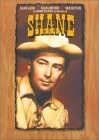

One of the best westerns to ever see the screen, this film has stunning cinematography, effective performances and a great story. Christian symbolism abounds in this story of a stranger who arrives at a farm and is forced by circumstance to set things right.
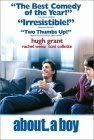

To have purpose in your life, effect other people’s lives for the better. Hugh Grant changes gears and gives a likable performance as Will, a literally useless person, who changes when he is adopted by a boy looking for a mentor.
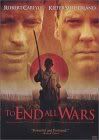

Probably the best example of the effects of worldview ever put to screen. American P.O.W.s are tortured by their Japanese captors during World War II. The only weapon available to the Americans is their faith. The Japanese rely on their “honor”. Be warned, this is a brutal film and very hard to watch. The torture scenes are very realistic.
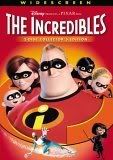

In my opinion this is the greatest piece of animation in decades and the best film of 2004. This movie affirms the family, good over evil, and the wages of clinging to the past. It also makes the unflinching statement against the results oriented crowd. All of this and it is entertaining to boot.


Like About a Boy, this film supports the idea that one improves themselves by helping others. John Candy offers one of his best and most endearing performances as the kindly Uncle who has put off responsibility as long as possible. Very funny and pushes great values.
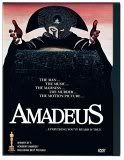

A great story of envy. F. Murray Abraham portrays Salieri, a gifted composer who is thankful to God for his talents until he finds that God has given the foul Mozart more. Unable to accept his lot in life, Salieri conjures an evil plot against God’s chosen one. Outstanding performances are buttressed by Peter Schaffer’s sharp direction.


Life is fleeting, use your time wisely. An intelligent script that is full of wisdom is good values inform this humorous piece. Robin Williams gives what is probably his best performance as teacher John Keating who teaches his students to live their lives with as much life as possible.


M. Night Shamalamadingdong’s creepy alien invasion story is an entertaining suspense film. Mel Gibson gives a strangely subdued performance as Rev. Hess, a man who has lost his faith after the death of his wife. A somewhat weak resolution attempts to spoil this otherwise well-conceived plot which speaks to faith and redemption.
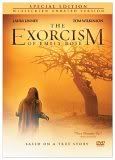

One of the scariest films in years. It’s scary because it takes the notion of possession and faith seriously. This piece is more of a courtroom drama than a horror film. Well written and expertly performed, this movie will scare you and get you thinking about the nature of evil.
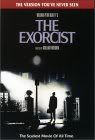

The best horror film of all time. Starkly realistic, William Friedkin’s film about the possession of a little girl still frightens today. A rare exception, faith is given a serious portrayal in this piece and is used to heighten the realism of the film as a whole. This is not for those who scare easy.
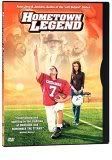

Fueled by well-written script by Shawn Hoffman and Michael Patwin, this is one of the better overtly Christian films made in recent years. While far from masterful, this is a good movie with good morals and strong Christian messages. If you’re committed to only watching “Christian” film, this is one you need to see.
These are not for the faint of heart and involve some very harsh sexuality and/or violence to get their point across.
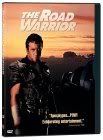

Yeah, it’s hyper violent and has gay bikers running around with their butts hanging out. Don’t rent this one for the church social. I sincerely believe this film is a good look at worldview and sacrifice when viewed properly. Look at the differences between Mad Max (Mel Gibson) and Pappagallo (Michael Preston) and how they work in the world. If you’re still confused, click on the link below the title to be taken to my full review.
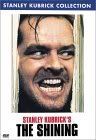

Can you think of a better film that shows the results of a person obsessing on their works in this world? Evil gets a foothold on Jack (Jack Nicholson) when his obsession to create overcomes him while managing an empty hotel with his wife and psychic son. A great look at how evil can take root when we lose our way.


Christians will turn from this one instinctually. If you’re capable of handling the violence, this smart film is worth another look. The morality at work in this piece is well thought out and worthy of discussion. Extremely well written and directed, this disturbing piece is far more than it first appears.


The real face of the pornography business is shown in the brutally realistic film. Nicholas Cage is private investigator Tom Welles who gets caught up in the terrible world of porn when he is tasked to investigate if a snuff film is authentic or not. This film will stick with you and probably not in a good way. I recommend it because it shows evil for what it is without dressing it up (until the unfortunate ending.) This one comes with a strong caution for content.
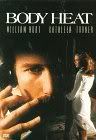

Not for everyone, this sometimes too blunt film shows the underbelly of sexuality. William Hurt and Kathleen Turner star in this steamy film noir piece about a man who will do anything to feed his lust. One of the better films of the 80’s, this movie speaks to the moral consequences of immoral behavior. Be warned, the sexuality portrayed in this film is very graphic.
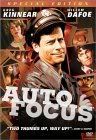

Probably the best view on the effects of pornography on the individual. Greg Kinnear portrays Bob Crane, best known as Hogan from Hogan’s Heroes. Crane who is at the top of his career takes a nosedive when pornography and his sexual desire takes over his life.
Those last few ought to kick up the comment count.
Agree with my picks or not, it is crucial for Christians to be mindful of the entertainment they devour. Although I suggest some films with sexuality and violence you must protect yourself. Obviously, if viewing rough content easily sways you then you shouldn’t. Do not take my endorsement of some films with sex and/or violence to mean that I don’t have any criterion at play here. The worldview of a film is a critical thing for us to be wary of but it is always important for us to be cautious when we open ourselves to sex and violence. Watching questionable material does have its effect and we shouldn’t be dismissive of it.
Drop me a line if you disagree with my choices or my way of thinking. Better yet, let me know if I have missed anything.
Labels: Christian culture, commentary, links, list, movie reviews
posted by Michelle Obama's Left Nut at 6:50 AM
0 comment(s)
Share





















Good News Film Reviews LLC 2004-2010 - used with permission
Images, video and titles are the property of their respective copyright holders. Good News Film Reviews LLC claims no ownership or connection to them.
The views expressed on this site are not the opinion of any advertiser or external entity.
While we take care to only link to responsible entities, Good News Film Reviews LLC takes no responsibility for the content linked from this site. There are sharks in the waters. Surf at your own risk.
The Template is generated via PsycHo and is Licensed.