

Should I see it?
Sure.
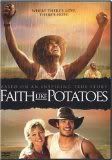

First things first - nice title. Faith Like Potatoes? Yeah, that will get the DVDs flying off the shelves.
"Hey Honey, do you want to watch Bolt, The Wrestler or Yes Man?"
"I don't know...is there anything with a nonsensical title that sounds like an immigrant confusing a metaphor?"
Faith Like Potatoes. Nice title.
Okay, on with the movie.
Outstanding cinematography, notable performances, good story...all stretched out to make it all go on and on longer than it needs to.
Angus, a quick tempered Scotsman farmer is forced to leave his Zambian farm because of the racist land claim by the government - white farmers were getting their lands taken from them. He relocates his family in KwaZulu Natal, South Africa and starts fresh. He begins with nothing but a tractor and a small plot of land. He fails, has trouble and a deeply transforming tragedy which leads him to give his life to God. He changes his focus which changes his life and the lives of those around him. The story is positive, meaningful and interesting. The film doesn't fully live up to the story but it does give a valiant effort.
Director Regardt van den Bergh clearly knows what he's doing but in this instance it appears the story gets away from him from time to time. He has trouble smoothing out the transitions and Angus' emotional arcs. He flips from one scene to the next with the gentleness of yanking on someone's collar. The scenes don't quite fit, or at least they don't pass to one another organically. The transitions have a television feeling, rather than those from a film.
Frank Rautenbach, who is South African, gives an impressive performance. The man is a good lead. However, his accent may be too thick for some American viewers. There are times where the South African doing a Scottish accent can be a bit trying. If you can grapple with the accent you will find a surprisingly strong actor in his first big role.
Again, the film does drag in many scenes. I don't think one can accurately review this film without mentioning the dry spots. Admitting this, the film does still have quite a bit to offer. It takes place in a part of the country that's largely ignored. It shows the chaotic life and the awkward race relations in Africa in a honest manner. It also deals with the issues of faith and the redemptive power of God to change people. The spiritual aspects aren't overwhelming and handled with respect but also with some delicacy. Angus is an ass, but he redeems himself and the transformation makes for some good drama. Luckily, the film manages to avoid the preachy, hollow vibes of other faith-based films.
But, phew, there are some scenes that are so dry I expected a tumbleweed to blow by in the background.
Christian Films:
Heart of Texas (2008)
The Visitation (2006)
Other Critic's Reviews:
DVD Verdict
DVD Reviews
Click here to buy your copy of

You Are What You See and learn
to change the world from your couch
Labels: Christian film, Frank Rautenbach
posted by Michelle Obama's Left Nut at 8:00 AM
0 comment(s)


Share
Short Review: The film succeeds in a nearly impossible task, making a story you’ve heard a thousand times seem fresh and interesting.

Mary is given the Christ child. Her and Joseph traipse across the land to Bethlehem where she gives birth to God in a manger. Throw some wise men and shepherds in for good measure and you’re set. This is seen every in churches around the globe and has become a visual backdrop for the Christmas season. What can a film really offer to the tale that is new?
As it turns out, quite a bit. I believe this film is well done and deserves more praise than it received during its initial run. Director Catherine Hardwicke (The Lords of Dogtown, Thirteen) has an ear for teenage voices. As with her previous work, she delivers accurate and real young characters looking for their way in the world. Mary is not the deified virgin we know today. She is what she really was, a teenage girl living in brutal times.
Hardwicke, through sixteen-year-old actress Keisha Castle-Hughes (Whale Rider) establishes the opening of the film on Mary’s teenage concerns. By concentrating on the human drama, which is usually missing from this story, Hardwicke and screenwriter Mike Rich (Radio) actually enhance the miraculous events of the narrative.
I understand that many will not be thrilled with the humanizing of Mary or her reduction in the overall story. As the story progresses, it becomes less about her and more about Joseph and the choices he faces. It would seem odd to tell the story of the nativity without directly focusing on Mary, but it makes sense. Joseph directs their journey from Nazareth to Bethlehem since he was the male in the relationship, not to mention not swelling with child. Mary spends a great deal of time sitting on the back of a mule. This hardly makes for a thrilling narrative.
By placing the focus on Joseph the story moves forward and he really becomes a figure for both himself and Mary. Their troubled marriage is shown strengthening through the trials. Their love grows as they choose to do God’s bidding. Pushing Joseph to the forefront of the narrative also gives the story more humanity. No one assumes any deity status on old Joe, just Mary. By having him in the spotlight, again, we are served with a deep human drama not a sanitized Sunday School play.
The movie itself is well written and strongly directed. Some have had issues with Castle-Hughes’ performance as Mary. I will agree that she isn’t brimming with charisma, but I think she still did a good job expressing the fear a teenage girl would have being thrust into history as Mary was. One day she is living a normal life, the next she is the mother of the Christ child. I think she gets across the fear and then acceptance that Mary faced.
The real star of the piece is Oscar Issac as Joseph. He handles his role and the conflicting issues swirling around the character very well and provides a likable lead. His vibrant performance compensates for Castle-Hughes more timid presence.
I do recommend this film even outside of the Christmas season. It is obviously a great story and told in this fashion, I do believe it gives the story more power. To understand the potency of The Bible and its stories you have to see it not as just scripture and history but as drama involving real, flesh and blood humans. Once you begin to see the people of scripture as what they were, people like you, the scriptures themselves become more alive. This film shows this wonderfully.

Related Reviews:
Movies about Christ
The Jesus Film (1979)
The Passion of the Christ (2004)
Other Critic's Reviews:
Bible Films Blog
ReelViews
Labels: Alexander Siddig, Christian film, film, Jesus Christ, Keisha Castle-Hughes, movie review, Oscar Issac
posted by Michelle Obama's Left Nut at 1:00 PM
0 comment(s)
Share
Yes.
Short Review: And I thought my family reunions were tense!


With the 2005 release of End of The Spear along with this documentary, the world is reminded of the deeply moving story of salvation, forgiveness and redemption of the Waodani tribe.
In this well paced and constructed documentary, we are told the story of five missionaries who engage the Waodani at a time when the tribe was embroiled in violent attacks against one another. The Stone Age tribe would kill and torture over nothing and the introduction of missionaries into this situation led to tragedy. Each of the five missionaries: Nate Saint, Jim Elliot, Roger Youdarian, Ed McCully and Peter Fleming were slaughtered by the Waodani. Over the course of their lifetimes, the wives and children of the murdered missionaries not only returned to interact with the Waodani, but they have lived among them. The families of the slain missionaries through acts of Christian forgiveness and understanding that many of us cannot fathom have not only helped save the Waodani, but have become family with these people. Think of it, you kill my father or my husband but I still forgive you and we will become like brother and sister. Moreover, I will introduce you to Jesus Christ and through him you will be saved.
The story is laid out patiently and thoroughly. The interviews of the families of the missionaries along with those of the Waodani are fascinating. To see how the Waodani used to behave (casual murder, infanticide and torture) to how they are one generation later is stunning. This story is enthralling and uplifting. The horror of the murders being able to be turned into the salvation of a small culture is a lesson for us all.
Overall, this is a very good documentary. Its subject matter is entrancing regardless of your religious background. This story of forgiveness and understanding will speak to your heart and mind. For Christians, this film will have particular meaning since it shows to power of God to turn that which was meant for evil into good in his name.
Related Reviews:
Christian films
Mercy Streets (2000)
The Hiding Place (1975)
Other Critic's Reviews:
Reel.com
Hollywood Jesus
Labels: Christian film, documentary, film, Friday Rewind, movie review, Waodani
posted by Michelle Obama's Left Nut at 12:00 PM
1 comment(s)
Share
Sure.
First things first. Nice title. Faith Like Potatoes? Yeah, that will get the DVDs flying off the shelves.
"Hey Honey, do you want to watch Bolt, The Wrestler or Yes Man?"
"I don't know...is there anything with a nonsensical title that sounds like an immigrant confusing a metaphor? I don't like my movies to have attractive, inviting titles. I only like the one's that make me say "What the heck?""
Faith Like Potatoes. Nice title.
Okay, on with the movie.
Outstanding cinematography, notable performances, good story...all stretched out to make it all go on and on longer than it needs to.
Angus, a quick tempered Scotsman farmer is forced to leave his Zambian farm because of the racist land claim by the government - white farmers were getting their lands taken from them. He relocates his family in KwaZulu Natal, South Africa and starts fresh. He begins with nothing but a tractor and a small plot of land. He fails, has trouble and a deeply transforming tragedy which leads him to give his life to God. He changes his focus which changes his life and the lives of those around him. The story is positive, meaningful and interesting. The film doesn't fully live up to the story but it does give a valiant effort.
Director Regardt van den Bergh clearly knows what he's doing but in this instance it appears the story gets away from him from time to time. He has trouble smoothing out the transitions and Angus' emotional arcs. He flips from one scene to the next with the gentleness of yanking on someone's collar. The scenes don't quite fit, or at least they don't pass to one another organically. The transitions have a television feeling, rather than those from a film.
Frank Rautenbach, who is South African, gives an impressive performance. The man is a good lead. However, his accent may be too thick for some American viewers. There are times where the South African doing a Scottish accent can be a bit trying. If you can grapple with the accent you will find a surprisingly strong actor in his first big role.
Again, the film does drag in many scenes. I don't think one can accurately review this film without mentioning the dry spots. Admitting this, the film does still have quite a bit to offer. It takes place in a part of the country that's largely ignored. It shows the chaotic life and the awkward race relations in Africa in a honest manner. It also deals with the issues of faith and the redemptive power of God to change people. The spiritual aspects aren't overwhelming and handled with respect but also with some delicacy. Angus is an ass, but he redeems himself and the transformation makes for some good drama. Luckily, the film manages to avoid the preachy, hollow vibes of other faith-based films.
But, phew, there are some scenes that are so dry I expected a tumbleweed to blow by in the background.
Christian Films:
Heart of Texas (2008)
The Visitation (2006)
Other Critic's Reviews:
DVD Verdict
DVD Reviews
Labels: Christian film, Frank Rautenbach
posted by Michelle Obama's Left Nut at 9:00 AM
0 comment(s)
Share
HT to Robert M. Lindsey from Retro Hound for pointing me to the post.
“Christian film” is far better now than it was just a few years ago. Then again, that is a little like saying that dry heaving is better than puking. Yes, you’re doing better, but you’re still left queasy and the end material results are still unpleasant. After thirty years of claiming to be on the verge of breaking into the mainstream, “Christian film” is still synonymous with substandard production values, heavy-handed dialog and childish plots. This is not to say there’s a lack of good movies to be seen. The issue is that we don’t need good movies.
We need great movies.
To be blunt, if a film purports to be a “Christian film” it supposedly is done for the glory of God. You don’t glorify God by making lousy movies.
We need great movies.
Like I said, things are getting better. Production values are indeed increasing and there are some serious shops out there trying their best. Within the past ten years we’ve gone from embarrassing messes like Left Behind, The Omega Code, and Joshua to more impressive works like The Nativity Story, Luther, Beyond the Gates of Splendor, Saints and Soldiers, and Facing the Giants. There’s also that little ditty Mel made called Passion of the Christ. As the industry has come to see the financial and cultural muscle of Christians they have worked to market products our way. Those directly in our ranks have likewise stepped up and tried to cater to our tastes. This has lead to more investors, more money and better looking product. Of course you can have the nicest lighting in the world but if you’re still filming a pedantic script with summer-stock reject actors your “better looking product” is simply lipstick on a pig. The product still stinks.
As I said, the genre is improving but must do better. I believe the first step in improving “Christian film” is to stop having “Christian films” and simply have Christians making films. I believe labeling our works, or allowing others to label our works, is our first mistake. When we label our works as being “Christian”, the intention is usually to announce that the piece is “made for Christians” and presumptively is made to glorify Christ. These are commendable ideals and should be the goals of any committed Christian when making art. We run into a few problems when we use the “Christian film” label however:
1. The label is just that, a label. It allows Christian artists to be pigeonholed by people in the industry. Those in the industry can subscribe any negative ideas they’d like to a label “it’s one of those “Christian films.” The label can also relegate the product to a particular distribution stream, which isn’t always a great match.
2. The audience can pigeonhole as well. Christian audiences have come to expect very particular things. The rules don’t tend to stress Biblical truth, moral clarity and sound technical achievement but rather a watered down view of the world. Violence is almost non-existent, salty language never happens, unmarried couples never struggle with lust, evil isn’t really all that evil (because showing various forms of sin isn’t allowed) and in the end everyone is converted quite nicely with no residual issues. Life is reduced to an after school special with praying thrown in for good measure.
For me, this is where the aforementioned dry-heaving usually comes in.
The “Christian” label sets the filmmaker up with a number of hindering rules that are meant to satisfy the most sensitive members of the audience that hijacks the proper development of a story.
3. When a non-Christian is presented with a “Christian film” their reaction is going to be far more defensive than a regular movie. No one wants to go to the movies to be proselytized and most people won't give the time of day to a film that promises to preach.
4. Which branch of Christendom gets the corner on the label “Christian film"? Catholics make movies, as do the Evangelicals and Mormons. Who gets to claim their films are “Christian”? I’m certain most Catholics would be made uncomfortable at a film like Luther while most Evangelicals would bristle at many of the films stemming from the Mormons.
5. When we remove ourselves by stamping our cinema with the Christian label we are leaving the wider culture to be run by whoever comes around. We retreat into our safe little subculture and then act surprised when the Pagan turn Hollywood into Nineveh. We handed over the steering wheel to the heathens and relegated ourselves to whining in the backseat as they drive the culture straight to hell. Our place is at the FRONT of culture not running along the side of it hoping we’ll get noticed.
As you can see, the label brings up a number of serious issues – issues that are not necessary. Christians should drop the pretenses and get to work. We have retreated into this subculture to protect ourselves from the wider one. By relegating our work to be “Christian” and defining that word with the most simplistic, nearly childish worldviews, we extract ourselves from the wider population. We need to be in the mix.
Christian film’s has a long history of being relegated to the basements of churches. The films were made by Christians for Christians to be seen by Christians in the comfort of their churches. We have spent all of our efforts preaching to the choir and then exclaiming that our work was done. If Christians are to make movies they should be with the intent of distributing the teachings of God to everyone not just those in the light. We are to speak the Good News to the world and we can’t do that if we’re too busy entertaining ourselves. Redefining the brand of “Christian film” is the first step in the process of opening up to the outside world.
I am not calling for a lowering of our moral standards. I am not saying we should be ashamed of being Christian. Quite the contrary, we should be open about our faith. I do believe it is important for the filmmaker to be identified as Christian than his work be labeled as such. If a Christian makes a film and if that Christian speaks to Biblical truth and morality – he is making a Christian film. The labeling is there for show and its not really helping anyone. A pagan can make a movie and label it as Christian. The product itself shouldn’t be where the labeling resides. The artist is the one who is the Christian. His fruit will bear His name.
I have no interest in seeing any “Christian film.” What I want to see films made by Christians. There is a difference in my mind. The former is made to satisfy the demands of Christian culture. The latter answers to Christ.
Labels: Christian culture, Christian film, commentary, film, miscellaneous
posted by Michelle Obama's Left Nut at 4:40 PM
1 comment(s)
Share
Yes.
I am a Christian, but I'm not easily moved. This film cut through all of my jaded sarcasm. To put it as plainly as I can, the true story that is presented in this film is as inspirational and moving as the trailer suggests. For once, I can say a trailer is actually telling you the truth about the product it is promoting.
This is a perfect film for church groups, or those who just want something uplifting. Even if you’re not a Christian, this film can still speak to you because it reminds us that there is more to the universe than our self-interests, or even our own lives and it keeping our eyes on a Christ-filled life that brings it all into focus - even during the painful times.
Labels: Christian film, documentary, indepdendent film
posted by Michelle Obama's Left Nut at 9:00 AM
0 comment(s)
Share
Not a fan? Skip it.

I get offers to review Christian films all the time. 99% of these offers involve me sitting in front of a cheaply made, poorly constructed flick, cobbled together by people who either haven't made a movie before, or by people who should just stop trying. In other words, they're just like regular independent films, just with more chatting about Biblical living. This is on the upper side of the scale. Yes, it is done on a shoestring budget and it has some seriously annoying technical flaws. I'd still recommend it however to those used to the genre.
I will admit a bias towards Christian films. I will also admit my bias comes along with a stricter eye as well. I am more willing to accept a Christian film given that I'm theologically on their side, I'm rooting for them. This said, I am also more willing to get frustrated with their efforts than I would if it were some dimwit indie flick some dolts pieced together with their friends and took to the festival circuit. A Christian film is presenting my worldview after all. Please remember my bias as we go forward.
The film at first seems like a commercial for Patrick Henry College. Caleb (Austin Kearney) and Rachel (Victoria Emmons) are students who fall for each other during participating in the college's moot court competition. There are plenty of scenes showing the campus and presenting the place in the best possible light. This is fine, but it comes across a little obvious that the filmmakers intend on promoting the place (this said, I'd be happy to send my kids there.) Since this is a Christian film, the debate of the moot court is of course Roe vs. Wade. The two students frustrate one another because Rachel, who is very orthodox believes the argument should work to undo Roe while Caleb thinks the argument should undermine it while leaving it in place. The two also begin courting, which brings the films best elements. the coupling of Kearney and Emmons works, as the two actors do have chemistry. The characters are both likable and they are handled well. Rachel is very restrictive in how she conducts her love life, to the point where she won't date until she knows it serious. It is refreshing to see such a philosophy presented in a positive way. She's not overly idealistic about her views, as they seem to come from an understanding of self-respect, something that is commonly misunderstood by most screenwriters. The script by Manny Edwards, George D. Escobar and David Halbrook (there are a total of five people who worked on the story/script - it took two more people to write the script than it took to man a ship to the moon,) does a good job of expressing her worldview. The problem is that her conduct isn't strange in the environment she lives in. She's at a Christian college, flirting with a Christian guy who fully understands her chastity. While the relationship between the two works well, it is also lacking in compelling drama. These are good people and its nice to see good people come together. In a film however, there needs to be conflict to hold interest. The fact that the two agree on everything saps the story of its potential. Had Caleb been more secular in his thinking it would have given Rachel more of a chance to explain her lifestyle. This would have been a chance for the filmmakers to show their competing worldviews in conflict. Which would in turn have put a real argument at the center of a story about arguing - something this film fails to do. Instead of placing this conflict on the students, the script leaves this for Caleb's parents Don and Judith (played by Kenneth and Karen Jezek.) Don is a firm pro-life Christian and Judith a morally pliable, pro-abortion lawyer. While the conflict between the parents is good, it would have been more striking if the students had an equally strong disagreement working in tandem. Since they don't, the pro-abortion mom, Judith is weighed down by carrying the entire secular argument by herself - making her the odd person out in a world of Christians.
The results of the film are not brilliant, as I have mentioned. Then again, I doubt they intended for this to be Citizen Kane. Even when lowering expectations to meet the budget, there are still issues to contend with. The editing in particular is distracting. Please, a note to all of you budding filmmakers out there, when you film a conversation, you do not need to snap between positions on every line. If you do, make sure your composition will allow for this continual back and forth. This kind of technical mistake is common to this film and becomes a little schizophrenic at times. Along with these technical mistakes are moments of potential. The script is loaded down with overt, on-the-nose dialog, and then there will be a scene where everything works and the film is very enjoyable. Same goes with the camera work. There will be a terrible handling of a conversation followed by a well placed composition that really supports the production. During the viewing I was swinging between wanting to turn it off and being impressed with how much they got out of their very limited resources. The actors likewise are hot and cold. When given a well written scene Kearney and Emmons, in particular, do quite well and carry their own. The dialog does let them down at times however, not giving them enough to work with. As is the problem with many films, when it comes time for an agenda to be presented, the script stumbles trying to pretend its not propagandizing a particular viewpoint. Where the film really gets it right is when it doesn't shy away from its agenda. There are scenes where Don frankly explains the pro-life position on when life begins and another where Caleb's professor explains why Roe should be dismantled. These scenes present a clear and concise point-of-view without trying to mask it. If the whole film had the clarity and grace of these scenes the film would have been far superior. This combined with starker conflicts the actors could have sank their teeth into? It would have worked.
This review isn't about what would have been but what is. What we have here is a mixed result. For people who are used to the lower quality of Christian films, they will find this is better than many in the field. For those who are used to independent films, they're used to shoddy material as well but will probably balk at the frank Christian messages. Just watch Hollywood studio films? This will seem like someone's home movie. Me? I can see what they were trying to do, think they got part way there but needed to do more planning. I look forward to the next production to see if they improve.
Related Reviews:
Christian films
The Visitation (2006)
Fireproof (2008)
Other Critic's Reviews:
The Dove Foundation
The Christian Pulse
Labels: Christian film, film, movie review
posted by Michelle Obama's Left Nut at 8:02 AM
1 comment(s)
Share
Sure.
Short Review: It’s a “Christian film” that’s not half bad. This of course means it’s one of the best “Christian films” of all time.

As factious as my short review sounds, this is one of the better pieces in its genre. Being labeled one of the better Christian films however isn’t exactly like winning the Nobel Prize. The “Christian film” genre is loaded with less than brilliant pieces. This is primarily because the makers of Christian films are bigger on intent than results. When I rip on Christian film I usually refrain from attacking the intent, but man do I have a special place in my sarcastic heart for their final products.
To look at the genre itself, I loathe the term “Christian film”. It’s such an obtuse label that somehow acts like an explanation. It reminds me when white suburbanites are describing someone and they say “my co-worker Robert, who happens to be black.” “I just saw a film, which just happens to be Christian!”
Back to the film, it’s good. It’s well acted, aptly directed and certainly not weighed down by too much preaching. Based on Frank Peretti’s novel, the film tells the story of Travis Jordan, a fallen preacher who confronts a strange mystic who sets up shop in Jordan’s small town. Produced by two of the better Christian film production companies, Namesake Productions (Left Behind) and Signal Hill (Mercy Streets) this film hopefully shows that its possible to make an overtly theological film without making the audience feel like they’re in Sunday school. It also shows that a “Christian film” doesn’t have to be completely neutered of any interesting content.
One of my favorite actors, Martin Donovan portrays Jordan, and delivers another toned down but effective performance. Donovan, a veteran of Hal Hartley’s Generation-X, art house whine fests, is the master of underplaying for effect. I’ve always liked his delivery and style. Most audience members probably won’t know this guy from Adam, but me finding him in a cast list is like finding a twenty dollar bill on the sidewalk.
Edward Furlong (the kid from Terminator 2: Judgement Day, who’s not a kid any longer) is horribly miscast as a charismatic mystic who lures the residents of a small town to their doom. The issue here is the word “charismatic”. Firstly, Furlong looks like a roadie for Foghat. Secondly, his performance is something you’d expect to see during auditions for a community theater. While Furlong’s unfortunate performance distracts, the rest of the production is good enough to carry his weight.
The script by screenwriter Brian Godawa is tight and concise but a little tone deaf in regards to some scenes. The script seems to be constrained by the story itself. The arc of the story isn’t dramatic enough to really work to full effect so the final act stumbles somewhat. Forgiving that, there are some good moments that make for a reasonably good film. This isn’t a great work but on the flip side it won’t make you feel like you’ve wasted your time.
Related Reviews:
Christian films
Thr3e (2006)
The Second Chance (2006)
Other Critic's Reviews:
DVD Talk
DVD Verdict
Labels: Brian Godawa, Christian film, film, Frank Peretti, Martin Donovan, movie review
posted by Michelle Obama's Left Nut at 9:00 AM
1 comment(s)
Share
Coincidence is God's way of being obvious. When things come together in life, I pay attention. I honestly think this is one of the ways the Lord speaks to us. This is probably because of my ability to be easily distracted. When I pray, I plead with the Lord to be as blatant as possible. I hope for something along of the line of Him dropping an anvil from sky with a note tied to it. Coincidence is His anvil.
For those of you who read my reviews on a regular basis, my harsh criticisms of “Christian film” are well known. I’ve maintained for years that as a rule the Christian film market is packed with cheesy, poorly made and ironically uninspiring products. A majority of the films are all intention and no execution. They likewise fail to reach beyond the church walls, keeping their focus firmly on preaching to the choir. I believe we need to move past just talking to each other and open our efforts up to include those not saved. We need to look at seed planting. We should work to lift up this declining culture and spread the Word through film. Despite all of my complaining and sometimes attacking of my fellow Christians, coincidences in my life have lead me to realize I have lost sight of some things.
My biggest concern with Fireproof was its unflinching Christianity. This may seem like an odd thing for a Christian to be repelled by. This is a “Christian film” after all. The display of Christian thought and action in itself hasn’t been my concern. Where I wobble is how it is received by non-Christians. There is a certain level of embarrassment when dealing with non-Christians in light of films such as this, not because of any shame of I have towards Christ, but because of the awkward disconnect the non-Christian has with the cultural norms we hold within the church.
Secularists have been raised to have a caricature in their minds when they think of Christians. To many we’re a bunch of doe-eyed morons who believe in a fairytale. For many people raised in our culture, the idea that the Christian faith is steeped in firm academic traditions and holds a logical foundation is preposterous. It seems films like this one which delivers its agenda so plainly risk promoting the misconception others have of us. Film is one of the greatest tools of communication ever devised. It instructs the population and has the ability to direct the course of our civilization. When I see film, I see a tool to be used to spread the Gospel to all people. Up to this point, a film that spoke directly to the converted annoyed me. It always seemed to me like holding a play, but not letting the general public in to see the stage. What’s the point? Along with some other things, my interview with Stephen Kendrick has softened my criticism.
Stephen Kendrick was a sharp and thoughtful interviewee. Unfortunately, the phone system I had used to conduct the interview crashed, so I do not have his exact words. I will paraphrase, I hope he doesn’t mind. I had asked him if he had wanted to direct the film specifically at Christians and if non-Christians could get something out of this film? His response was unapologetic. He said that he and his brother were called by God to make films for Christians. Their focus was directly towards that group. The film itself was intended to call us faithful to renew our marriages. If we hope to inspire and draw others to the church, we need to shore up our own issues. Christians lead by example and his intent was to help us heal our relationships and stand more in alignment with Biblical teaching. When I pressed him on the overt messages of the film pushing away potential secular audiences he responded that “the Narnia and Lord of the Rings films are wonderful, great films, but I don’t know of anyone coming to Christ after seeing them.” He has a good point and it has struck a chord with me. Buttressed by a post by Skip Press over at Big Hollywood, and conversations I’ve been finding myself in lately. I've been urged to reconsider my criticisms of Christian film.
I’ve been comfortable pointing at the overt Christian displays of a film like Fireproof and dismissing them as obtuse. A number of my readers have agreed with my attitude. It has been my contention that we need to speak to the masses and not as if we were in mass. I’ve been wrong on this, or at least I’ve been wrong with the degree at which I’ve attacked this brand of filmmaking. While subtlety is good in some venues, being open is good in others. If the message is so buried under symbolism and narrative what is the point? We need films that plant seeds to be certain. A film such as Magnolia for example is not Christian at all but John C. Reilly’s Jim Kurring in the film still stands as one of the best portrayals of a Christian man I’ve seen put to film. We also need films that speak in declarative tones. Christ is the way, He is your Savior - no frills, there it is. We need films that do speak to the converted. We need films that call us to account and reaffirm the Word in us. To always have films push Christian thought while avoiding Christ Himself doesn’t work. He is the author of everything and avoiding the topic of his role is unhealthy. Employing the arts and sciences while ignoring the governing hand of God is like completing a jigsaw puzzle cardboard side up. You can figure out how the pieces fit together but you're missing the beauty and function of the design. Christ is the answer and He belongs in our art. Seed planting is a worthy goal but we also need to keep Him upfront. In my zeal to urge Christian artists to speak to broader audiences, I have forgotten the simple fact that they need to speak to us as well.
On the subject of coincidence, I asked Mr. Kendrick how he and his brother found distribution for Facing the Giants. Pooling funds and talent to make a movie is one thing, but finding distribution is whole other beast. Securing a favorable distribution deal is the make or break part of any production. He told me they were just local film makers looking to obtain the rights for a song they wished to use in the soundtrack. They contacted the music publisher to negotiate these rights. As it turns out, the publisher just so happened to have been bought up by Sony. Sony just opened up a faith film branch. Sony put out word they were looking for Christian films and the tape of Facing the Giants was sent on and it goes from there. In addition, the controversy of the film getting a PG-Rating from the MPAA increased the visibility of the film upon release. Clearly, in particular when you view the meteoric rise of these film makers, the Lord is working through these men and their crew.
* - Research accounting in the film industry and you’ll understand why I couched this sentence.
Labels: Christian film, commentary
posted by Michelle Obama's Left Nut at 12:00 PM
1 comment(s)
Share
Yes.
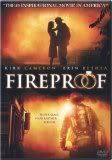

It is not often I can say that I've seen a film that promotes the Christian faith properly (even when I watch most "Christian" films.) This film is about Caleb (Kirk Cameron), a troubled firefighter and his wife Catherine (Erin Bethea). Their marriage is disintegrating until he finds God and the two begin to patch their relationship. The Christian view of marriage the film promotes is the best choice for couples. A relationship founded in Biblical truth promises a firm bond over the years. I've seen it in practice, I know this to be true. In this age of political correctness a firm statement like this will bring comments that I'm being too broad. No, in this case one size does fit all. Living a Biblical life makes things better every time its tried, no exceptions. This film directs people in the right way. Based solely on this I recommend the film, but mostly to just Christians. I fear that many non-Christians will not get what's being displayed.
This film, like many other "Christian films" gets slammed for its low budget and frank presentation of faith. Thinking back on my own pre-Christian days, I would have seen this and dismissed it as Christian proselytizing with television lighting. I give the film makers Alex and Stehpen Kendrick a break on some of the technical issues because of what they're doing: delivering the Gospel in a respectful and enjoyable way.
Now that I've recommended it, let me get to the flip side.
This film has two serious flaws. First, the dialog is inorganic. The Kendricks have very specific points they're looking to impart, but this comes at a cost. The characters express their motivations and emotions too abruptly which breaks the rhythm of conversations. This leads to actors from getting a flow of words they can present smoothly, which leads to stilted scenes. Just like with live theater, the words said by a character are the critical aspect of a film. Dialog sets tone, motivation, and style providing the lyrics to the film. When the words are too blunt, or "on the nose" they distract, pulling the audience out of the scene and breaking the suspension of disbelief. This is not to say that every line is troubled, there are good scenes in the film. However, there are enough awkward exchanges that I need to mention it.
The other major flaw was the structure of the first act. For my readers who have heard me go at the subject a thousand times already, please forgive me but we're going there again because it is important. The first act is the introduction to the film. We meet the characters, discover their conflicts and desires, and come to understand the rules of the road. This introductory act is mechanical stuff once you understand it. This said, it is complicated mechanics and it is easily set off balance. In this production the whole narrative rests on the presentation of the marriage between Caleb and Catherine. It is critical that we develop a want for their relationship to work. We have to like both of them and see that the two of them are compatible. As an audience we are looking to see ourselves in them, even if they're miserable. We look to connect with the characters and share in their misery, then later in their salvation. The Kendricks do a good job with their argument scenes. They are well written and delivered. The problem is that we are introduced to both characters separately where they grumble about life. Following this they are shown together where the two explode - actually it's Caleb that explodes and Catherine wilts. By the time the two finish fighting and divorce looms, we are left with little reason to actually want them to reconcile because we don't have a clear enough vision of the two being happy.
Caleb is posed as a jackass. He's abrupt with his men at the firehouse and verbally abusive to his wife. What's missing is the reason we should like him. He's an unlikable guy and there's no reason given as to why he's respected or loved by those around him. When Caleb later turns himself around this missing connection with the audience leads them to be witnesses to his transformation not active participants in it. Making the initial connection between audience and hero is normally done with a brief exchange at the beginning of a story where he will tell a joke, do a favor, or impart some wisdom. Caleb does this, but it falls flat since he is so stern. When he moves into his relationship with Catherine we only see a brute, not a man, because we haven't been let in to see the calmer person inside. This impacts how we see his relationship. The two needed to be either more troubled by their circumstances or shown enjoying one another before the yelling starts. This establishes for the audience why we should like the couple. This simple misstep causes serious problems moving into the middle acts where Caleb is transformed because we don't have a proper guide as to what his end goal looks like, what their good relationship will bring.
On the positive side it is clear the Kendrick brothers are capable of some good film making. They have some well paced and structured scenes that payoff. Given the limited budget and time constraints, they manage to get quite a bit out of the resources they are provided. A good example is the accident scene. A car with a couple of teenage girls is trapped on train tracks. The firemen struggle to move the car off the tracks before an oncoming train destroys the vehicle with the girls stuck inside. This moment of peril is very well pieced together and quite effective. Given that it appears to have been shot with very little technology and since the result of the scene is obvious, it is notable how successful they were at pulling it off. A result of good writing and planning, the editor is able to piece together a tense scene. There are moments such as this through out the film where Alex Kendrick's direction and the script align and work in tandem to show the potential of this film making crew.
In closing, I want to repeat that the film promotes a good message. I can see how many people will be able to look past the faults of the production mentioned above to enjoy the message being delivered. Is this a masterful work of cinematic art? No, this is not Citizen Kane. Taking it on its own terms, it succeeds. I have respect for the Kendrick brothers and what they've managed to build over the past few years. They are Christians and they are doing what more Christians should be attempting - making movies that promote their faith.
Click on Kirk to see the trailer
Related Reviews:
On Christian films
Less Christian Art - More Christian Artists
The G-Rated Christian: Part I - Does God Call For Us to Become Ned Flanders?
Other Critic's Reviews:
Christianity Today
Happy Catholic
Labels: Alex Kendrick, Christian film, film, Kirk Cameron, movie review, Stephen Kendrick
posted by Michelle Obama's Left Nut at 9:00 AM
0 comment(s)
Share
We need great movies.
To be blunt, if a film purports to be a “Christian film” it supposedly is done for the glory of God. You don’t glorify God by making lousy movies.
We need great movies.
Like I said, things are getting better. Production values are indeed increasing and there are some serious shops out there trying their best. Within the past ten years we’ve gone from embarrassing messes like Left Behind, The Omega Code, and Joshua to more impressive works like The Nativity Story, Luther, Beyond the Gates of Splendor, Saints and Soldiers, and Facing the Giants. Lest we forget, there’s also that little ditty Mel made called Passion of the Christ. As the industry has come to see the financial and cultural muscle of Christians they have worked to market products our way. Those directly in our ranks have likewise stepped up and tried to cater to our tastes. This has lead to more investors, more money and better looking product. Of course you can have the nicest lighting in the world but if you’re still filming a pedantic script with summer-stock reject actors your “better look product” is simply lipstick on a pig. The product still stinks.
As I said, the genre is improving but must do better. I believe the first step in improving “Christian film” is to stop having “Christian films” and simply have Christians making films. I believe labeling our works, or allowing others to label our works, is our first mistake. When we label our works as being “Christian”, the intention is usually to announce that the piece is “made for Christians” and presumptively is made to glorify Christ. These are fine – no commendable ideals and should be the goals of any committed Christian when making art. We run into a few problems when we use the “Christian film” label however:
1. The label is just that, a label. It allows Christian artists to be pigeonholed by both people in the industry. Those in the industry can subscribe any negative ideas they’d like to a label “it’s one of those “Christian” films.” The label can also relegate the product to a particular distribution stream, which isn’t always a great match.
2. The audience can do the pigeonholing as well. Christian audiences have come to expect very particular things. The rules don’t’ tend to stress Biblical truth, moral clarity and sound technical achievement but rather a watered down view of the world. Violence is almost non-existent, salty language never happens, unmarried couples never struggle with lust, evil isn’t really all that evil (because showing various forms of sin isn’t allowed) and in the end everyone is converted quite nicely with no residual issues. Life is reduced to an after school special with praying thrown in for good measure.
For me, this is where the aforementioned dry-heaving usually comes in.
The “Christian” label sets the filmmaker up with a number of hindering rules that are meant to satisfy the most sensitive members of the audience and more times than not hijacks the proper development of a story.
3. When a non-Christian is presented with a “Christian film” their reaction is going to be far more defensive than a regular ol’ movie. No one wants to go to the movies to be preached at. As it turns out, looking at the box office receipts, they don't go.
4. Which branch of Christendom gets the corner on the label “Christian film”? Catholics make movies, as do the Evangelicals and Mormons. Who gets to claim their films are “Christian”? I’m certain most Catholics would be made uncomfortable at a film like Luther while most Evangelicals would bristle at many of the films stemming from the LDS.
5. When we remove ourselves by stamping our cinema with the Christian label we are leaving the wider culture to be run by whoever comes around. We retreat into our safe little subculture and then act surprised when the Pagan turn Hollywood into Nineveh. We handed over the steering wheel to the heathens and relegated ourselves to whining in the backseat as they drive the culture straight to hell. Our place is at the FRONT of culture not running along the side of it hoping we’ll get noticed.
As you can see, the label brings up a number of serious issues – issues that are not necessary. Christians should drop the label, drop the pretenses and get to work. We have retreated into this subculture to protect ourselves from the wider one. By relegating our work to be “Christian” we extract ourselves from the wider population. We need to be in the mix.
Christian film’s has a long history of being relegated to the basements of churches. The films were made by Christians for Christians to be seen by Christians in the comfort of their churches. We have spent all of our efforts preaching to the choir and then exclaiming that our work was done. If Christians are to make movies they should be with the intent of distributing the teachings of God to everyone not just those in the light. We are to speak the Good News to the world and we can’t do that if we’re too busy entertaining ourselves. Removing the unneeded label of “Christian film” from our works is the first step in the process of opening up to the outside world.
I am not calling for a lowering of our moral standards. I am not saying we should be ashamed of being Christian. Quite the contrary, we should be open about our faith. It is important for the filmmaker to be identified as Christian than his work be labeled as such. If a Christian makes a film, and if that Christian speaks to Biblical truth and morality – he is making a Christian film. The labeling is there for show and its not helping anyone. A pagan can make a movie and label it as Christian. The product itself shouldn’t be where the labeling resides. The artist is the one who is the Christian. His fruit will bear His name.
I have no interest anymore in seeing “Christian film” What I want to see are films made by Christians. There is a difference in my mind. The former is made to satisfy the demands of Christian culture. The latter answers to Christ.
Labels: Christian culture, Christian film, commentary, film
posted by Michelle Obama's Left Nut at 4:00 PM
2 comment(s)
Share
No.
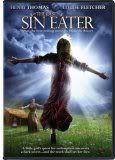

Who doesn't love a self-satisfied, low budget movie that moves along at glacial speed?
10-year-old Appalachian girl Cadi (Liana Liberato) is consumed with guilt over the death of her sister. The locals are all pagans who believe that a local man "The Sin Eater" has the ability to consume the sins of the dead so they may rest in peace. Cadi decides she'd like to have her sins eaten while she's alive. When a "Man of God", yes that's the character's name, comes proclaiming that Jesus Christ has already died for her sins and she has the redemption she's been searching for, things hit the theological fan. Well, actually they don't, they should but they don't. In a clever twist on traditional storytelling, this film avoids any interesting conflicts or drama and replaces them with monotonous flashbacks, stilted dialog and distracting subplots.
The end of the film is completely consumed by a remarkably horrid tangent which concentrates on the slaughter of Native Americans at the hands of seething whites. The Native Americans are laughing, enjoying their lovely existence, everyone is happy and the birds are chirping. A bunch of squinty-eyed whites show up on the scene and launch into a brutal holocaust against the peace loving Indians the moment one of them looks at them funny - you know, just it happened in the real life. The slaughter portion of the film is shoehorned in such a clumsy way, it seems like another movie was edited to the end by accident.
The film's writer/director has created a film that wobbles through its two hour running time and is troubled by bad writing, acting, direction, scoring and special effects. There is no part of the production that works. Nothing good made it to the screen. Do yourself the favor, skip this one.
Related Reviews:
Christian films
One Night With the King (2006)
Bella (2006)
Other Critic's Reviews:
Reel.com
Reel Talk
Labels: Christian film, film, Michael Landon Jr, movie review
posted by Michelle Obama's Left Nut at 9:00 AM
3 comment(s)
Share

Screenwriter: Alex Kendrick and Stephen Kendrick
Director: Alex Kendrick
Actors: Alex Kendrick
Labels: Alex Kendrick, Christian film, film, movie trailer
posted by Michelle Obama's Left Nut at 9:00 PM
0 comment(s)
Share
No.

Related Reviews:
Christian films
The Second Chance (2006)
The Omega Code (1999)
Other Critic's Reviews:
PopMatters
Hollywood Jesus
Labels: Brad Johnson, Christian film, film, Kirk Cameron, movie review
posted by Michelle Obama's Left Nut at 5:00 PM
0 comment(s)
Share
No.
Short Review: It’s the film Saw, but for Christians.
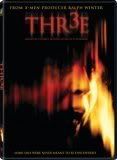

This is a lowly derivative of the film Saw. Since Saw and its subsequent films are a derivative of the far superior Se7en, this movie can trace its lineage there as well. Its not shocking to discover that Thr3e is less than Se7en.
The story has a psycho who forces his victims into deadly games like Saw and does so out of moral conviction, like Se7en. If my continual referencing to Saw and Se7en is a bit monotonous, wait until you see this film. The only thing new to be found with this retread work is the level of tediousness it reaches.
Director Robby Henson (The Visitation) along with Alan B. McElroy (Left Behind) saps any tension from the piece. What we’re left with is a series of poorly shot scenes of dialog and mood lighting. There’s no character development, plot work or tone. One could have taken random scenes of suspense from a dozen network shows, strung them together with discount background music and have achieved the same result.
Do yourself the favor, forget this film was ever made. Go back to the source, David Fincher’s Se7en. It is a high quality film that does its job. It holds a stunningly powerful moral message, while it also entertains. Yes, it is full of ugliness and gore but all of that is in context. I’ll take appropriate ugliness and gore over inept foolishness any day.
Related Reviews:
Serial killer movies
Mr. Brooks (2007)
L'Empire des loups “Empire of the Wolves" (2005)
Other Critic's Reviews:
eFilmCritic
Hollywood Jesus
Labels: adaptation, Christian film, Justine Waddell, Marc Blucas, Robby Henson, Ted Dekker, Thr3e
posted by Michelle Obama's Left Nut at 9:00 AM
0 comment(s)
Share
Believe it or not, yes, but only if you can handle b-movies.
Short Review: The characters are saved by Jesus. The film is saved by a good story.
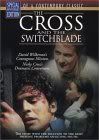

This movie really wants to stink. The production seems to go out of its way to be unwatchable. Luckily, it fails on these efforts.
This is a poorly shot Christian film from 1970 starring Pat Boone and Eric Estrada. This description alone marks this movie for the trash heap. Beyond all odds, this is a pretty good film considering its problems. There are plenty of issues with this film and each one is right up there on the screen. The dialog is often melodramatic, much of the acting is embarrassing and the cinematography is below par. This movie should be singularly awful but again, I have to admit again that I enjoyed it. I didn't love it, but I enjoyed it. It is difficult to be overly enthusiastic about this film because it is so deeply flawed by bad film making.
This film tells the story of Pastor David Wilkerson as he copes with a couple of warring New York gangs. Wilkerson is a naive preacher from Pennsylvania and through his adherence to the teachings of Jesus, and a great deal of courage from the same source, he gets the gangs to put down the knives and guns in favor of Bibles. Many people know of the great work Teen Challenge (link found here) has done around the world. This is the story of how that ministry began and if it weren’t real it would be unbelievable.
Pat Boone plays Wilkerson. He carries the film and offers a solid performance. What centers Boone is that he is a believer. When he speaks of the saving grace of Jesus Christ, you know he means it. In the film’s final scenes when Wilkerson makes his final confrontation with the gangs Boone’s delivery sells the scene. With the lacking talent in the rest of the cast and the dismal script, it is saying something that Boone manages to save the production with his performance.
As stated above, the film itself has many problems and many people will probably have difficulty taking it seriously. There is stiff performances and this is a low budget film from 1970. To put it plainly, this film is best viewed if you actually want to see it. If you come at this movie without knowing what you’re in for, you’ll probably not make it ten minutes. If you hunker down and suffer through how dated this movie is, you will find an inspiring and interesting story about faith, redemption and the power of God. For Christians, this is a must see. I suggest this film for those who aren’t Christian as well but I do so knowing that there are parts that feed into the “Christians are out-of-touch” stereotype we have. This is a dated film that is begging to be remade (and I sincerely hope that it is) but it is something many of the films released today are missing – a good message.
Related Reviews:
Christian films
Woman Thou Art Loosed (2004)
The Decalogue (1989)
Other Critic's Reviews:
Rotten Tomatoes
Bad Movie Dimension
Labels: Christian film, David Wilkerson, Eric Estrada, film, movie review, Pat Boone
posted by Michelle Obama's Left Nut at 5:00 PM
4 comment(s)
Share
I have a knee-jerk reaction to slam Christian films because I'm a student of their historical pathetic displays. Robbie Henson did well with The Visitation. It wasn't Oscar-level stuff but for a Christian film it certainly held its own.
This is based on the work by Frank Peretti and Ted Dekker. While the marketing for this film makes sure to display this, I couldn't care less. Novels are novels and movies are movies, there's plenty of lousy adaptations of good books (see most Dickens adapatations).
I don't know, this trailer doesn't do much to make me want to see it. The set up is stock stuff and the conflicts shown don't excite.
Make up your own mind, the trailer is below.
Director: Robby Henson (The Visitation)
Actors: Michael Madsen (Reservoir Dogs), Julie Ann Emery (Hitch), Leslie Easterbrook (Halloween) and Bill Moseley (Halloween)
Labels: Christian film, film, Michael Madsen, movie trailer
posted by Michelle Obama's Left Nut at 8:00 PM
2 comment(s)
Share





















Good News Film Reviews LLC 2004-2010 - used with permission
Images, video and titles are the property of their respective copyright holders. Good News Film Reviews LLC claims no ownership or connection to them.
The views expressed on this site are not the opinion of any advertiser or external entity.
While we take care to only link to responsible entities, Good News Film Reviews LLC takes no responsibility for the content linked from this site. There are sharks in the waters. Surf at your own risk.
The Template is generated via PsycHo and is Licensed.