

Nope
Short Review: Previous generations got John Wayne, we get a self-hating drunk crying in his beer.
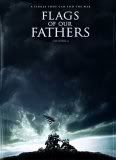

Wake me up if they decide to make a movie about Iwo Jima. This about sums up my experience screening this distracted choppy, dropped ball of a movie.
Clint Eastwood’s film has less to do with the actual battle in the black sands of that remote island and more to do with the marketing campaign back home. The three surviving men, John "Doc" Bradley, Ira Hayes and Rene Gagnon who raised the flag in the famous picture from Iwo Jima are used by the war department as spokesmen for the war bond drive. The film treats this necessity like it was a cynical, terrible assault on human dignity. It probably made the men uncomfortable to be remembered for something as simple as raising a flag, but the goals of the marketing were good. Eastwood plays these segments like the men were being leveraged to sell Coca-Cola.
The bulk of the film shows these men coping with their guilt. Great, Oprah has made a war movie. This is why I loathe this film. People don't read much anymore, and they certainly don’t consume a great deal of history when they do. Films such as this stand as historical monuments. People will know what they know about Iwo Jima because of this film. What will people get from this? We fought, but we didn’t have a clear moral goal and a cynical government back home duped the people into supporting our efforts. Our soldiers were pawns guilty of their actions and shamefully dismissed by a belligerent public. Since the film serves to undermine the concept of heroes and a moral war, the audience will learn little about the actual battle. They also won't come to understand why we fought and why it is critical for us to win.
The film is spread out over decades and told in a series of disruptive and unrelated flashbacks. It is like watching television with someone else holding the remote who is very bored. We’re watching a war movie…oh, wait now it’s a family drama…wait, it’s a halftime show…opps, more war…wait, isn’t this the Alcoholics Anonymous Channel? If you don’t like a part of the film, wait a minute and Clint will change gears. Since the film never spends too much time in one place all of the scenes are sucked dry of any dramatic flavor. The film becomes a prattling string of scenes without any punch. I found that this particularly effected the battle sequences.
The battle of Iwo Jima was as brutal a fight as was seen in WWII. Thousands of American men were wounded or killed in the fight. This film doesn’t give the sense of the massive size of this sacrifice. The battle sequences are without personality or tension. Everything is quiet then it is a wall of noise…then we cut to the men back home.
This is a film, it is intended for dramatic purposes. The battle sequences should grab the audience and rivet their fear and imagination. It should bring them into the fight. This film never accomplishes this task because it never defines characters well enough for us to care when the bullets begin to fly. Our concern is one of being distantly uncomfortable rather than personally involved. In Saving Private Ryan, we were literally placed into the bloody waters of D-Day. Then we are attached directly to Tom Hanks, a known face, that drew us into that fight. Eastwood does not offer us any handle to pull us into his film’s world.
One of the worst things about the fighting is that only one side of the battle is seen. American soldiers are shown moving up the beach and then cut down. The Japanese soldiers are almost never seen in this film. When they are it is in the dark. There are a couple of fleeting shots of the Japanese in sunlight but they are not presented as human, just props to be knocked down. A great deal of attention is given to their guns however. Eastwood offers many shots of Japanese muzzles poking out of spider holes and bunkers. This dehumanizes the Japanese fighters and removes the human element from the overall battle.
As it stands, the film expends more effort making certain we know that Ira Hayes had to deal with white people making casual remarks about his Indian heritage. With little exception, nearly every white person in the film belches out a ignorant statement about Indians to Hayes. He’s asked if he killed the Japs with a tomahawk and we’re supposed to be disgusted. Over and over, never ending is the verbal assaults from whitey. Okay, but Italians, Irish and Polish soldiers all got mocked as well. The amount of focus Hayes gets is clearly inordinate.
Eastwood spends so much time showing how poorly Hayes is treated, how guilty he feels, that the film winds up being about Hayes. This stinks because Hayes was a drunk. Which is more racist? People making insulting comments about a man's heritage or a Hollywood film concentrating on showing an Indian drunk and vomiting in all of his scenes? At least Hayes is in the film, unlike the hundreds of black soldiers who are literally removed from history by Eastwood and company.
Black soldiers performed support roles in WWII. At Iwo Jima, the battle was so intense these men found themselves in the murky sands next to their white counterparts. There is one shot of black soldiers in this film. There is no word for this other than shameful to express Eastwood’s not recognizing these men.
Overall, this film serves to dilute heroism during a time when our country is at war. It serves to water down history and remove the moral core from the Pacific theater of WWII. The stories of the battles our soldiers fight are worthy of being told. We must be reminded of sacrifice and yes heroism. Heroes do exist in war. If there are cowards, then there are heroes. This film should have shown the sacrifices of the men on that island. It doesn’t do this task and is therefore a terrible waste. It is an unforgivable waste.

Related Reviews:
War movies
Midway (1976)
The Thin Red Line (1998)
Other Critic's Reviews:
Film Critics United
Confessions of a Film Critic
Click here to buy your copy of

You Are What You See and learn
to change the world from your couch
Labels: Barry Pepper, Clint Eastwood, film, Ken Watanabe, movie review, Neal McDonough, Robert Patrick, Ryan Phillippe, World War II
posted by Michelle Obama's Left Nut at 8:00 AM
1 comment(s)


Share
Absolutely.
Short Review: Thank you Clint Eastwood for giving liberal Hollywood a solid kick in the daddy sacks on your way out the door.
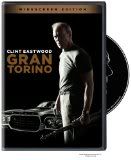

This is a great movie. There are many aspects of the film worth praising but in my mind, I keep coming back to the work of screenwriter Nick Schenk. Schenk has given us a tightly constructed and meaningful script worthy of every screenplay award out there. While it is very possible that a good portion of the lines in the film were improvised, Schenk's storyline and character work are very impressive.
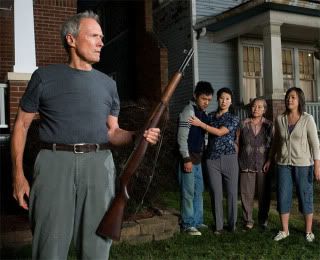
The actual plot is not a marvel. A weathered old Korean War Veteran, who has seen his neighborhood disintegrate into a ghetto, comes to the aid of a Hmong family next door. The veteran, Walt Kowalski (Clint Eastwood), spits racist taunts at the family, but still finds common ground with them once they are confronted by a local Hmong gang. Until the last ten minutes or so, the plotting is pretty conventional stuff. Unpredictability is not one of the film's selling points. Where the film strikes gold is in its characterizations and dialog. Schenk and Eastwood (who directed the film) masterfully deliver what I believe to be the best characters recent memory. Schenk's Kowalski seems custom built for the actor. Eastwood digs into the character and gives one of his best performances (he'll never do better than Unforgiven). Making Kowalski a sympathetic guy is no easy task. He is a bitter, grumbling, racist who doesn't have much time for people. He opens as a stoic, granite-faced curmudgeon. As the film progresses and he finds a relationship with the Hmong family next door he softens and the man inside emerges. All the while he speaks his mind, no matter how vile his thoughts. His frank honestly, regardless of the racist wording he uses, makes him endearing in a strange way.
A word about the racist dialog in the film. If you are sensitive to blatant displays of racism this is not a film for you. Eastwood spouts out racist comments that are shocking in this age of sensitivity and PC. I found the use of racism in the film to be smartly played. At first it is used to establish the disconnect Kowalski has with his neighbors and how much of an alien he has become in his own home. Not only does Kowalski sneer at his Hmong neighbors, they sneer right back asking "why doesn't this American leave?" As Kowalski grows closer to the family he retains his bigoted language. But the tone of it changes. Instead of being hatred it is used to show a strange bit of respect in the same way two friends will viciously mock each other as a sign of friendship. You can say something hurtful to me but it doesn't matter, you still like me and I still like you. There's this difference between us but it is irrelevant. This relationship is buttressed by Kowalski's banter with his Italian barber Martin (wonderfully played by John Carroll Lynch). The two men rip each other mercilessly with of the worst racist language possible. At one point Kowalski brings in a Hmong teen who he has taken under his wing. To teach him how men talk to one another he teaches the teen to assault the barber with bigoted bile. The scene is the film's best. In an age where we pretend even unintended phrasing is somehow akin to being a founding member of the KKK, the display of race based dialog in this film is somewhat refreshing to hear. This is not because I'm harboring some sick need for racist talk but because I love honesty. Who wouldn't rather have people talk frankly about what they're thinking than all of this East Coast liberal double-talk sensitivity we live with today?
The film also does a fantastic job of showing America as it stands today. The "American Century" is over and Kowalski perfectly represents that bygone era. American industry is dead or dying (Kowalski worked at a Ford plant his whole life) and the country's demographics are quickly changing. The promises of the past have not paid the dividends as expected. What it has left is a generation of spoiled, self-absorbed monsters who have no sense of history or decorum. Kowalski's grumbling in the first act speaks for anyone concerned for the country. We are headed somewhere and not many people think its someplace nice. What shows promise is that in the opening scene, at Kowalski's wife's funeral the grandchildren arrive wearing sport jerseys and tank tops. While my generation has raised what appears to be the worst generation ever, populated with people who would wear flip-flops to a funeral, I found it comforting that its still possible to show this behavior as bad form. The concept of respect is still there someplace in our society. Over and over while I watched the film I kept thinking about how disappointing it must be to be elderly today. You've sacrificed your whole life, you've gone to war you've worked and saved and you look and see a country filled with dome-drink sipping, ipod zombies who don't even remember the name of the war you fought in.
This is a great film. I recommend it fully.
Related Reviews:
Clint Eastwood movies
Letters from Iwo Jima (2006)
Dirty Harry (1971)
Other Critic's Reviews:
Christianity Today
The Independent Critic
Labels: Clint Eastwood, film, movie review, racism
posted by Michelle Obama's Left Nut at 11:04 AM
2 comment(s)
Share
The trailer makes this out to be a Saving Private Ryan derivative which it's not. It never reaches that level. The follow-up to this film, Letters from Iwo Jima is far superior, but of course, there's no manipulative American Government to slam when you're focusing on the Japanese.

Screenwriter: Paul Haggis (Quantum of Solace) and William Broyles Jr. (Jarhead)
Director: Clint Eastwood (Unforgiven)
Actors: Ryan Phillippe (Stop-Loss), Adam Beach (Joe Dirt), Barry Pepper (Battlefield Earth), Paul Walker (The Fast and the Furious), Robert Patrick (Terminator II: Judgment Day), Jesse Bradford (W.) and Neal McDonough (Minority Report)
Labels: Barry Pepper, Clint Eastwood, film, movie trailer, World War II
posted by Michelle Obama's Left Nut at 5:00 PM
0 comment(s)
Share
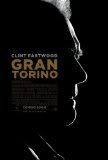

This is a great movie. There are many aspects of the film worth praising but I keep coming back to the work of screenwriter Nick Schenk. Schenk has given us a tightly constructed and meaningful script worthy of a Best Screenplay nod. While it is very possible that a good portion of the lines in the film were improvised, Schenk's storyline and character work are very impressive.
The actual plot is not a marvel. A weathered old Korean War Veteran, who has seen his neighborhood disintegrate into a ghetto, comes to the aid of a Hmong family next door. The veteran, Walt Kowalski (Clint Eastwood), spits racist taunts at the family, but still finds common ground with them once they are confronted by a local Hmong gang. Until the last ten minutes or so, the plotting is pretty conventional stuff. Unpredictability is not one of the film's selling points. Where the film strikes gold is in its characterizations and dialog. Schenk and Eastwood (who directed the film) masterfully deliver what I believe to be the best characters recent memory. Schenk's Kowalski seems custom built for the actor. Eastwood digs into the character and gives one of his best performances (he'll never do better than Unforgiven). Making Kowalski a sympathetic guy is no easy task. He is a bitter, grumbling, racist who doesn't have much time for people. He opens as a stoic, granite-faced curmudgeon. As the film progresses and he finds a relationship with the Hmong family next door he softens and the man inside emerges. All the while he speaks his mind, no matter how vile his thoughts. His frank honestly, regardless of the racist wording he uses, makes him endearing in a strange way.
A word about the racist dialog in the film. If you are sensitive to blatant displays of racism this is not a film for you. Eastwood spouts out racist comments that are shocking in this age of sensitivity and PC. I found the use of racism in the film to be smartly played. At first it is used to establish the disconnect Kowalski has with his neighbors and how much of an alien he has become in his own home. Not only does Kowalski sneer at his Hmong neighbors, they sneer right back asking "why doesn't this American leave?" As Kowalski grows closer to the family he retains his bigoted language. But the tone of it changes. Instead of being hatred it is used to show a strange bit of respect in the same way two friends will viciously mock each other as a sign of friendship. You can say something hurtful to me but it doesn't matter, you still like me and I still like you. There's this difference between us but it is irrelevant. This relationship is buttressed by Kowalski's banter with his Italian barber Martin (wonderfully played by John Carroll Lynch). The two men rip each other mercilessly with of the worst racist language possible. At one point Kowalski brings in a Hmong teen who he has taken under his wing. To teach him how men talk to one another he teaches the teen to assault the barber with bigoted bile. The scene is the film's best. In an age where we pretend even unintended phrasing is somehow akin to being a founding member of the KKK, the display of race based dialog in this film is somewhat refreshing to hear. This is not because I'm harboring some sick need for racist talk but because I love honesty. Who wouldn't rather have people talk frankly about what they're thinking than all of this East Coast liberal double-talk sensitivity we live with today?
The film also does a fantastic job of showing America as it stands today. The "American Century" is over and Kowalski perfectly represents that bygone era. American industry is dead or dying (Kowalski worked at a Ford plant his whole life) and the country's demographics are quickly changing. The promises of the past have not paid the dividends as expected. What it has left is a generation of spoiled, self-absorbed monsters who have no sense of history or decorum. Kowalski's grumbling in the first act speaks for anyone concerned for the country. We are headed somewhere and not many people think its someplace nice. What shows promise is that in the opening scene, at Kowalski's wife's funeral the grandchildren arrive wearing sport jerseys and tank tops. While my generation has raised what appears to be the worst generation ever, populated with people who would wear flip-flops to a funeral, I found it comforting that its still possible to show this behavior as bad form. The concept of respect is still there someplace in our society. Over and over while I watched the film I kept thinking about how disappointing it must be to be elderly today. You've sacrificed your whole life, you've gone to war you've worked and saved and you look and see a country filled with dome-drink sipping, ipod zombies who don't even remember the name of the war you fought in.
This is a great film. I recommend it fully.

Related Reviews:
Clint Eastwood movies
Letters from Iwo Jima (2006)
Dirty Harry (1971)
Other Critic's Reviews:
Christianity Today
The Independent Critic
Labels: Clint Eastwood, film, movie review
posted by Michelle Obama's Left Nut at 9:00 AM
1 comment(s)
Share
Looks like pretty straight forward stuff. Clint as growling curmudgeon is always a safe pick.
Screenwriter: Nick Schenk
Director: Clint Eastwood (Flags of Our Fathers)
Actors: Clint Eastwood (Dirty Harry)
Labels: Clint Eastwood, film, movie trailer
posted by Michelle Obama's Left Nut at 9:00 PM
0 comment(s)
Share
I kept expecting Bud White to show up and kick somebody's butt.
Screenwriter: J. Michael Straczynski
Director: Clint Eastwood (Million Dollar Baby)
Actors: Angelina Jolie (Mr. & Mrs. Smith), John Malkovich (Dangerous Liaisons), Jeffrey Donovan (Hitch) and Michael Kelly (Invincible)
Labels: Angelina Jolie, Clint Eastwood, film, movie trailer
posted by Michelle Obama's Left Nut at 9:00 AM
1 comment(s)
Share
Yes.
Short Review: This films cuts both ways, on one hand it is a brilliant grunt level look at war, on the other hand it is a kick in the soft compliments to the American military.

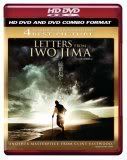
There are two ways to look at this film. One is to take this film as a standalone piece exploring the psyche of the Japanese side of Iwo Jima. The other view on this is to take this film in context and as a companion piece to director Clint Eastwood’s earlier and far inferior film about Iwo Jima, Flags of Our Fathers.
Taking this on its own merits, it is a great film. The story is focused, and we are given a fascinating look into the workings of the Japanese army. As the conditions on the ground begin to crumble as the American forces press on, the natural collapse of morale and discipline are shown in vivid detail. Eastwood does well managing this chaotic storyline of various characters meeting their imminent doom. Buttressed by screenwriter Iris Yamashita’s talent for character, Eastwood creates a stark portrait of men faced with internal and external existential wars to fight.
At the center of this film are two moving performances. The real lead in this piece is Kazunari Ninomiya. Ninomiya’s performance as Saigo, a poor baker who is torn from his love and conscripted into the army, carries the film. He is a critical figure in the film since he is the only character most people will be able to fully connect to. He is somewhat sarcastic and lacking the compliance or commitment to his army’s call. He is a common man yanked into the maelstrom of the Pacific theater. The other main focus of the piece is General Tadamichi Kuribayashi, portrayed by Ken Watanabe (The Last Samurai). Watanabe brings his natural charisma to the role and fills the shoes of a general quite well. He is a thoughtful leader who was educated in America. His leadership mismatches the brutal discipline of his underlings. This rift creates much of the film's early conflicts from which the characters are allowed to express themselves before the fighting begins. Kuribayashi is likewise a pawn and cast into the pit along with his men. The difference with his character is that he knows its coming. He goes into the fight with the Americans fully aware he cannot win.
Eastwood patently moves through subplots and minor characters to keep hammering home the uselessness of the venture of making war. From the upper echelon to the lowest grunt, we are shown that the wages of war are deep and, apparently in Eastwood’s eyes, not worth it. The full impact of the piece is muddled however given the inability for the characters to fully connect. In all of their effort to bring the expanse of the battle to the screen, Eastwood and Yamashita move around too much and too quickly. This battle went on for thirty-five days. Because of the hurried script it seems like the defeat of the Japanese came quick. The Americans land, there’s a couple of scuffles and the Japanese begin killing themselves. There is absolutely no feel to the timeframe involved. This breaks down the drama faced by these men, and saps some of the energy from the piece. When the final climatic moment occurs the lack of perspective comes to bear. While it is certain these men faced hard and violent times, the full scope of their endurance is missing.
Also missing from this piece is an honest look at who these guys were as soldiers and what they were capable of given their worldview. In this film it is the Americans who are shown to be brutish and cruel. While there is one individual Japanese officer who beats his men, the others are shown to be regular guys. While, yes, the Japanese soldiers we're all fully committed to the cause, it is important to remember that many were and that the Japanese army fully capable of horrible atrocities on the level of the Nazis. One has to look at Eastwood’s portrait and ask would this still be acceptable if he was showing us a sympathetic side to German forces? The Axis in WWII were strongly evil forces and Eastwood casually dismisses this in his work.
Overall, taken as a standalone piece this is successful and worth seeing at least once. Eastwood’s tendency to get long winded works in this piece as it is balanced out by Yamashita’s episodic writing. For those who love war film, this is a must see production. For those looking for an escape into comfortable entertainment, this may be a little too heady.
Cautions: Obviously, given that this is a frank look at war, this is a very violent film. Only a moron would go in thinking it would be otherwise.
So then, if you're a moron - be careful.
Related Reviews:
Clint Eastwood movies
Million Dollar Baby (2004)
Flags of Our Fathers (2006)
Other Critic's Reviews:
FilmCritic.com
Dear Cinema
Labels: Clint Eastwood, film, Kazunari Ninomiya, Ken Watanabe, movie review, war, World War II
posted by Michelle Obama's Left Nut at 9:00 AM
0 comment(s)
Share
Yes.
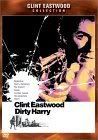

Related Reviews:
Clint Eastwood movies
In the Line of Fire (1993)
Million Dollar Baby (2004)
Other Critic's Reviews:
Roger Ebert
eFilmCritic
Labels: Clint Eastwood, film, movie review
posted by Michelle Obama's Left Nut at 12:00 PM
0 comment(s)
Share





















Good News Film Reviews LLC 2004-2010 - used with permission
Images, video and titles are the property of their respective copyright holders. Good News Film Reviews LLC claims no ownership or connection to them.
The views expressed on this site are not the opinion of any advertiser or external entity.
While we take care to only link to responsible entities, Good News Film Reviews LLC takes no responsibility for the content linked from this site. There are sharks in the waters. Surf at your own risk.
The Template is generated via PsycHo and is Licensed.