

Yes
.
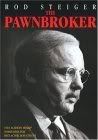

Rod Steiger scored a Best Actor Oscar Nomination for his performance as Sol Nazerman, a Jewish pawnbroker who has been devastated by his experiences as a victim of the Nazi concentration camps. Sol suffers and takes out his pain by emotionally distancing himself from those around him and by attacking anyone who gets too close. Steiger establishes himself as one of the great actors of his generation with this brilliant performance. He crafts a character filled with overwhelming turmoil and manages to express the horror and pain in the man with an even delivery. Steiger's nuanced performance is something to behold, this is really one of the rare performances that stands out across the expanse of film history in my estimation.
Director Sidney Lumet keeps a tight grip on his story and much of the film is rather restrained. But when Sol has flashbacks to the nightmare of the Nazi camps or when he allows his emotions to boil to the surface, this restraint is dropped and gives the film some seriously powerful emotional punches. The images of the concentration camp may seem a little manipulative to today's audiences but I think they still work to great effect when kept in context of the film, in particular when you seriously consider what Lumet is trying to express.
If you're looking for something smart and moving I recommend this movie. This said, it is a hard film to get through on some levels. It is depressing - very depressing and some viewers may find it a little slow.
Related Reviews:
Another movie involving The Holocaust
The Hiding Place (1975)
Other Critic's Reviews:
Three Movie Buffs
FilmCritic.com
Labels: film, holocaust, movie review, Rod Steiger
posted by Michelle Obama's Left Nut at 9:00 AM
0 comment(s)


Share
No.
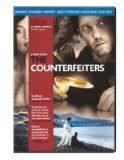

Yes, it won an Oscar for Best Foreign Language Film, but it didn't deserve it.
This is not a horrible film, the problem is that it is not a great one. The film tells the true story of master counterfeiter Salomon 'Sally' Sorowitsch (Karl Markovics) who is forced to oversee the largest counterfeiting operation in history run by the Nazis. Sally is plucked from the crowds of a concentration camp when his talents become useful to his captors. The Nazis design to flood England with counterfeit pounds and dragging their economy down.
The film concentrates on the counterfeiters working to create the fake currency while also battling amongst themselves whether they should sabotage the project or go along to survive. To bring this struggle to life, Sally, who is a self-serving criminal looking merely to survive, is constantly confronted by fellow prisoner Adolf Burger. Burger, a communist, demands that they sabotage the whole project even at the expense of their lives. Burger is a revolutionary who denies his fellow prisoner's right to life to feed his blind desire to hurt his tormentors.
The film suffers in two different places. First Burger, portrayed by August Diehl, is a detestable character. His calls for revolution and sacrifice come at a cost, not paid by him but by those around him. Diehl's bombastic performance is grating and sophmoric in light of Markovics' nuanced work. Diehl isn't necessarily to blame, Burger as a character is bluntly written and his dialog is nearly all platitudes. It is uncommon for the character to discuss anything that makes him human rather than a tool for director/screenwriter Stefan Ruzowitzky to hammer his point home.
The other area of concern is the focus of the film. The movie opens with Sally as a criminal counterfeiter. This part is interesting and does well to establish character. Then Sally is captured and sent to the camps. From that point the film becomes a relatively predictable paint-by-numbers Holocaust film. We get a glimpse at the dank barracks, the prisoners are consumed by disease and the violent whims of the guards. There's the stock guard who is particularly vile and cruel. The prisoners bond together and survive to play through the traditional rescue scene where they wander in bewildered amazement that it's really and finally over. I understand that we're all supposed to be reverent and offer blind approval for films about the Holocaust but the fact is that the Holocaust Movie has become subgenre with identifiable conventions. This film offers nothing new on these conventions. Where the real interest for the film, where the real character development occurs is after Sally survives the camps and is living large off his counterfeited money. The final scenes of the film show this part of his life. The torment of survivor's guilt, in particular in light of his helping the enemy is rich terrotory for a writer. If the film would have mined this, the story would have a devastating character study. As it stands, this is pedestrian stuff that we've seen a dozen times before.
Related Reviews:
Movies about Nazi Germany
Downfall (2004)
The Goebbels Experiment (2005)
Other Critic's Reviews:
Combustible Celluloid
Monsters & Critics
Labels: film, holocaust, Karl Markovics, movie review
posted by Michelle Obama's Left Nut at 8:00 AM
0 comment(s)
Share
Screenwriter: Mark Herman (Little Voice)
Director: Mark Herman (Brassed Off)
Actors: David Thewlis (Naked), Vera Farmiga (The Departed) and Rupert Friend (The Libertine)
Labels: adaptation, David Thewlis, film, holocaust, movie trailer, Nazis, Vera Farmiga
posted by Michelle Obama's Left Nut at 1:00 PM
0 comment(s)
Share
Yes.
Short Review: A deeply moving film that perfectly expresses the reach of God’s grace even in the worst of times.
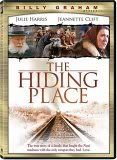

The film centers on a family of Danish Calvinists, the ten Boom family, during Nazi occupation. Headed by watchmaker abd patriarch Casper ten Boom, the family has their lives and faith thrown out of control by the invasion of deep hatred into their world. Casper takes a firm stand against the Nazi movement. In one case he actually begins wearing the infamous Star of David patch the Jewish population was forced to wear. But as the tides of Nazi hatred rise, Casper and his daughters Corrie and Betsie quietly join an underground movement. They soon find themselves helping their Jewish neighbors escape and allow others to hide in their home. It isn’t long before the family is found out and they are sent to the camps. The remainder of the film is very difficult to watch since the narrative offers an unflinching look at the hellish life Corrie and Betise ten Boom endured in the Ravensbrook concentration camp.
The first portion of the film is sincere and quiet. The ten Boom family are intent on remaining absolute to the faith regardless of what comes. This section is quaint in many places but offers some great insight to Christian morality. The family doesn’t turn from the fight when evil arrives on their doorstep, they do what they can to help beat the darkness away. All of the actions they take, every soul they try to save from the cruel machinations of mankind is an act of love and faith.
When they are sent to the camps, the film changes drastically. The opening with its charming displays of reason and faith is just a kind contrast to the hell that follows. Director James F. Collier offers one of the bleakest and visceral portrayals of life in a concentration camp. A feeling of endless dread soaks the camp scenes. The grungy and soulless look of the camp serves as a sharp conflict to the resilient faith of the sisters as they find God even in the darkest of holes.
It is easy to focus on the camp scenes and look to the bravery of the ten Boom sisters. Their willingness to continue to suffer and risk their lives to profess the power and love of Jesus Christ even in the dank barracks of Ravensbrook is stunning. I believe one of the major points of the film can be found elsewhere. I think the real power of the film is in the opening scenes.
The ten Boom family’s faith instills an immediate revulsion to evil and this drives them to literally sacrifice themselves for others when the time comes. It is made clear in the first act of the film that the family’s faith is so strong that it is second nature for them to step up when they are asked. When the family is destroyed and imprisoned their unyielding faith is inspiring. This film shows that their faith didn’t grow out of the misery. It existed in the good times and it was just as strong. I believe this film shows the importance of working on one’s faith when the times are good as well as the bad. It isn’t enough to plead for God to save you when the storm clouds roll in. To have a firm faith you must also go to him when the sun is shines. The ten Boom’s faith is nearly identical whether they’re resting comfortably in their parlor or shivering in cold hell of the camps.
This is a great film on many levels. I highly recommend it. From my review, my non-Christians readers may want to dismiss this piece. I’m telling you that is a mistake. This film doesn’t shy away from the Christian faith but it doesn’t sermonize either. The characters are committed Christians so they act in kind, but this isn’t a Christian film like the kinds we see today. This film is actually well done.
Related Reviews:
Other Inspiration WWII Movies
I am David (2003)
Sophie Scholl: The Final Days (2005)
Other Critic's Reviews:
Decent Films Guide
Rotten Tomatoes
Labels: Christian film, Corrie ten Boom, film, holocaust, movie review
posted by Michelle Obama's Left Nut at 9:00 AM
0 comment(s)
Share





















Good News Film Reviews LLC 2004-2010 - used with permission
Images, video and titles are the property of their respective copyright holders. Good News Film Reviews LLC claims no ownership or connection to them.
The views expressed on this site are not the opinion of any advertiser or external entity.
While we take care to only link to responsible entities, Good News Film Reviews LLC takes no responsibility for the content linked from this site. There are sharks in the waters. Surf at your own risk.
The Template is generated via PsycHo and is Licensed.