

I thought that I would crack this film open and explain why it doesn't work.
In order to be focused, a story should contain exactly one hero and one villain. This singular hero should have an identifiable and solitary goal which directly conflicts with the goal of our lone villain. Two forces (read two ways of thought), on a collision course - that is the root of a story.
When you have two heroes and/or two villains, or in the case of this film 1½ heroes and 1½ villains, you take what should be the only thread that runs through a story and slice it into at least two branches. This means the story has to go into two different places, meaning it is exactly like trying to drive to two places at once. Since this isn't possible, the storyteller is forced to rush back and forth from the paths to both locations and doesn't get anywhere.
This is the core problem with The Dark Knight - it wants to go too many places.
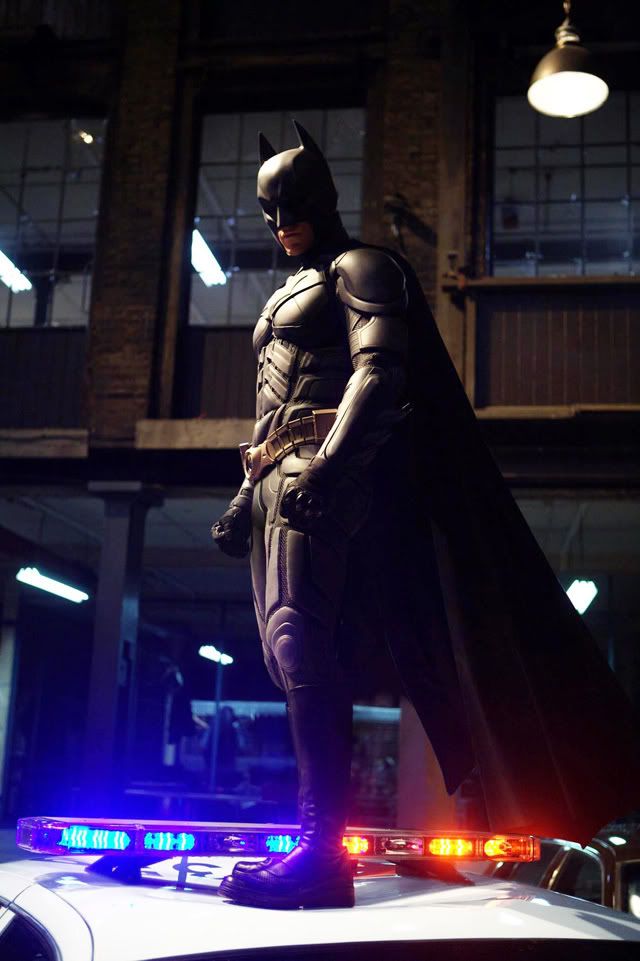 To clarify, it is possible to have subplots with secondary heroic characters, Jack Sparrow in Pirates of the Caribbean: Curse of the Black Pearl is a great example of this. The problem of a split narrative comes when a secondary character is promoted into the hero or villain role while the other character is still active. In this film, the hero should be Batman. He's the titular character and he is the guy wearing the black rubber suit. The villain of the film is The Joker. The film should be clear, Batman (representing civilization and order) and The Joker (representing anarchy and disruption) duke it out over Gotham. Where writer/director Christopher Nolan botches the works is the promotion of Harry Dent, Gotham's stalwart district attorney. Dent is dating Rachel, Batman's love interest. He is also rounding up all of the criminals in Gotham. In the film Batman himself sees him as the hero, his replacement. In the narrative he performs this role as well. Nolan focuses a great deal of energy propping up Dent as an heroic figure to the exclusion of Batman. As Dent's fortunes rise Batman is essentially ushered into the background. To alleviate this, Nolan needs to have Batman do something - anything, to appear useful. Otherwise Batman has completely evaporated in his own movie. Nolan fabricates completely unneeded side projects for Batman such as his trip to Hong Kong to kidnap a villainous accountant. This sequence is there simply to show Batman doing his stuff. It doesn't push the story forward, it doesn't add anything to the film's themes. The whole sequence could have occurred at the airport in Gotham and had the same effect in half the time. There is a similar scene at the opening where Batman dispatches Scarecrow and some Russian mob bosses. Again, the scene is completely unnecessary other than showing Batman can kick some butt. In other words, almost every frame showing Batman in the first act is of him doing something that doesn't really impact the plot in a meaningful way. There's the introduction of some key facts, but these could have been made in simpler fashion.
As the story progresses Nolan uses Dent and Lt. James Gordon to fill in the heroic gaps in the story. Since neither the capturing of The Joker, the arrest of the mob bosses, nor the attaining of Rachel's love really falls to Batman to resolve (they're all Dent's problems) Batman is a secondary player. The story needs a hero but Dent isn't big enough to fill this role. Gordon is brought on to co-hero. Between the two, they battle the mob and plot against The Joker and attempt to win public support in the face of terrorism. Batman is left scurrying in the background doing little to help progress any of these plots. When time is spent with either Bruce Wayne or Batman, the scenes are focused on the theme of terrorism and the question if a hero can fight a villain without rules and not become evil in the process. This theme is interesting and works in light of The Joker but The Joker's deeds haven't been dramatic enough to warrant this special attention. Since Nolan spends all his time with Dent, Rachel and Gordon, he's forced to divorce himself from the Batman versus The Joker plot that should be the driving force behind the film.
The proof that Nolan's film is spliced is the duel resolution in the film. The Joker has to confront both heroes separately. He goes to the injured Dent in the hospital. There The Joker mocks Dent's burned face, and explains the chaotic nature of the world. This supposedly lures Dent to evil. Dent then takes revenge on people directly involved in the circumstances that ruined his life, and transforms into the cruel Harvey Two-Face. This makes Dent a tragic hero who loses the fight. The Joker then moves on to Hero #2, Batman. Since there hasn't been a set plot running through the film up to this climax, Nolan is cornered and has to set up an scenario where two boats filled with people are at risk. The theme being played at this point, anarchy versus civilization, hasn't been the direct focus of the film. There have been competing questions such as "what does it take to be a hero", "will the boy get the girl", "can a hero act villainous and remain heroic". Since Nolan has played too many themes and asked too many questions, the main thread running through his climax is suffocated. The anarchy versus civilization theme is shoehorned in and without the support of the rest of the film, this robs Nolan of a tense dramatic arc. When Batman dispatches The Joker there's nothing proven, nothing learned.
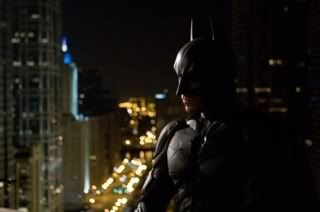 This lack of a moral means that The Joker's not really the villain - what? No, its true. The final conflict between the hero and the villain results in a moral being learned. In the case of this film, the lesson being taught comes when Batman overcomes Harvey Two-Face. When Two-Face is killed, Gordon and Batman come to the realization that society needs its heroes even if those heroes are fake. This structural work means that Harry Dent is both the replacement hero and the real villain of the film. Batman and The Joker are mere players in Harvey Dent's tale.
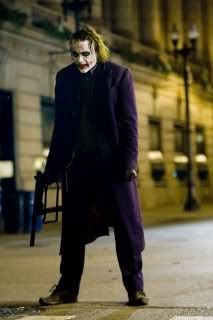
The film would have succeed in its goals if it followed the same path seen in Tim Burton's Batman. That film kept the distractions to a minimum and showcased the conflict between the hero and his nemesis. The Joker is the real star of the show, as the ultimate trickster character, the audience wants to enjoy his deviousness, his clever cruelty. As a trickster, The Joker is the perfect representation of chaos. Against this stands the lawful protector Batman, and as The Joker states in The Dark Knight, this makes them the unstoppable force and the immovable object. They should have kept the story honed in on this conflict. They could have gotten to the same place with far less extra narrative weight. Remember, one hero - one villain - one central question with a single moral to the story. These are they keys to good stories, stories worth telling and worth watching.
Labels: Batman, miscellaneous, movie watching tip
posted by Michelle Obama's Left Nut at 12:00 PM
1 comment(s)


Share
If you like big, loud, flashy, but hollow things: yes.
If you're into well structured, good movies: no.
Disappointment. That's the word that swims through my head when I think of this film. I have disappointment over the opportunity that was missed. What should have been a tale of chaos versus order, good versus evil, winds up being a unfocused yarn that tries way too hard.
Disregard the gleeful, fanboys wetting their trunks who claim this is the best film ever. This simply is not as great as people desperately want it to be. This film has little to do with the battle between The Joker and Batman and has everything to do with Harvey Dent (Aaron Eckhart). Structurally speaking, Dent is the hero of the film and a tragic hero at that. Batman himself is a bystander in his own story. He doesn't drive or control any aspect of the narrative. His choices do not bring about the climax. These things fall to Dent, who, if this thing was written properly, would have been a supporting member until the final moments. Dent's fall from political hero to the evil Two-Face should have been saved to set up the next film. As it is, he acts as Batman's stand-in for the whole movie.
The real shame to this film comes with the handling of The Joker. First, he simply does not have enough screen time. Writer/Director Christopher Nolan (Batman Begins) has to spend so much time developing Dent that he has to sacrifice displaying The Joker. The result is what appears to be a stunning performance by the late Heath Ledger is choppy and incomplete. The conflict between Batman and his eternal nemesis is well known to the audience and little development would be needed to get to the meaty parts of the story. Nolan, if he would have keep himself in check, could have given The Joker his due and allowed him to play in all of his trickster glory. Instead, Ledger's rendition feels forced at times with his jerky speech patterns and stabbing tongue. Given space to grow, Ledger's performance could have flowered into something special.
Opposite Ledger, Christian Bale's Batman seems like a faded copy of his former self. With nothing to do but watch those around him, this outing leaves the caped crusader sulking in the shadows. Reduced to little more than a gruff voiced prop.
Nolan's problem is the same one that tanked Sam Raimi's Spider-Man 3. Having multiple villains, multiple stories, and multiple themes is like tying three baskets to the bottom of a hot air balloon and expecting it to fly. A story needs to have a singular point supported by related themes and represented by a lone conflict between an individual hero and villain. It would be nice if multi-arced stories worked but they don't. This is the way of the world. Nolan exhausts all his time chasing down all of his narratives. He can't move his story forward.
Beyond the multifaceted plots, Nolan weighs the film down with obtuse references to the War on Terror™. IEDs, the burning 9/11-esque wreckage, hostage videos, concerns over spying and on and on the references come. These references have a place in the film but the film is so crammed with other competing points that they aren't fully explored and only provide rude nudges to the audience. Look see, he's waffling on spying on Gotham because spying is wrong - just like when we do it. Again, the references to the War on Terror™ are perfectly fine and I don't have an issue with them if they were allowed space for explanation.
Ridiculously, Nolan has been telling the press that the political overtones to the film are essentially unintentional:
"To be honest with you, in the writing of the films we try not to be too conscious of any political parallels or any thing that we might want to include from the real world because I think the terms of the storytelling demand that you be a step removed from today's political environment." - Christopher Nolan, Director Christopher Nolan on The Dark Knight, Crave Online.com
Its fine if he wants to make these arguments, but please have the manhood to stand next to your own work. The problem here is that his War on Terror™ branch seemed wedged in and obscures the real reason for the film - to watch Batman and The Joker kick each other's back ends across Gotham.
Overall, this is a flashy movie that is good enough to entertain. The same can be said of many films. Most people will probably find it worth their while. My stance is that it could have been a thousand times better and Nolan dropped the ball. This is not a great film. Its not even a great superhero movie. Sure it is big and it is flashy, but in the end it's nothing special.
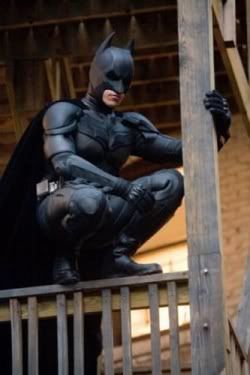
Labels: Aaron Eckhart, Batman, Christian Bale, Christopher Nolan, film, Gary Oldman, Heath Ledger, Maggie Gyllenhaal, Michael Caine, Morgan Freeman, movie review, superhero
posted by Michelle Obama's Left Nut at 8:00 AM
0 comment(s)
Share
I thought that I would crack this film open and explain why it doesn't work.
In order to be focused, a story should contain exactly one hero and one villain. This singular hero should have an identifiable and solitary goal which directly conflicts with the goal of our lone villain. Two forces (read two ways of thought), on a collision course - that is the root of a story.
When you have two heroes and/or two villains, or in the case of this film 1½ heroes and 1½ villains, you take what should be the only thread that runs through a story and slice it into at least two branches. This means the story has to go into two different places, meaning it is exactly like trying to drive to two places at once. Since this isn't possible, the storyteller is forced to rush back and forth from the paths to both locations and doesn't get anywhere.
This is the core problem with The Dark Knight - it wants to go too many places.
To clarify, it is possible to have subplots with secondary heroic characters, Jack Sparrow in Pirates of the Caribbean: Curse of the Black Pearl is a great example of this. The problem of a split narrative comes when a secondary character is promoted into the hero or villain role while the other character is still active. In this film, the hero should be Batman. He's the titular character and he is the guy wearing the black rubber suit. The villain of the film is The Joker. The film should be clear, Batman (representing civilization and order) and The Joker (representing anarchy and disruption) duke it out over Gotham. Where writer/director Christopher Nolan botches the works is the promotion of Harry Dent, Gotham's stalwart district attorney. Dent is dating Rachel, Batman's love interest. He is also rounding up all of the criminals in Gotham. In the film Batman himself sees him as the hero, his replacement. In the narrative he performs this role as well. Nolan focuses a great deal of energy propping up Dent as an heroic figure to the exclusion of Batman. As Dent's fortunes rise Batman is essentially ushered into the background. To alleviate this, Nolan needs to have Batman do something - anything, to appear useful. Otherwise Batman has completely evaporated in his own movie. Nolan fabricates completely unneeded side projects for Batman such as his trip to Hong Kong to kidnap a villainous accountant. This sequence is there simply to show Batman doing his stuff. It doesn't push the story forward, it doesn't add anything to the film's themes. The whole sequence could have occurred at the airport in Gotham and had the same effect in half the time. There is a similar scene at the opening where Batman dispatches Scarecrow and some Russian mob bosses. Again, the scene is completely unnecessary other than showing Batman can kick some butt. In other words, almost every frame showing Batman in the first act is of him doing something that doesn't really impact the plot in a meaningful way. There's the introduction of some key facts, but these could have been made in simpler fashion.As the story progresses Nolan uses Dent and Lt. James Gordon to fill in the heroic gaps in the story. Since neither the capturing of The Joker, the arrest of the mob bosses, nor the attaining of Rachel's love really falls to Batman to resolve (they're all Dent's problems) Batman is a secondary player. The story needs a hero but Dent isn't big enough to fill this role. Gordon is brought on to co-hero. Between the two, they battle the mob and plot against The Joker and attempt to win public support in the face of terrorism. Batman is left scurrying in the background doing little to help progress any of these plots. When time is spent with either Bruce Wayne or Batman, the scenes are focused on the theme of terrorism and the question if a hero can fight a villain without rules and not become evil in the process. This theme is interesting and works in light of The Joker but The Joker's deeds haven't been dramatic enough to warrant this special attention. Since Nolan spends all his time with Dent, Rachel and Gordon, he's forced to divorce himself from the Batman versus The Joker plot that should be the driving force behind the film.
The proof that Nolan's film is spliced is the duel resolution in the film. The Joker has to confront both heroes separately. He goes to the injured Dent in the hospital. There The Joker mocks Dent's burned face, and explains the chaotic nature of the world. This supposedly lures Dent to evil. Dent then takes revenge on people directly involved in the circumstances that ruined his life, and transforms into the cruel Harvey Two-Face. This makes Dent a tragic hero who loses the fight. The Joker then moves on to Hero #2, Batman. Since there hasn't been a set plot running through the film up to this climax, Nolan is cornered and has to set up an scenario where two boats filled with people are at risk. The theme being played at this point, anarchy versus civilization, hasn't been the direct focus of the film. There have been competing questions such as "what does it take to be a hero", "will the boy get the girl", "can a hero act villainous and remain heroic". Since Nolan has played too many themes and asked too many questions, the main thread running through his climax is suffocated. The anarchy versus civilization theme is shoehorned in and without the support of the rest of the film, this robs Nolan of a tense dramatic arc. When Batman dispatches The Joker there's nothing proven, nothing learned.
This lack of a moral means that The Joker's not really the villain - what? No, its true. The final conflict between the hero and the villain results in a moral being learned. In the case of this film, the lesson being taught comes when Batman overcomes Harvey Two-Face. When Two-Face is killed, Gordon and Batman come to the realization that society needs its heroes even if those heroes are fake. This structural work means that Harry Dent is both the replacement hero and the real villain of the film. Batman and The Joker are mere players in Harvey Dent's tale.The film would have succeed in its goals if it followed the same path seen in Tim Burton's Batman. That film kept the distractions to a minimum and showcased the conflict between the hero and his nemesis. The Joker is the real star of the show, as the ultimate trickster character, the audience wants to enjoy his deviousness, his clever cruelty. As a trickster, The Joker is the perfect representation of chaos. Against this stands the lawful protector Batman, and as The Joker states in The Dark Knight, this makes them the unstoppable force and the immovable object. They should have kept the story honed in on this conflict. They could have gotten to the same place with far less extra narrative weight. Remember, one hero - one villain - one central question with a single moral to the story. These are they keys to good stories, stories worth telling and worth watching.
Labels: Batman, miscellaneous, movie watching tip
posted by Michelle Obama's Left Nut at 6:00 PM
17 comment(s)
Share
If you like big, loud, flashy, but hollow things: yes.
If you're into well structured, good movies: no.
Disappointment. That's the word that swims through my head when I think of this film. I have disappointment over the opportunity that was missed. What should have been a tale of chaos versus order, good versus evil, winds up being a unfocused yarn that tries way too hard.
Disregard the gleeful, fanboys wetting their trunks claiming this is the best film ever. This simply is not as great as people desperately want it to be.
Amazingly, this film has little to do with the battle between The Joker (Heath Ledger) and Batman (Christian Bale) and has everything to do with Harvey Dent (Aaron Eckhart). Structurally speaking, Dent is the hero of the film and a tragic hero at that. Batman himself is a bystander in his own story. He doesn't drive or control any aspect of the narrative. His choices do not bring about the climax. These things fall to Dent, who, if this thing was written properly, would have been a supporting member until the final moments. Dent's fall from political hero to the evil Two-Face should have been saved to set up the next film. As it is, he acts as Batman's stand-in for the whole movie.
The real shame comes with the handling of The Joker. First, he simply does not have enough screen time. Writer/Director Christopher Nolan (Batman Begins) has to spend so much time developing Dent that he has to sacrifice displaying The Joker. The result is the acclaimed performance by the late Heath Ledger is choppy and incomplete. The conflict between Batman and his eternal nemesis is well known to the audience and little development would be needed to get to the meaty parts of the story. Nolan, if he would have keep himself in check, could have given The Joker his due and allowed him to revel in his trickster glory. Instead, Ledger's rendition feels forced at times with his jerky speech patterns and stabbing tongue.
Opposite Ledger, Christian Bale's Batman seems like a faded copy of his former self. With nothing to do but watch those around him, this outing leaves the caped crusader sulking in the shadows. Reduced to little more than a gruff voiced prop.
Nolan's problem is the same one that tanked Sam Raimi's Spider-Man 3. Having multiple villains, multiple stories, and multiple themes is like tying three baskets to the bottom of a hot air balloon and expecting it to fly. A story needs to have a singular point supported by related themes and represented by a lone conflict between an individual hero and villain. It would be nice if multi-arced stories worked, but they don't. This is the way of the world. Nolan exhausts all his time chasing down his narratives ans can't move his story forward.
Beyond the multifaceted plots, Nolan weighs the film down with obtuse references to the War on Terror™. IEDs, the burning 9/11-esque wreckage, hostage videos, concerns over spying and on and on the references come. These references have a place in the film but the film is so crammed with other competing points that they aren't fully explored and only provide rude nudges to the audience.
Ridiculously, Nolan has been telling the press that the political overtones to the film are essentially unintentional:
"To be honest with you, in the writing of the films we try not to be too conscious of any political parallels or any thing that we might want to include from the real world because I think the terms of the storytelling demand that you be a step removed from today's political environment." - Christopher Nolan, Director Christopher Nolan on The Dark Knight, Crave Online.com
It's fine if he wants to make these arguments, but please have the manhood to stand next to your own work. The problem here is that his War on Terror™ branch is wedged in and obscures the real reason for the film - to watch Batman and The Joker kick each other's back-ends across Gotham.
Overall, this is a flashy movie that is good enough to entertain. The same can be said of many films. Most people will probably find it worth their while. My stance is that it could have been a thousand times better and Nolan dropped the ball. This is not a great film. It is not even a great superhero movie. Sure it is big and it is flashy, but in the end it's nothing special.
Click here to buy your copy of

You Are What You See and learn
to change the world from your couch
Labels: Aaron Eckhart, Batman, Christian Bale, Christopher Nolan, film, Gary Oldman, Heath Ledger, Maggie Gyllenhaal, Michael Caine, Morgan Freeman, movie review, superhero
posted by Michelle Obama's Left Nut at 8:30 PM
12 comment(s)
Share
It was cool when it was released.
That was a long time ago.
It's not cool anymore.
It's kind of embarrassing now.
Visit the official site
Screenwriter: Sam Hamm (Monkeybone), and Warren Skaaren (Beetle Juice)
Director: Tim Burton (Big Fish)
Actors: Michael Keaton (White Noise), Jack Nicholson (As Good As It Gets), Kim Basinger (L.A. Confidential), and Jack Palance (City Slickers)
Labels: Batman, film, Jack Nicholson, Kim Basinger, Michael Keaton, movie trailer, Tim Burton
posted by Michelle Obama's Left Nut at 10:05 PM
0 comment(s)
Share
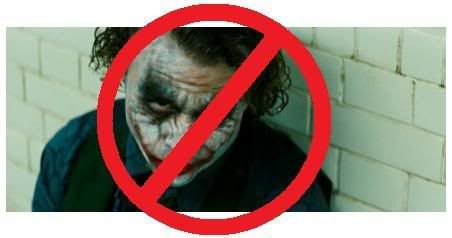
- The film borders on pastiche. It's Spider-Man 3 meets American Gangster meets Bourne Ultimatum meets Batman. The most epic thing about the movie is the titanic clash of genres.
- Shouldn't there be some upside from living in the age of the sound bite and short attention spans? Not when it comes to blockbuster summer movies, apparently. One hundred fifty-three minutes! It took Orson Welles just under two hours to unpack a man's entire life, and it takes a third of a workday for Batman to catch the Joker? I fear some are confusing richness and complexity with sheer running length.
- Is it too much to ask that a Batman movie be about…Batman? One of the film's recurrent tricks is to have the de-caped crusader hide in the shadows, listening to someone else talk. That's a great metaphor for the character's role – he's watching his own movie.
- Stripped down to its essentials, a story poses a question in the beginning and then spends the rest of your time answering it. This one has three weighty queries (Does one have to become evil to fight evil? Can people retain their humanity in the face of extremity? Is our destiny determined by chance or will?). If those aren't enough, there are a number of ancillary questions (What is a hero? Which guy will the girl pick? Can you get salt poisoning from eating popcorn for 2.5 hours?). There is no way this movie can do justice to all that (though I can answer that very last one).
Labels: Batman, guest review, movie review, superhero
posted by Michelle Obama's Left Nut at 9:51 AM
1 comment(s)
Share
Click here for the official site
Click here to return to the Movie Trailer Page
Screenwriters: Christopher Nolan, David S. Goyer (Batman Begins)
Actors: Christian Bale (3:10 to Yuma), Heath Ledger (Brokeback Mountain), Michael Caine (Sleuth), Morgan Freeman (The Shawshank Redemption), Maggie Gyllenhaal (Donnie Darko), Gary Oldman (Romeo is Bleeding), and Aaron Eckhart (Thank You For Smoking)
Labels: Batman, Christian Bale, Christopher Nolan, Heath Ledger, Michael Caine, Morgan Freeman, movie trailer, superhero
posted by Michelle Obama's Left Nut at 12:00 PM
0 comment(s)
Share
Click here to return to the Movie Trailer Page
Screenwriters: Christopher Nolan, David S. Goyer (Batman Begins)
Actors: Christian Bale (3:10 to Yuma), Heath Ledger (Brokeback Mountain), Michael Caine (Sleuth), Morgan Freeman (The Shawshank Redemption), Maggie Gyllenhaal (Donnie Darko), Gary Oldman (Romeo is Bleeding), and Aaron Eckhart (Thank You For Smoking)
Labels: Batman, Christian Bale, Christopher Nolan, Heath Ledger, Michael Caine, Morgan Freeman, movie trailer, superhero
posted by Michelle Obama's Left Nut at 10:33 AM
0 comment(s)
Share





















Good News Film Reviews LLC 2004-2010 - used with permission
Images, video and titles are the property of their respective copyright holders. Good News Film Reviews LLC claims no ownership or connection to them.
The views expressed on this site are not the opinion of any advertiser or external entity.
While we take care to only link to responsible entities, Good News Film Reviews LLC takes no responsibility for the content linked from this site. There are sharks in the waters. Surf at your own risk.
The Template is generated via PsycHo and is Licensed.