

Yes.
Short Review: The biggest problem with this film is that listening to Capote is like listening to someone scrape a fork on a plate.
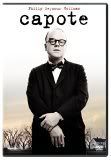

The main criteria for who wins the Oscar for Best Actor should always be for the actor who delivers a performance that no one else could have done. They should offer a performance that is unique to them. Tom Hanks as Forrest Gump and Anthony Hopkins as Dr. Hannibal are great examples of this. Over the past few years we have been asked to swallow that good but not great performances were worthy of professional adulation. Gwyneth Paltrow in Shakespeare in Love, or Denzel Washington in Training Day? He loses for Malcolm X but wins for that pedestrian waste? Paaaleese! Philip Seymour Hoffman’s Best Actor win for his performance as Truman Capote returns us to a more proper recipient for this award. Hoffman’s performance is a singular achievement. His Capote is at first a heck of an imitation. He has the voice, the inflection and the gesture down pat. Beyond the mimicry, Hoffman provides a moving look at a brilliant mind injured by a deeply wounding history.
Director Bennett Miller’s work is usually overlooked when people talk about this piece because of Hoffman’s overwhelming performance. Miller gives Hoffman enough space to do his work but also manipulates the story and screen to let us see underneath this complex man. There is never a time when we don’t know that Capote’s hubris is at once well founded but also used by him as an emotional shield. Capote’s aggressive mind offered him the world’s blessings but it also forced him to curse himself at the same time. This duality is handled by Miller brilliantly both by giving Hoffman the ability to express it but also by maneuvering the scenes in such a way that this conflict is constantly at the forefront.
It has been made clear by the filmmakers that this is not an autobiography of Capote. I believe it is. Although you only follow him throughout the five years we was involved in the murders of the Clutter family and their killers, you get such an intimate look into his motivations that the film leaves little else one could possibly get from the rest of his life. One doesn’t need to drink the whole ocean to come to understand its taste. We can gleam much from a person by looking at the actions they take when faced with moral choices. This film follows Capote as he intentionally chooses to do the wrong thing, as he decides the wrong moral choice. He lies to condemned men, he defiles the sanctuary of closed coffins, he uses people and scoffs at their lives when they are away. In short, he was a very bad man who wasn’t far removed from the murderers he worked to popularize.
The film doesn’t condemn Capote’s abuse of those around him openly, but through subtle and intelligent moves it makes it clear his work is not something to be proud of. At one point Capote claims that he will return the killers to the realm of humanity. The scene, in context, is played in such a way that the audience is forced to recall the victims and therefore question if his work will remove them from humanity. Through Capote’s actions and statements, Miller allows the character to condemn himself. The final moments of the film accommodate the need for the film itself to come down with a moral choice in regards to Capote using the tragedy of a quadruple murder for his own gain.
This is a very good film is a brilliant performance at its center. Philip Seymour Hoffman’s performance is as good as you have heard and the film lives up to him. Despite a slight tilt to equating the death penalty to the cold-blooded murder of innocents, this film is very much worth seeing.
Related Reviews:
In Cold Blood (1967)
Infamous (2006)
Other Critic's Reviews:
ReelViews
Quick Reviews
Labels: film, movie review, Philip Seymour Hoffman, Truman Capote
posted by Michelle Obama's Left Nut at 9:00 AM
0 comment(s)


Share
No.
Short Review: A bad ending to a good movie is like eating a sub sandwich only to find the final bite has a toenail it in.


If you’ve seen Capote, there is no compelling reason to see this film. This aside, there is much to recommend this piece. There is some fine acting and directing and the story itself is inherently interesting. The issue is that the overall point sullies any positive effort made by the production. The film tells the same story as Capote: New York big shot writer/raconteur/human squeak toy, Truman Capote goes into a small Kansas town to report on the events of the murder of the Clutter Family. While investigating the story, Capote gets drawn into writing about the two thugs who brutally murdered the family. It is clear the story behind the story is a riveting human drama.
This film succeeds in a couple of ways. The performances are quite good. After seeing Philip Seymour Hoffman as Truman Capote it seemed impossible for anyone else to successfully pull off this strange character. Toby Jones’ portrayal of the impish writer is in many ways superior to Hoffman’s work. Hoffman deserved the Oscar he received for his performance. His rendition of Capote fit his production perfectly and is a brilliant piece of acting. To his credit, Jones’s Truman is one step more real, more human and his physical likeness is striking. It would seem that Jones was born to play this role.
The other strong point of the film is writer/director Douglas McGrath’s polished script. Much of his script is taut and plays to the best parts of the story. The interactions of the Kansas residents and Truman, a flamboyant, gay banshee is priceless. McGrath smartly juxtaposes the elite world of Manhattan and rural Kansas to great effect. Each of the characters, even those with a moment of screen time are, if not fully realized, quite interesting to watch. The writing allows for the actors to act. The fullness of the piece even allows Sandra Bullock to achieve what is easily her best performance as Nell Harper Lee.
In spite of its successes, the film ultimately fails. In the final act a homosexual relationship between Truman and killer Perry Smith (Daniel Craig) develops. I have no idea if this relationship was factual, but it doesn’t matter. The film concentrates so much on this love affair and the complications it forces on the conflicted Capote it overwhelms the story. While this is effectively used to support the climatic scenes where Smith is executed for his crimes, it pulls the focus away from what Capote was doing. In Cold Blood is a brilliant book but it is also a product of Truman Capote serving his (and on a larger scale our) needs by trampling on the tragedy of a dead family. He also used the deaths of the killers to advance his goals. Through his development of the true-crime novel, Truman Capote watered down the immoral behavior of profiting from the dead. The film Capote deals with this issue in the end. This film gives Capote a pass.
In the end of the film Sandra Bullock, as Nell Harper Lee (author of To Kill A Mockingbird) complains that Capote’s final years of drunkenness and stagnant creativity were the result of American culture and not Capote’s guilt. She complains that America isn’t as fancy as a place like France where things more "effervescent" can survive. Our memories are short and we Americans want things now. Are you kidding me? I do not know if these were Lee's words but even so, can someone take Miss Congeniality aside and explain that she’s a part of the sickness not the cure? I know she’s playing a character and I’m sure she’s a nice lady, but that complaint coming out of that actress’s mouth? Sandra Bullock, the star of Speed and Speed 2 complaining on camera that American culture is too hurried? Why not have Paris Hilton on camera bemoan our culture has gotten too flippant?
To bring this to a close, this is a well done film but its lack of moral clarity drains the movie of the potency it could have contained. Proof that there is more to a good movie than solid dialog and quality scenes. You must always have a good point.
Related Review:
In Cold Blood (1967)
Capote (2005)
Other Critic's Reviews:
Reel Talk
The Movie Boy
Labels: film, movie review, Sandra Bullock, Sigourney Weaver, Toby Jones, Truman Capote
posted by Michelle Obama's Left Nut at 9:00 AM
0 comment(s)
Share
No.
Short Review: A good movie and a great performance that dances on the graves of the dead.
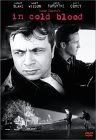

This film is based on Truman Capote’s controversial and morally questionable classic non-fiction book. It follows the crooked path of killers Perry Smith and Richard Hickock as they chose to murder Kansas farmer William Clutter and his family. We then track the killers through to their deaths in a hangman’s noose. Robert Blake offers a career establishing performance as the broken-souled Smith. Blake lays out a complex performance that does an expert job of showing the seemingly tormented man who performed the horrible deed of murder. Smith was a lost man whose mind apparently was capable of far more than his abused personality would allow. Hickock, Smith’s partner in crime, portrayed by Scott Wilson, comes across as more of an amoral thug. With Blake’s gentle performance aligned with Capote’s advocating characterization, Perry Smith comes across as a hero gone wrong. He is made to appear to be more of a mistake of social circumstances than a cruel-hearted murderer that chooses to slaughter an innocent family.
This film, due to time constraints, concentrates on Smith and Hickock and acknowledges the Clutter family when it suits the narrative. The victims William Clutter, Bonnie Clutter, their son Kenyon and their daughter Nancy are reduced to curiosities to the overall plot. They are meaty, bleeding props used to forward the story of Smith. Their moments of humanity are reduced to a secondary role to expand the tragic heroic posture of the man who killed them. Given that the weight of the piece is so tilted to the killer, the moral issues of the film are striking. To allow the killer to gain in stature through his act diminishes the stature of the Clutter family. In effect, this film rapes the dead of their identities to celebrate their murderers.
The case that the execution of the killers is equal to the killing of the Clutter family is toyed with in this piece. Anyone with a moment of clarity can discern the difference between the killing parents in front of their children and the state executing the men guilty of the crime. This moral wavering lingers throughout the film. Are the lives of the killers tragic? Absolutely, and to come to understand what created these monsters is a good thing. The problem we have with understanding them is that many lose their focus and begin to excuse their actions. Forgiveness is required of us, dismissal of their brutal acts is not. This film fails to retain a strict line between wanting to show who these men are and wanting to sympathize with them. No one put them on that farm and even after they showed up, no one made them pull the trigger. These men, regardless of their bad lives, never had the right to murder and we do not have the right to excuse their deeds.
This is a very well done film and is, to be honest, fascinating to watch. Again, Blake’s performance is incredible. He nails his role, which is even more haunting following his own real life trial for murder. Regardless of the technical feats of this picture, I cannot recommend it. I am constantly bothered by the dismissal of the victims. Yes, through this piece we come to understand the heart of a killer but at what cost? The successes of this film are built upon the memories of the dead and I cannot happily suggest anyone join in the dancing on their graves.
Related Reviews:
Capote (2005)
Infamous (2006)
Other Critic's Reviews:
Roger Ebert
DVD Verdict
Labels: film, movie review, Perry Smith, Robert Blake, Truman Capote
posted by Michelle Obama's Left Nut at 5:00 PM
0 comment(s)
Share





















Good News Film Reviews LLC 2004-2010 - used with permission
Images, video and titles are the property of their respective copyright holders. Good News Film Reviews LLC claims no ownership or connection to them.
The views expressed on this site are not the opinion of any advertiser or external entity.
While we take care to only link to responsible entities, Good News Film Reviews LLC takes no responsibility for the content linked from this site. There are sharks in the waters. Surf at your own risk.
The Template is generated via PsycHo and is Licensed.